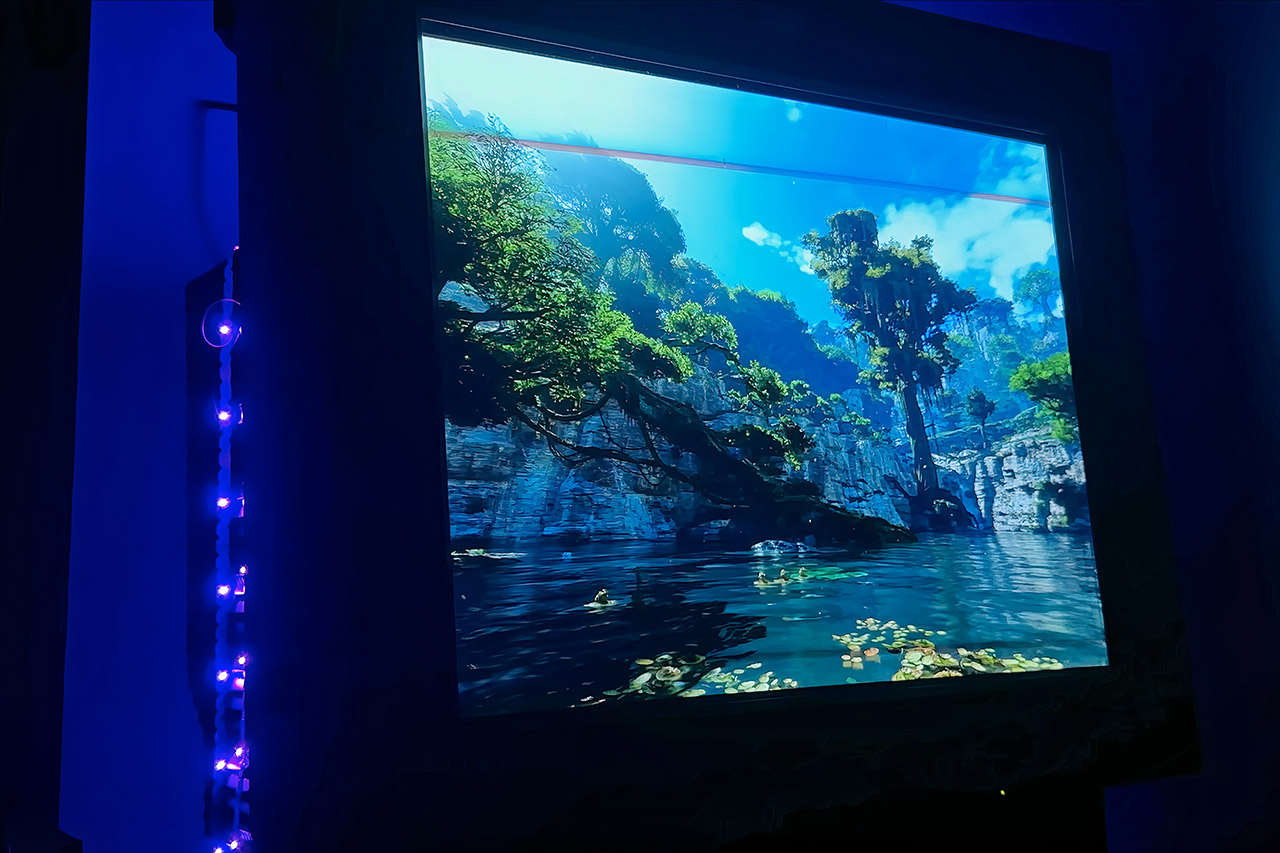
Gamers who remember the old days understand why CRT screens are so popular. Instant responsiveness to every command, no screen tearing, and images that feel alive in a way that newer flat screens cannot match. Found Tech has taken that magic and pushed it all the way to nearly 4K on something you wouldn’t expect, a dusty old IBM 275 monitor that’s been around since the turn of the century.
Found Tech began with a vintage IBM 275, which is roughly 20 years old and fairly strong for an office monitor constructed around a cathode ray tube. The problem is that modern graphics cards cannot generate the necessary signal to drive such high resolutions, therefore he relied on the “free” Intel graphics in his system. An RTX 4080 Super handled all the heavy rendering work while the Intel chip generated the final video feed. Custom Resolution Utility software let him dial in a 2880-by-2160 interlaced mode that standard drivers refuse to allow. After testing dozens of driver versions, the combination finally locked in.
Sale

LG 27UP650K-W 27-inch Ultrafine 4K UHD (3840 x 2160) IPS Computer Monitor, 60Hz, 5ms, DisplayHDR…
- Stunning Image Quality in 4K Display – The 27-inch UHD 4K (3840 x 2160) IPS display reproduces clear images and vibrant colors with up to 95% DCI-P…
- 4K UHD HDR – To more fully realize content creators vision, this monitor is compatible with VESA DisplayHDR 400 high dynamic range, supporting…
- Color Your World – Explore HDR content the way it was meant to be seen with up to 95% DCI-P3 color gamut expression—an elevated color spectrum that…
CRTs can support this high-resolution setup because they function differently than modern monitors. Instead of a set grid of pixels, a CRT projects an electron beam across a layer of illuminating phosphors. The beam may draw lines as close together as the signal desires, and at this very high density, interlacing concerns simply vanish. The impression is that the lines mix together so smoothly that it resembles progressive scan. The tube’s analog nature takes care of the rest, providing edges with a softness that digital sharpening cannot imitate.
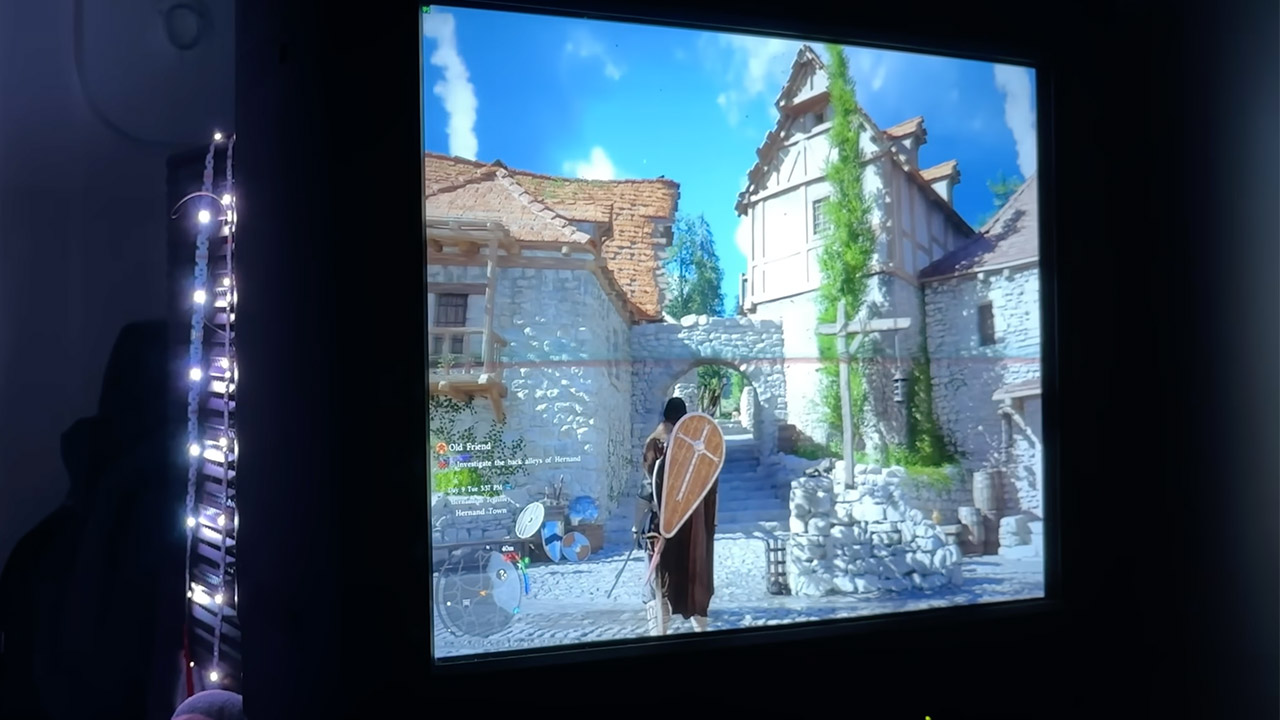
However, at this resolution, motion truly shines. LCD and OLED screens maintain each frame on the screen for a fraction of a second, resulting in a slight but consistent blur during fast panning and quick character movements, whereas a CRT lights up each phosphor for as long as the beam is over it and then fades away quickly. The result is incredibly crisp action, even with things racing across at full speed, and games feel much more immediate because you can see every frame just as the graphics card created it.
The depth is difficult to understand without seeing it for yourself, as the image looks to be sitting inside the tube rather than on its surface. Dark places remain pitch black, with no light leaking in. Bright highlights are super intense, and when speeding through the large open world of Crimson Desert at this resolution and 60 frames per second, the scenery begins to feel like it has depth and distance to it.
[Source]
