
These days, I think of Fitbit as the brand that tried to keep up with smartwatches—and slowly got absorbed into them. Ever since Google acquired the brand in 2021, Fitbit has struggled to define itself in an increasingly crowded wearables market. So when leaks of a Fitbit screenless fitness tracker started surfacing, my first reaction wasn’t surprise—it was relief.
Because instead of launching another smartwatch nobody really asked for, Fitbit seems to be going back to its roots—with a fitness tracker that’s rumored to be barely noticeable, like WOOP 5.0 and the rumored Garmin Cirqa. In other words, back to what made the first Fitbits popular in the first place.
A Leak That Confirms the Fitbit Screenless Fitness Tracker
Over the past few weeks, multiple signals have pointed toward a new Fitbit wearable with no display.
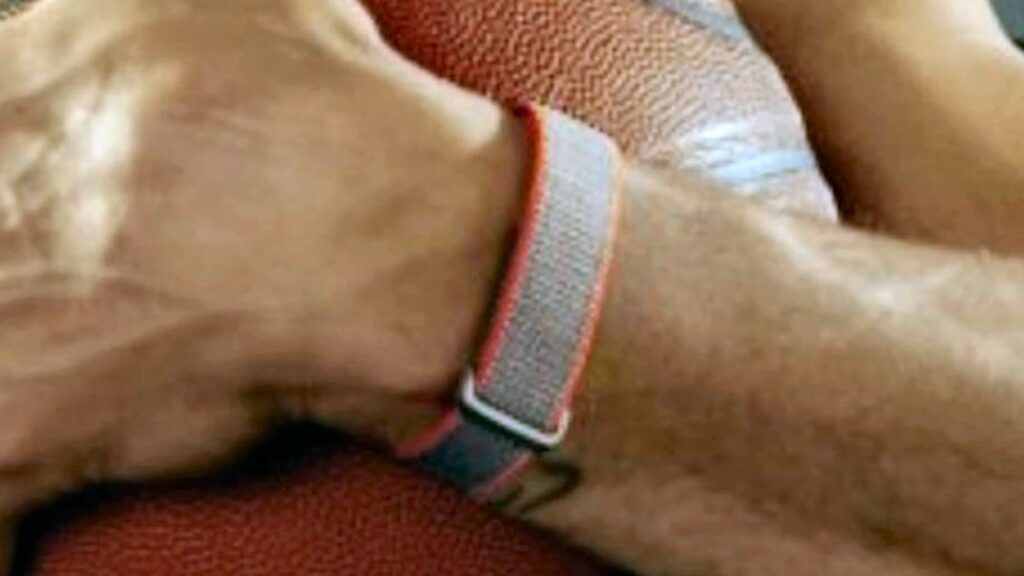
A teaser featuring NBA player Steph Curry showed him wearing a minimal band with no visible screen—it stood out immediately given Fitbit’s recent lineup.
There’s no official name yet, specs, or launch date. But the direction is clear: this is a passive fitness tracker designed to sit on your wrist and do its job quietly. Yep, we don’t have to worry about taps, swipes, or notifications
Fitbit Enters Screenless Fitness Tracker Space
What’s interesting is that Fitbit isn’t creating something entirely new here—it’s entering a category that’s been gaining traction.
Screenless fitness trackers have already been pushed into the spotlight by devices like Whoop, which focuses heavily on recovery and strain instead of smartwatch features.
Other brands have followed. Amazfit introduced the Helio Strap, and Polar has experimented with simplified tracking wearables. So Fitbit showing up now raises the obvious question:
Why now?
Why Fitbit is Shifting to a No Screen Fitness Band
Most wearables today try to do everything. Essentially, they’ve become digital Swiss Army Knives, tracking workouts, displaying messages, running apps. They can replace your phone—at least partially.
But somewhere along the way, that became too much. When people exercise, they want to be immersed in their run, climb, or weightlifting program—not checking another screen.
This Fitbit leak suggests a different approach: do less, but do it better. Instead of interacting with your device all day, the experience shifts to the app. The band collects your data—steps, sleep, recovery—and you check it when you choose to.
That’s a very different relationship with a wearable, and it feels overdue.
How Passive Fitness Tracking Devices Are Changing Wearables
If this direction sounds familiar, it should.
Fitbit originally built its identity on simple trackers—devices you clipped on or wore without thinking about. They tracked your movement, synced your data, and stayed out of your way.
In the Steph Curry Fibit teaser, I saw a modern version of that idea. Except now, the backend is far more advanced. Instead of basic step counts, we’ll likely get deeper insights—sleep cycles, recovery trends, and long-term health patterns—processed through the app.
So while the tracker hardware gets simpler, the data gets smarter.
The Bigger Shift: Less Screen Time, Not More
What makes this leak stand out isn’t just the product—it’s the timing. We’re surrounded by screens. Phones, laptops, watches. Even tools meant to improve our health have become another source of distraction—and stress.
A screenless fitness tracker changes that. There are no interruputions or notifications to check. People just wear the device and focus on their workout. The data? It’s collected quietly, in the background.
Of course, that won’t work for everyone. If you rely on quick glances for notifications or workout stats, this might feel too minimal. But for anyone focused on long-term health and recovery, it might actually be a better fit.
What We still Don’t Know About the Fitbit Leak
Right now, the biggest gaps are also the most important ones:
- Pricing
- Feature depth (especially recovery metrics)
- Whether there’s a subscription model
- How tightly it integrates with Fitbit’s existing app ecosystem
Those details will decide whether this becomes a serious competitor—or just an experiment.
Fitbit’s Screenless Tracker Could Mark a Reset
What it needed was clarity. And based on these leaks, that’s exactly where it’s heading.
A Fitbit screenless fitness tracker has the potential to remove the noise. And in a category that’s been getting louder every year, that restraint feels like the real upgrade.
Lauren has been writing and editing since 2008. She loves working with text and helping writers find their voice. When she’s not typing away at her computer, she cooks and travels with her husband and two kids.
