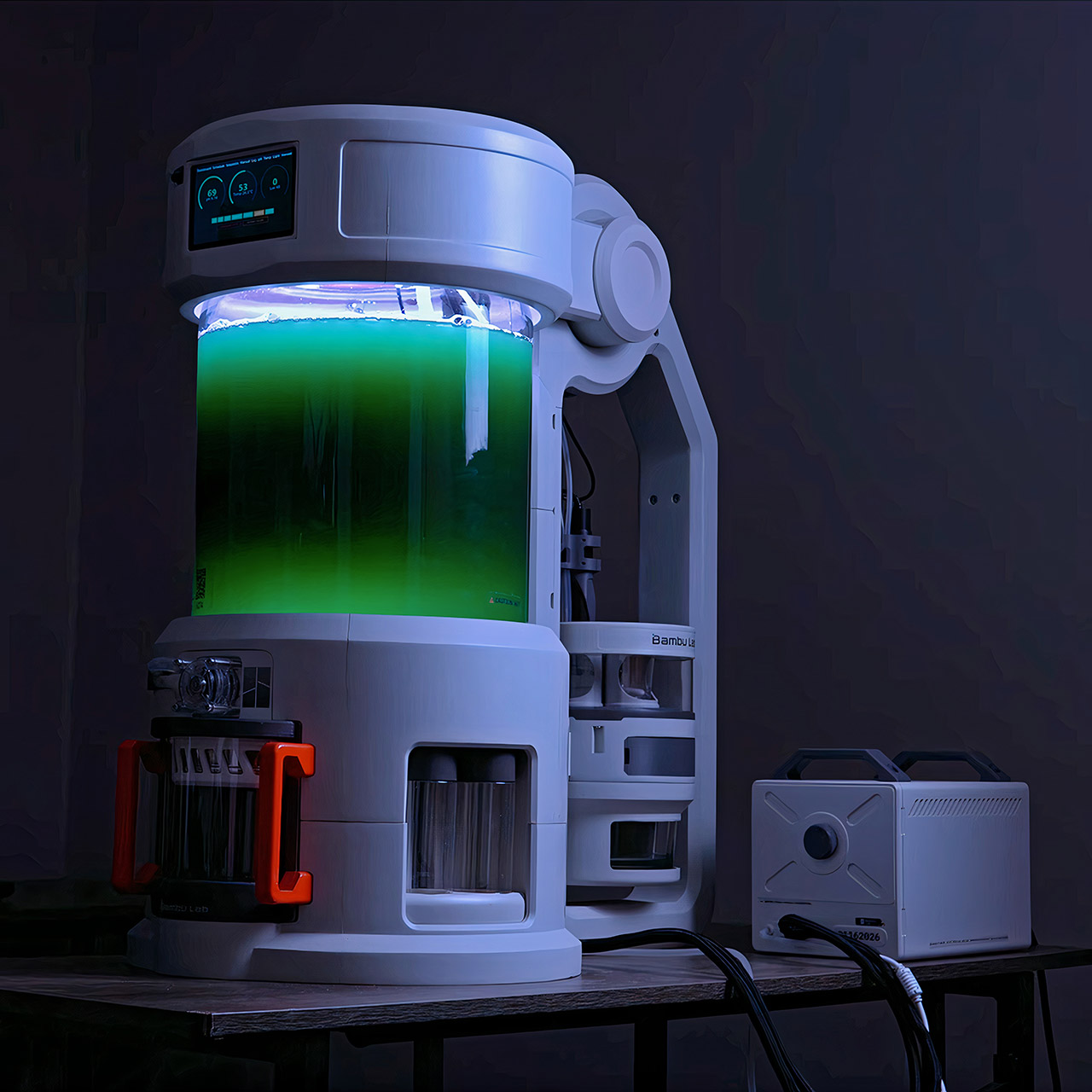
One builder showcases custom-built photobioreactor from start to finish, having printed the majority of its components on a conventional 3D printer sitting on a work surface. The final machine simply sits there silently day after day, converting water and light into useable biomass without the need for anyone to pay attention to it.
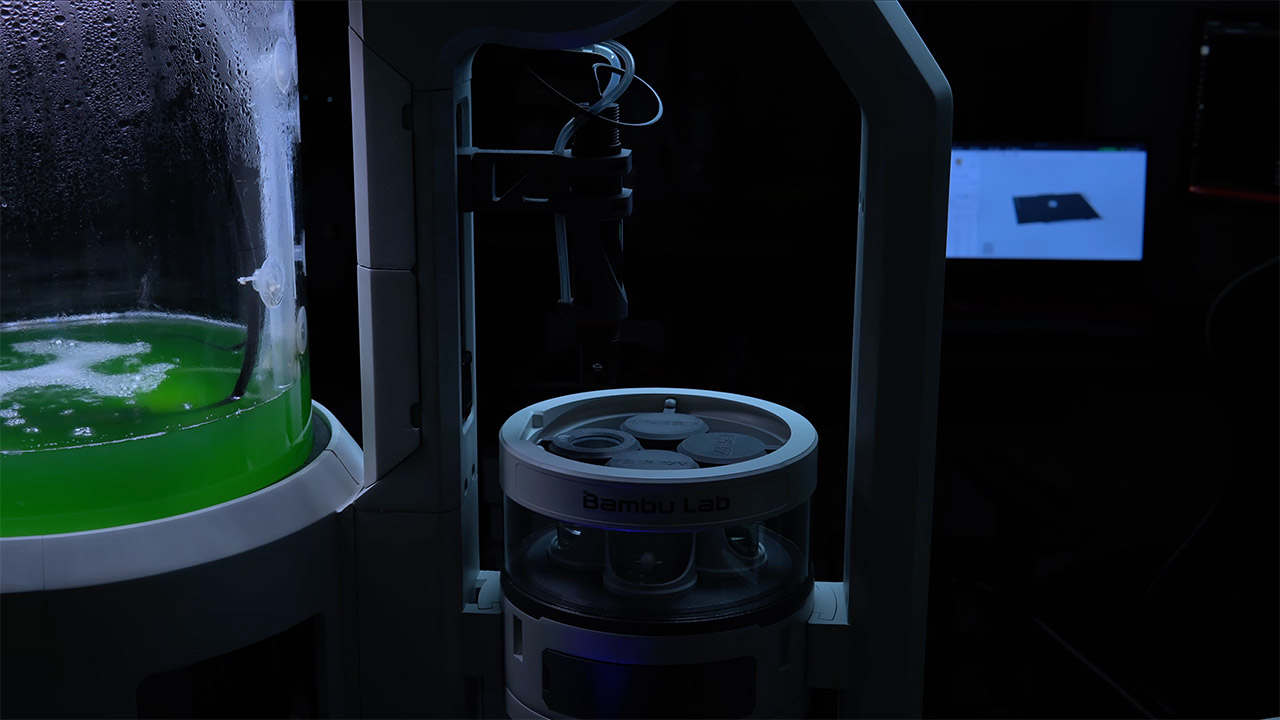
Spirulina fills the main chamber since the design ensures a consistent temperature, light, and air supply around the clock. A small initial amount of culture, roughly a gallon, expands over the next few weeks when fresh water and nutrients are introduced. The light enters from the sides, and there’s an air bubbler to keep everything mixed up and full of oxygen. Sensors are on the job, keeping an eye on things to ensure that the algae has enough to grow and reproduce swiftly, providing a few grams of dried biomass per week after the culture is fully established.

Bambu Lab A1 3D Printer, Support Multi-Color 3D Printing, High Speed & Precision, Full-Auto Calibration…
- High-Speed Precision: Experience unparalleled speed and precision with the Bambu Lab A1 3D Printer. With an impressive acceleration of 10,000 mm/s…
- Multi-Color Printing with AMS lite: Unlock your creativity with vibrant and multi-colored 3D prints. The Bambu Lab A1 3D printers make multi-color…
- Full-Auto Calibration: Say goodbye to manual calibration hassles. The A1 3D printer takes care of all the calibration processes automatically…
Things begin with the Bambu Lab A1 printer laying down thermoplastic layers for the frame, tank supports, and custom fittings. Large pieces come together quickly due to automated calibration and the printer’s rapid speeds. The printed parts fit together nicely and snugly, requiring little more than a touch of tidying before assembling the entire device. Off-the-shelf pumps, lighting, and tubing are then inserted into the plastic skeleton, changing it into a sealed environment that retains the liquid inside without leaking everywhere.
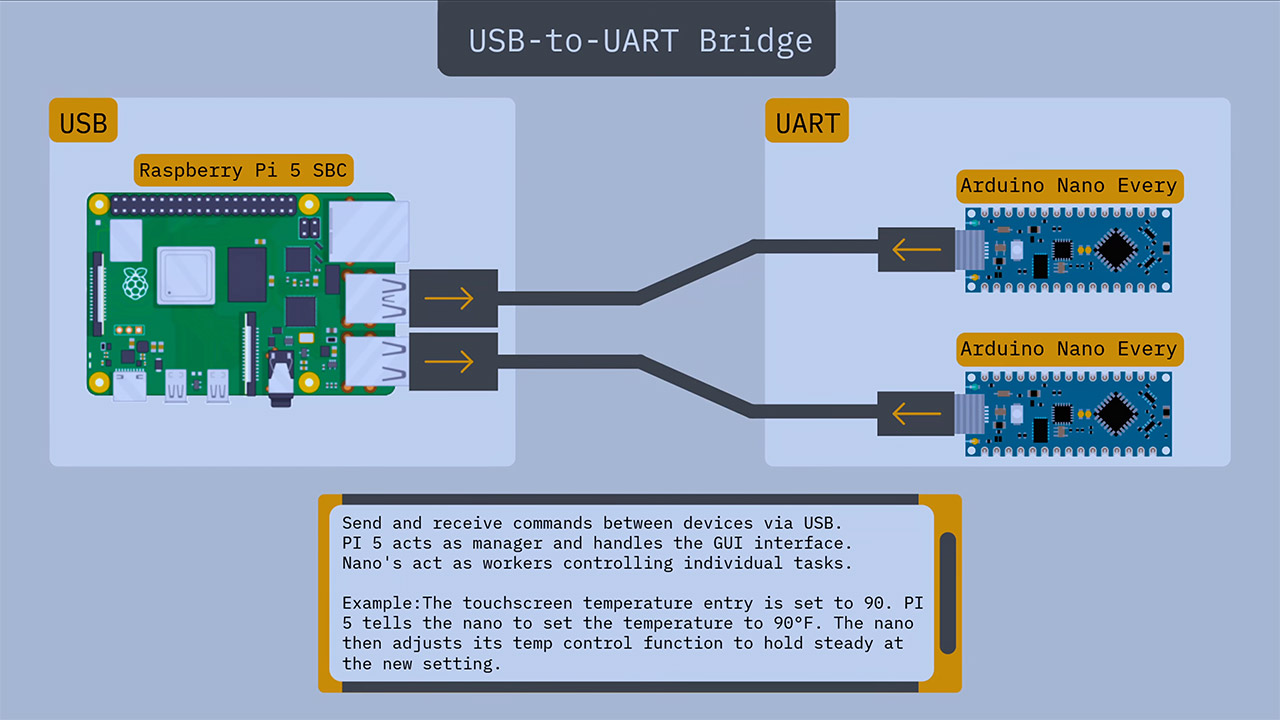
When everything is more or less upright, the electronics take over. A Raspberry Pi 5 serves as the main controller, with two Arduinos acting as task specialists. One Arduino is responsible for running the lights, heating, and bubbler on a regular basis. The second only handles the automated sampling procedure, which checks the acidity levels without allowing the sensors to run dry or deviate off course. A series of USB wires transmit basic text commands back and forth to keep the entire arrangement in sync.
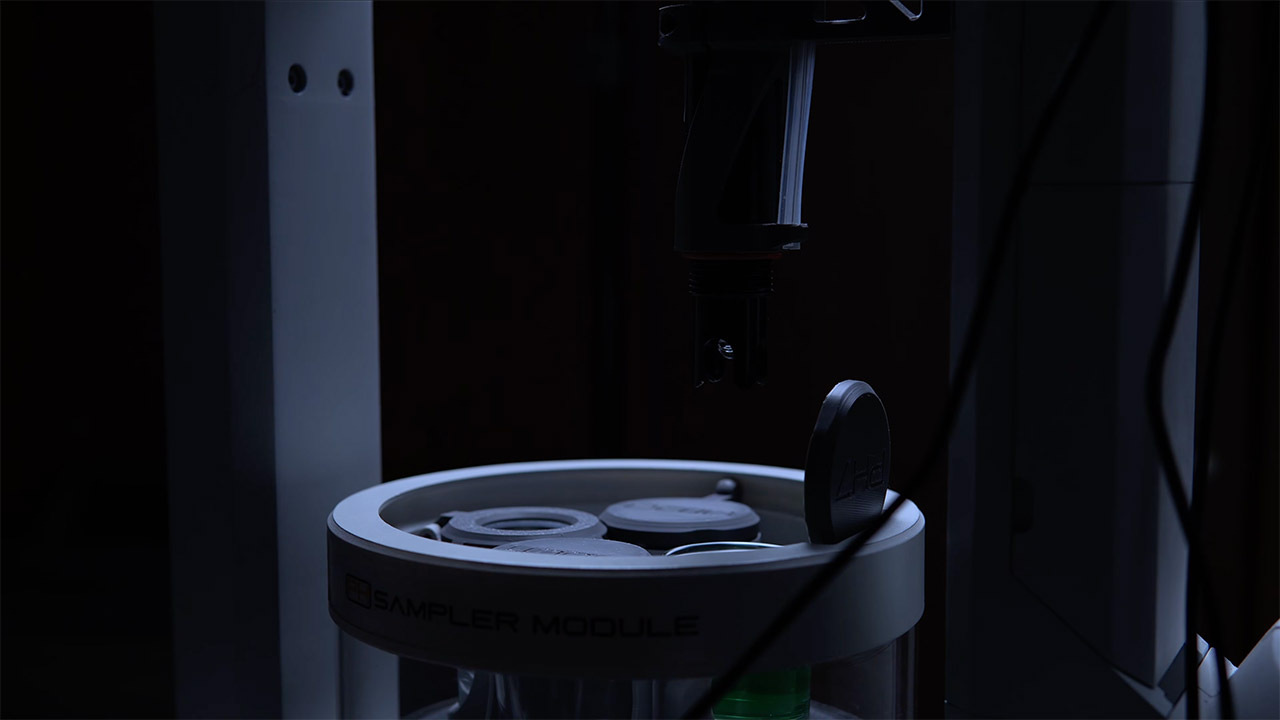
Measuring pH is particularly difficult since the probe must remain wet and clean between readings. So there’s a small rotating part that removes the lids off the storage vials, rinses the sensor in deionized water, and then moves it to grab a sample from the culture before returning it to the vial. A spinning pill inside a silicone tube attached to magnets to provide gentle stirring and minimize residue buildup. As a bonus, the same motion shuts up the vial, preventing evaporation. This all runs on its own tiny schedule and logs each outcome in case somebody wants to look it up later.
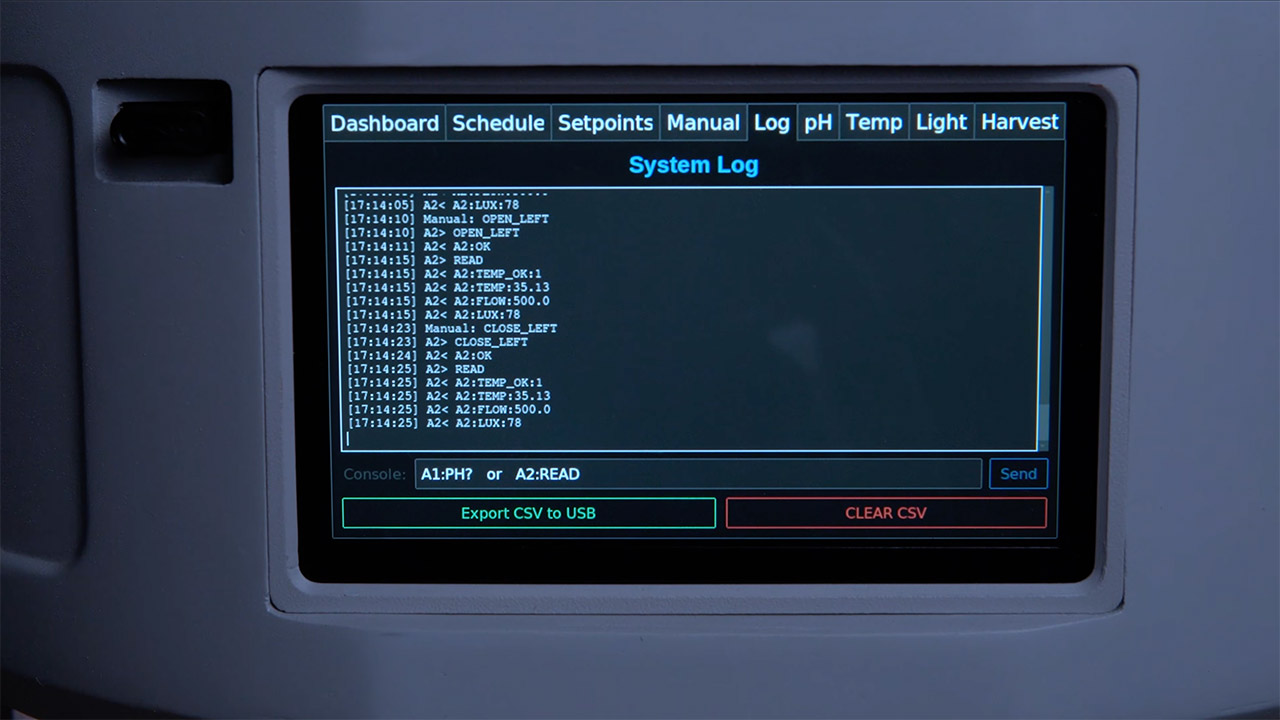
Data appears on a touchscreen that looks like a control panel. At a glance, graphs indicate how light intensity decreases at the bottom of the tank as algae density increases and blocks more light. The temperature readings are always displayed directly in front of you. When harvest time approaches, when the light curve finally flattens out, signaling peak concentration, the system drains a section of the culture, filtering out the good stuff while allowing the remainder to continue growing. Once harvested, the material is spread out on trays, dries in a few hours, and is pulverized into a fine green powder that can be stored or used immediately as fish food.
The biomass yield is currently around eight grams per week, which is sufficient to support a small aquaponic setup and reduce the need to purchase as much feed. Dried spirulina can also be stored for up to two years, providing a shelf-stable protein source right from your own backyard. And when your algae feed your fish, your fish waste fertilizes your plants, and your plant trimmings return to the algal culture, the entire system just keeps cycling round and round without any external assistance. Once the first culture is established, there is no need for additional inputs.
