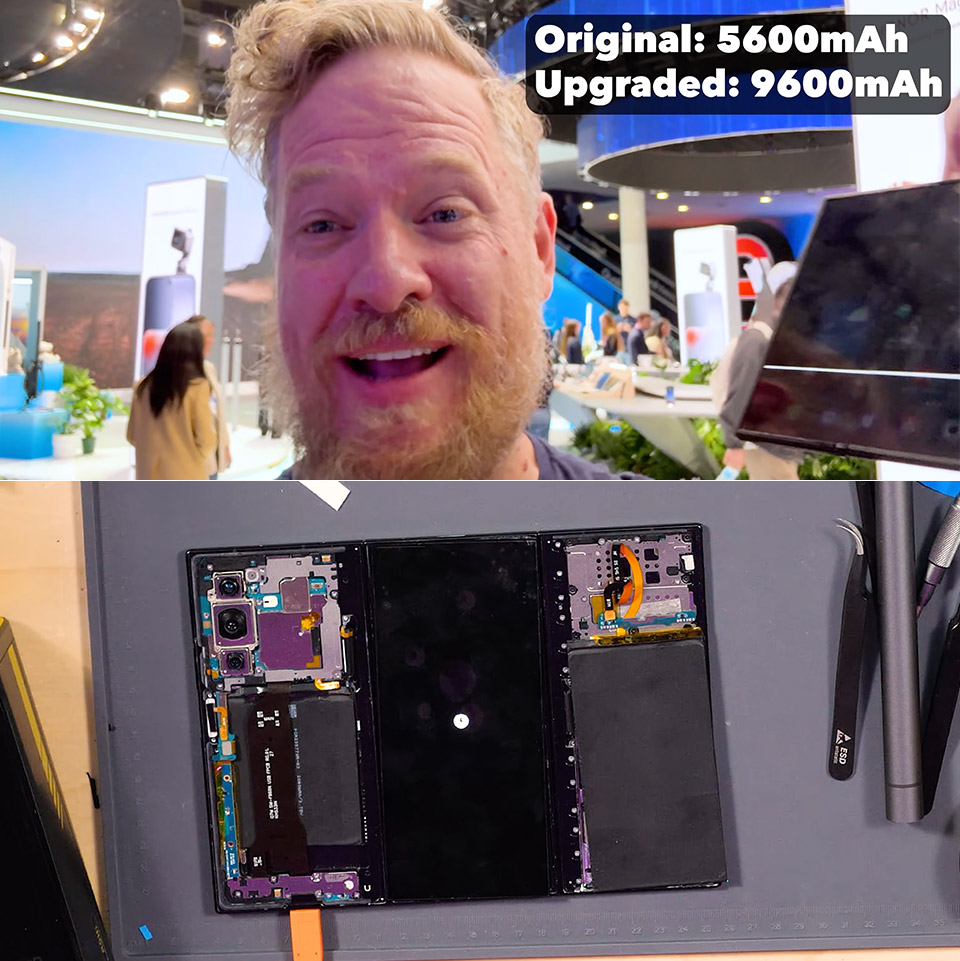
When Honor approached hardware hacker Scotty Allen of Strange Parts about showcasing their new silicon-carbon battery technology, they probably expected a standard teardown video. What they got instead was a wild international adventure spanning Shenzhen’s gray markets, a last-minute sprint to the airport, and a Samsung Galaxy Z Trifold, one of the most elusive phones today, getting its internal components completely rearranged.
The premise involved taking Honor’s next-generation silicon-carbon batteries, which the company was debuting at Mobile World Congress in Barcelona, and transplant them into Samsung’s triple-folding phone. Yes, the $2,899 consumer phone that is currently sold out in the United States.
Sale

Samsung Galaxy Z Fold7 Cell Phone, 512GB AI Smartphone, Unlocked Android, AI Photo Edits, Large Screen…
- BIGGER, YET SLIMMER THAN EVER: Who would’ve guessed that wider could also be lighter? The design of Galaxy Z Fold7 is refined to feel like a…
- BEST CAMERA ON A FOLD YET: You asked for more – now you can have the most. Galaxy Z Fold7 now boasts an ultra-premium 200MP camera with Pro-Visual…
- SCREENSHARE FOR STREAMLINED ASSISTANCE: Intrigued by something you see? Go Live with Google Gemini, then screenshare or point your camera at it for…
The Samsung Galaxy Z Trifold is only available for purchase in Singapore, the UAE, mainland China, and Korea. So, therefore, the next step was to board an aircraft to Shenzhen, China’s huge electronics manufacturing powerhouse, and hit the marketplaces. What followed was a wonderfully chaotic sequence of ATM runs (the machines cap withdrawals at 3,000 RMB, necessitating multiple trips), visits to storefronts with exactly one non-purchasable display model, and eventually a slightly ambiguous cash deal with a vendor whose inventory source remained unknown.
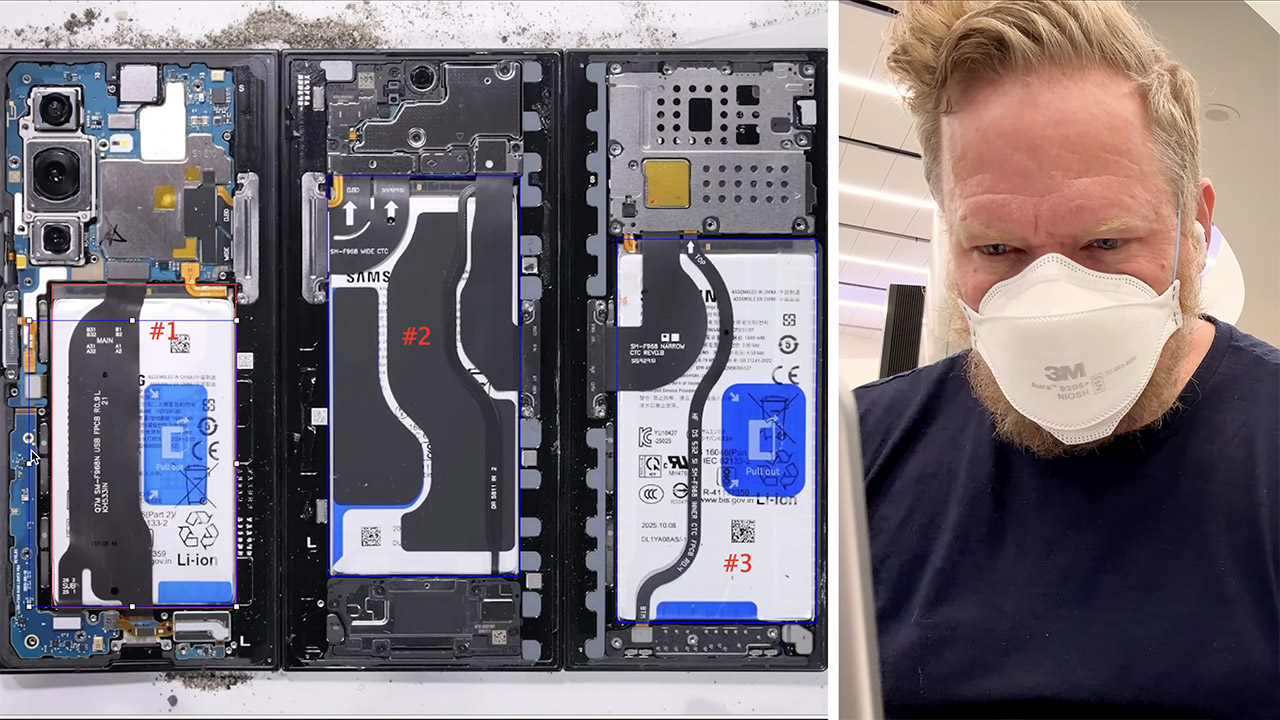
Armed with the phone, a disassembly reference video from JerryRigEverything, and tools from the famed Tool Brothers booth situated behind the McDonald’s on Shenan Boulevard, a Shenzhen staple, the real work appears to have begun. It turns out that the Honor batteries were physically wider than Samsung’s originals, by a significant margin, so simply swapping them in was never a possibility.
Precise machining was required to accommodate the larger cells, which meant that the phone’s interior chassis would need to be carefully and systematically chiseled out. The hinges, cables, and speaker locations all have to be considered. One miscut transforms a $3,000 phone into very costly modern art.
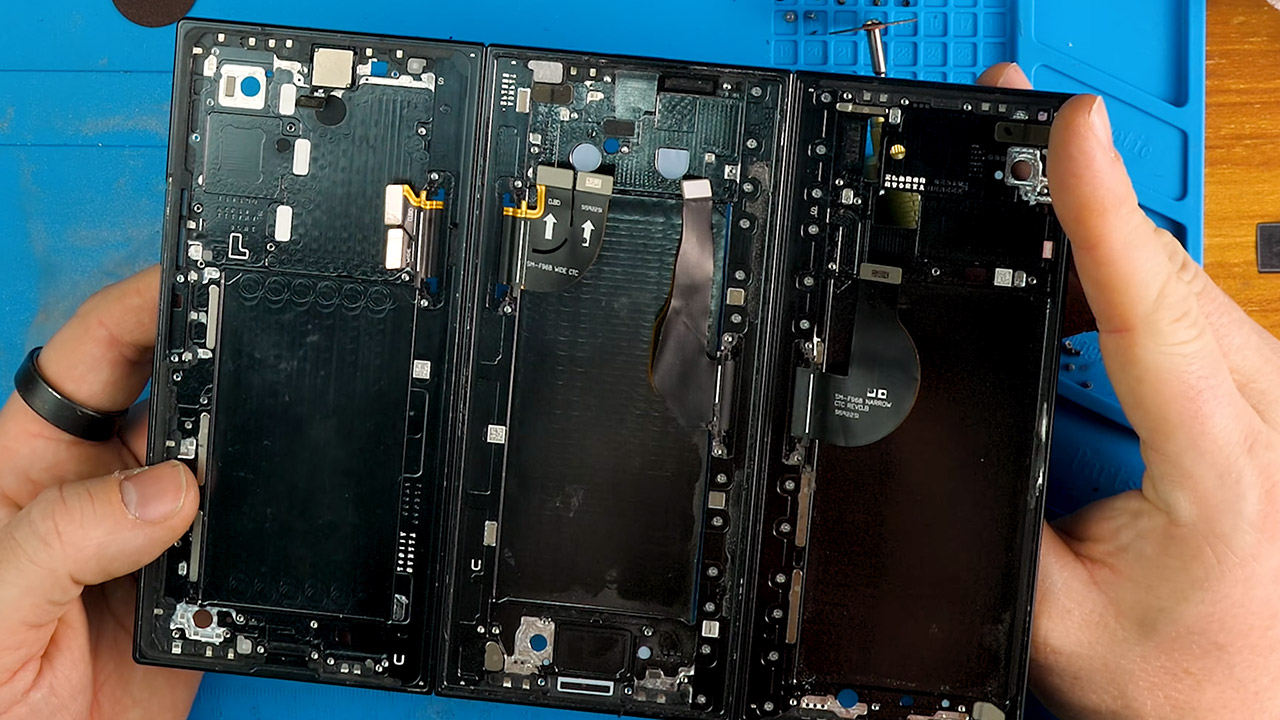
The process of getting there included having the phone parts 3D scanned by an external service (the same technique used previously on an Apple Watch mod), designing the cutouts in CAD, prototyping with 3D prints to ensure fitment before committing to metal, and then milling out the actual aluminum chassis on a CNC machine. In a useful piece of hardware hacking advice from Xbox modding veteran Bunny Huang, always have one unit to break, one to change, and one to retain intact for reference. Predictably, the first phone’s screen cable was sliced during disassembly.
The Honor silicon-carbon cells are not as simple to replace as iFixit replacement parts. Each battery has its own Battery control System (BMS), which manages charge protection, discharge limitations, heat control, and communication with the host device. To make this work, the Samsung BMS boards had to be meticulously desoldered from the original cells and spot-welded to the Honor cells, so the phone’s charging circuitry wouldn’t notice the change. A $30 USB-C spot welder from a Shenzhen market stall completed the task.
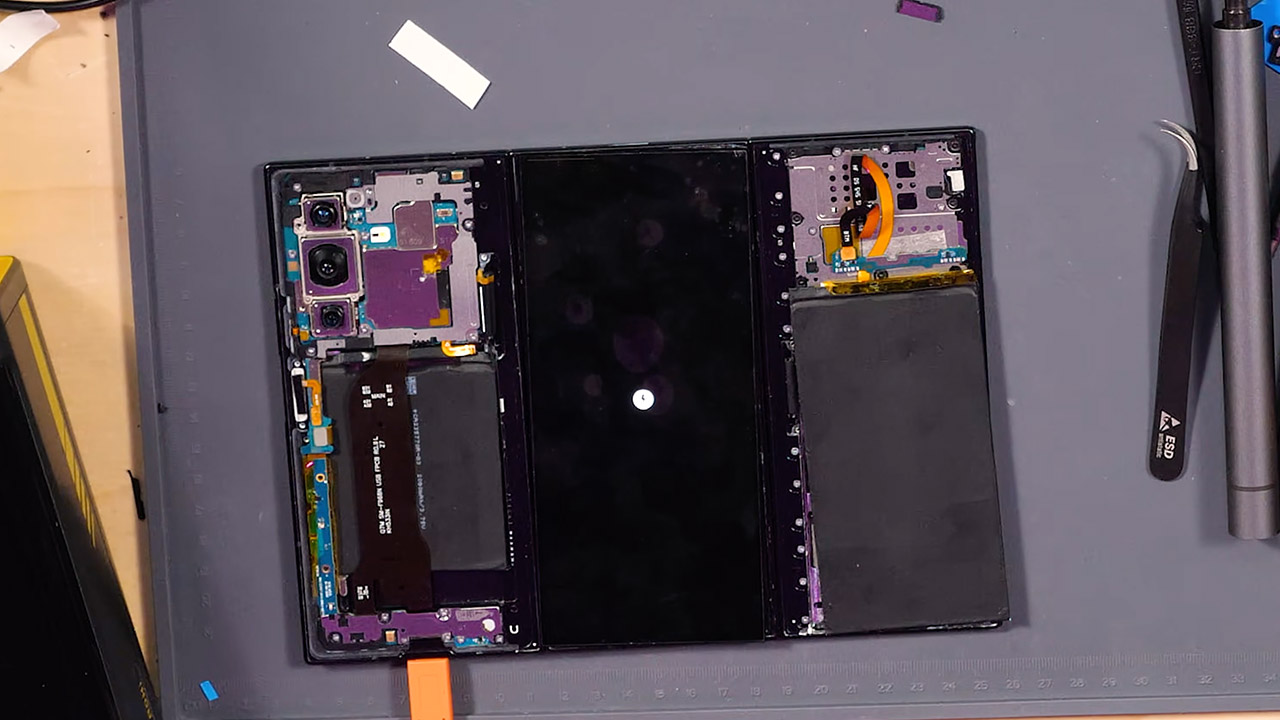
After some nerve-racking moments, a seemingly dead phone that only required 10 minutes on a charger, and a middle battery that first refused to cooperate, all three cells were converted and the phone booted clean. The entire battery pack was now powered by Honor silicon-carbon chemistry.
However, getting everything back inside the phone presented its own set of engineering challenges. In order to free up room, the bottom speaker had to be removed. One of the hinges lost a spring during the alterations, making it noticeably floppier. Even under the greatest conditions, folding phone screens are notoriously delicate. Despite careful handling, they continue to find new and innovative ways to sustain mysterious damage. By the end, there was noticeable cosmetic damage, some tape to keep everything together, and only 15 minutes to board a flight to Barcelona.
