When you’re in academia, reading research papers is part of everyday life — at least it is supposed to be. You may be working on a paper or thesis and want to do a thorough literature review. Or you may just want to catch up with your area of interest. These scholarly works are written for specialists, with dense language that makes regular reading a challenge even when the topic is familiar.
Yet, there’s a bigger, more common problem.
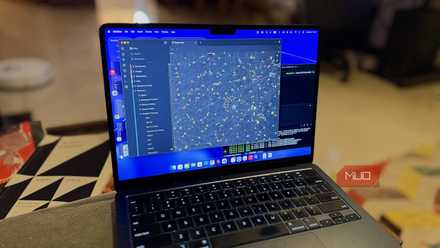
I hooked Obsidian to a local LLM and it beats NotebookLM at its own game
My notes now talk back and it’s terrifyingly useful.
I was saving papers more than I was understanding them
My “read later” system was doing all the reading

I’m sure most people working in academia have either a messy Google Drive folder with hundreds of papers or a Zotero library that feels vaguely familiar after a few months. Every time you come across something you think you love, you download the paper or add it to Zotero or Mendeley. But this rarely translates to actually reading them. It’s not that we try. There are larger issues at play.
For one, research articles are not in the most accessible format. You can either download them as a PDF or access the web page to read them. Neither of these options is really great for comprehending complex concepts and ideas on the go. Anyone who has tried reading a paper during a commute knows the feeling. Even when you try your best to organize your papers based on titles, tags, and categories, you end up with a huge number of saved papers that you haven’t fully read.
I was fed up with this unproductive routine and decided to give NotebookLM a try.
I tried NotebookLM without expecting much
Another summarizer, I thought—until I hit play.
I am not new to NotebookLM and its potential for research assistance. Yet, I will admit that it took me some time to integrate the Audio Overview feature of NotebookLM into my academic research itinerary. Honestly, I was not really sure whether NotebookLM would be an effective choice for this purpose. I have tried multiple AI summarizers before, but most of these tools essentially compressed the text, without doing much to help me understand the core ideas or concepts.
However, the NotebookLM experience felt genuinely different.
Creating an audio summary with NotebookLM was straightforward. I created a notebook and uploaded the paper’s PDF to understand it better. Then I clicked the Audio Overview button in the right pane, and the summary was ready in a few minutes! I could either download this audio file or listen to it directly from my smartphone. Now, ease of use is great, but I first wanted to see whether NotebookLM does justice to the paper’s content and arguments.
I ran multiple research papers through NotebookLM’s audio overview feature, and I got authentic, impressive summaries I would actually listen to. Unlike the text-based summarizers I had tried before, the overviews from NotebookLM were more focused and understood the paper’s core argument. This is something important when you are trying to decide whether you want to include this in your work or make it part of a literature review.
This experience helped me set up a pipeline for going through research papers.
Listening to papers changed how they fit into my day
Research moved into the gaps instead of demanding a slot

As I mentioned earlier, once you create an audio summary in NotebookLM, you can access it in a couple of ways. You can either download the file or access the audio overview in the Android or iOS NotebookLM apps. Both options allow me to read a research paper without being in front of a large screen. It also meant that I could accommodate this research activity into more flexible schedules. This approach has changed the way I read papers.
The flexibility meant I could listen to a research paper while commuting or during the time between lectures. Instead of trying to find a 2-hour window solely for reading papers, I could use my free time to get the task done. This passive listening style was great for improving retention, and I seemed to understand the core arguments better than when skimming a paper. Not having to stay focused on a screen led to less visual strain.
The customization options from NotebookLM’s audio overviews also help me in this regard. You can choose a couple of factors when creating an overview. You can choose between multiple modes, such as brief, deep dive, critique, and debate, and I get to do it depending on the work that I am trying to understand. If I come across a particularly significant paper, I could also ask for a more detailed overview with custom instructions.
Overall, the experience has been several times better than adding dozens of papers to Zotero every week and barely reading one of them. However, I should mention that Audio Overviews aren’t perfect. For instance, complex tables, equations, and graphs from research papers aren’t always properly translated to audio. I haven’t run into this issue, since I mostly read articles in the arts and humanities, but STEM research papers may face trouble.

- OS
-
Android, iOS, Web-based app
- Developer
-
Google
- Pricing model
-
Free
Audio becomes the filter, not the replacement
I want to make something clear. The audio overviews you create aren’t going to replace the insights you get when you go through a full paper. The point of this workflow is not to replace actual reading with NotebookLM either. Instead, I recommend using audio overviews as an effective filter to decide whether you should spend more time on an article. Here’s an example.
Let’s say that you came across close to 50 articles for your literature reviews. Reading all these articles individually is not a good way to spend your time, and you may not even need all of them for your actual work. The idea would be to listen to the audio overviews of all these articles, get to the core understanding, and then use those insights to filter out the papers you actually need. This way, you are not wasting a lot of time while still making sure you are grabbing the argument from the right papers.
At the end of the day, you are making the best use of your idle time, and you don’t have to worry about dedicating entire days or weeks to reading research papers!
