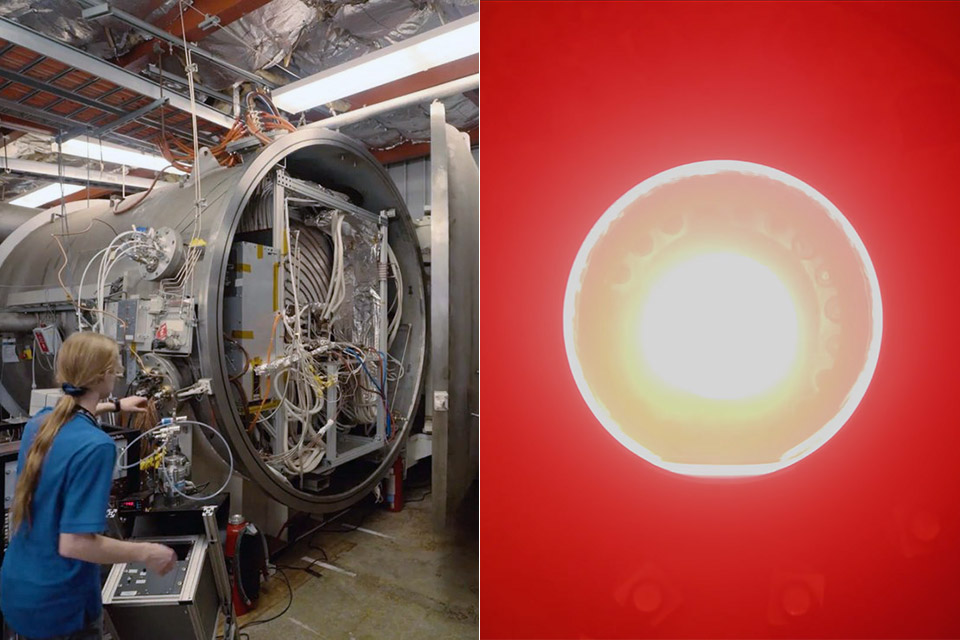
Engineers at NASA’s Jet Propulsion Laboratory gathered around a special 26-foot vacuum chamber in February of last year to witness a prototype engine fire five times in a row. The temperature within that device skyrocketed, exceeding 5,000 degrees Fahrenheit, with a center tungsten electrode burning a brilliant white and an outer nozzle spewing out an astounding crimson stream of lithium plasma into the void of space.
Those short bursts of fire boosted the engine to a clean 120 kilowatts, a level not even the most powerful US-built electric propulsion system had ever achieved. High voltage electric currents rip through lithium vapor inside the engine, interact with a magnetic field, and suddenly the plasma blasts out of the nozzle at a breakneck pace. It everything works together to provide you with a consistent thrust without any flames or explosions, just a smooth and continuous push that accumulates over months or even years in space. The lithium works so well for the job because it ionizes cleanly, can run on lower voltages than other choices, and allows the system to pack a big punch into a small space once everything is scaled up.

LEGO Technic NASA Artemis Space Launch System Rocket Building Toy for Boys & Girls – STEM Learning…
- BUILD AN OFFICIAL NASA ROCKET – Kids prepare to explore outer space with the LEGO Technic NASA Artemis Space Launch System Rocket (42221) building…
- 3-STAGE ROCKET SEPARATION – Young builders can turn the hand crank to watch the rocket separate in 3 distinct stages: solid rocket boosters, core…
- STEM BUILDING TOY FOR KIDS – This educational rocket kit was created in collaboration with NASA and ESA to showcase the authentic system that will…
Senior Research Scientist James Polk from JPL is the driving force behind the operation, with assistance from his colleagues at Princeton University and NASA’s Glenn Research Center. They spent a long two and a half years planning and building the monster with funds from the space nuke propulsion program. Polk described the test as a “big stride forward” because they not only demonstrated that the engine works but also achieved their target power exactly as expected. The data acquired throughout those five test cycles is now being used to plan the next releases.
NASA has already tried electric propulsion on missions with a lot lower power outputs, such as the Psyche spacecraft. This one revolutionary design can deliver 25+ times more power than those units while utilizing only a fraction of the prop required for a chemical rocket. In general, these techniques will reduce fuel requirements by up to 90%, allowing spacecraft to launch much lighter and carry far more cargo or crew supplies.
Eventually, nuclear reactors will provide enough electricity to keep the thrusters going over extended distances. A mission to Mars, for example, will most certainly require 2-4 megawatts to get the entire crew there. Once this configuration is in place, the transits will be much shorter because the spaceship will be able to keep chugging along steadily for the entire journey rather than coasting for the majority of it.
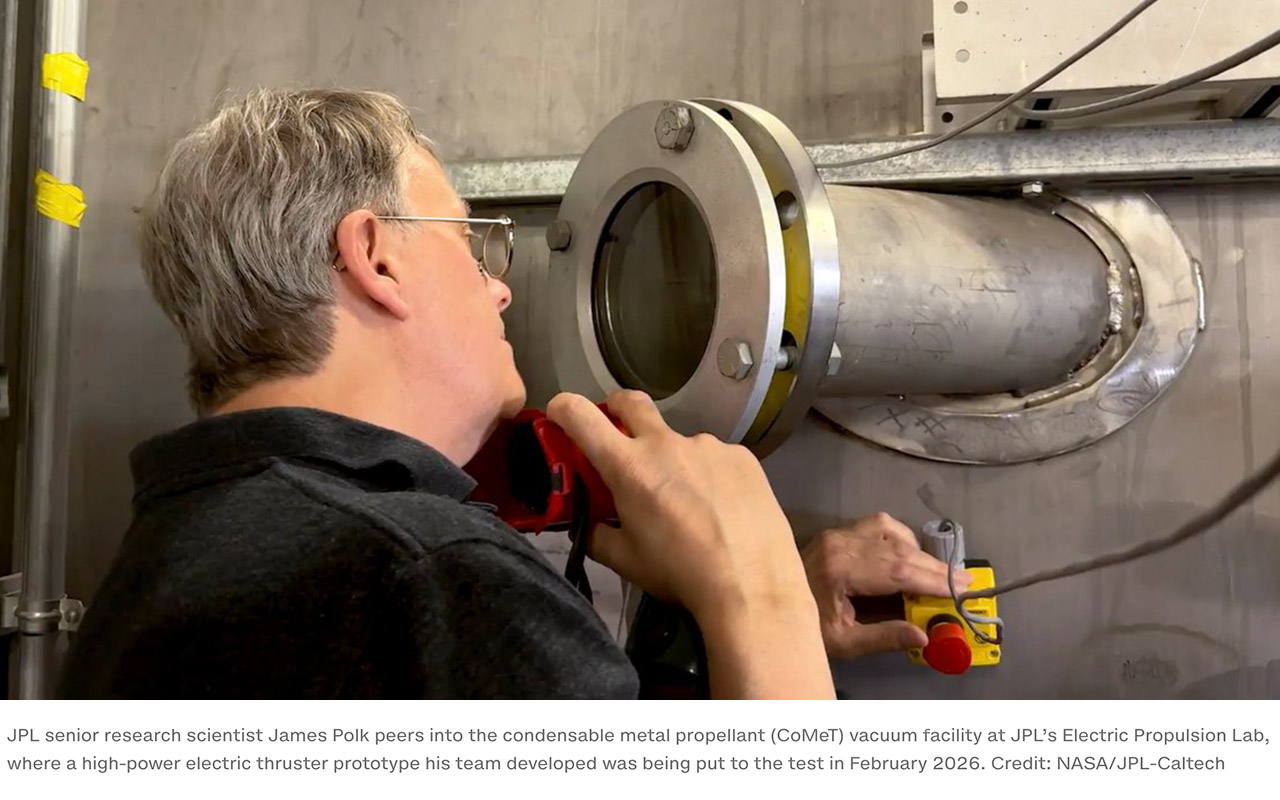
Of course, before any of this can happen, the team must first conquer a number of hurdles. The components must be able to sustain heat for thousands of hours without failing, and the engines must be capable of producing at least 500 kilowatts, if not more. The testbed they’ve set up in the vacuum chamber at JPL provides a strong foundation for them to address those difficulties one by one.
