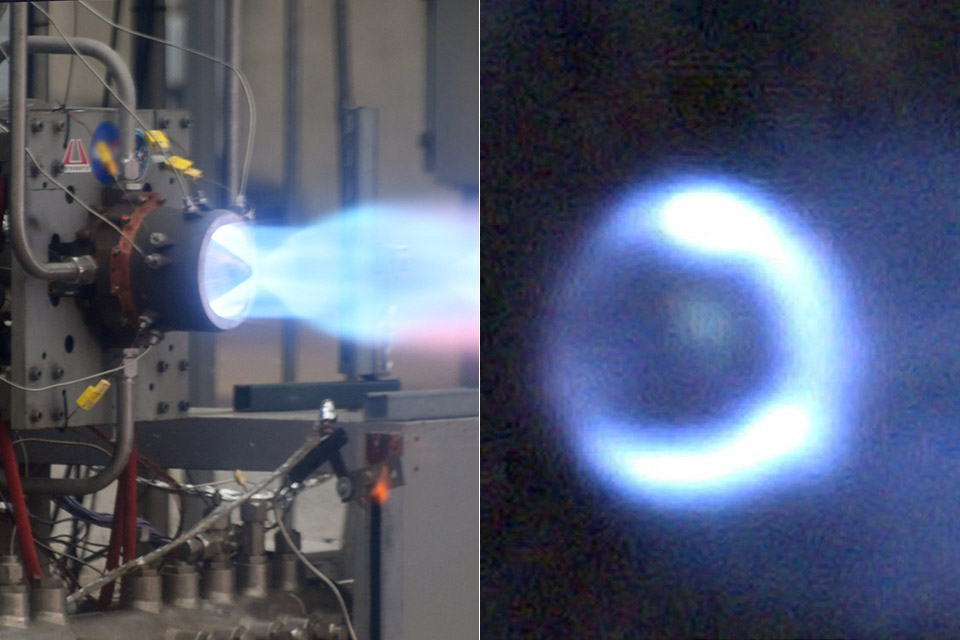
Astrobotic engineers went all out on their Chakram prototypes, doing a series of hot-fire tests that dwarfed anything previously done with this type of hardware. Two rotating detonation engines together clocked over 470 seconds of operation throughout eight runs at the Marshall Space Flight Center in Alabama, one of which lasted a whole 300 seconds without any hitches, and the entire time each engine delivered a solid 4,000 pounds of thrust as steady as can be.
These tests were conducted a few weeks ago and completed on a shoestring budget of just $1.5 million dollars. Every significant firing met the mark for a steady working temperature exactly, and when the crew disassembled the hardware for a thorough inspection later on, they couldn’t locate a single inch of obvious damage. This lot was put together by a small group of designers and builders with the help of two NASA contracts and a direct arrangement with the Marshall Center, and if you ask me, they’ve done far more than expected.

LEGO Technic NASA Artemis Space Launch System Rocket Building Toy for Boys & Girls – STEM Learning…
- BUILD AN OFFICIAL NASA ROCKET – Kids prepare to explore outer space with the LEGO Technic NASA Artemis Space Launch System Rocket (42221) building…
- 3-STAGE ROCKET SEPARATION – Young builders can turn the hand crank to watch the rocket separate in 3 distinct stages: solid rocket boosters, core…
- STEM BUILDING TOY FOR KIDS – This educational rocket kit was created in collaboration with NASA and ESA to showcase the authentic system that will…
Rotating detonation engines operate on a simple but powerful concept: mix your fuel and oxidizer in a ring-shaped chamber, fire it up, and then send a shockwave around in circles at supersonic speed, squeezing as much energy out of the propellant as possible. As a result, you get improved efficiency, lighter hardware, and the ability to carry a lot more payload or drive a long distance on one tank.
Astrobotic believes this technology will be very useful on its upcoming lunar landers, as the business has already contracted with NASA to send cargo to the Moon, and its next lander, Griffin, is scheduled to launch this year. Adding a Chakram engine to future landers could allow them to carry greater mass to the lunar surface or remain in orbit for longer periods of time. It also appears that the concept would fit in well with the company’s work on reusable rockets and orbital cargo ships that would transport stuff between Earth and Moon.
Next, the team plans to install regenerative cooling channels to allow the engine to run for longer periods of time without overheating. They’ll also work on a mechanism to adjust the thrust during flight, and as the design progresses, they’ll seek to trim it down and make it lighter. Each tiny adjustment brings them closer to using this technology in real-world space missions.
