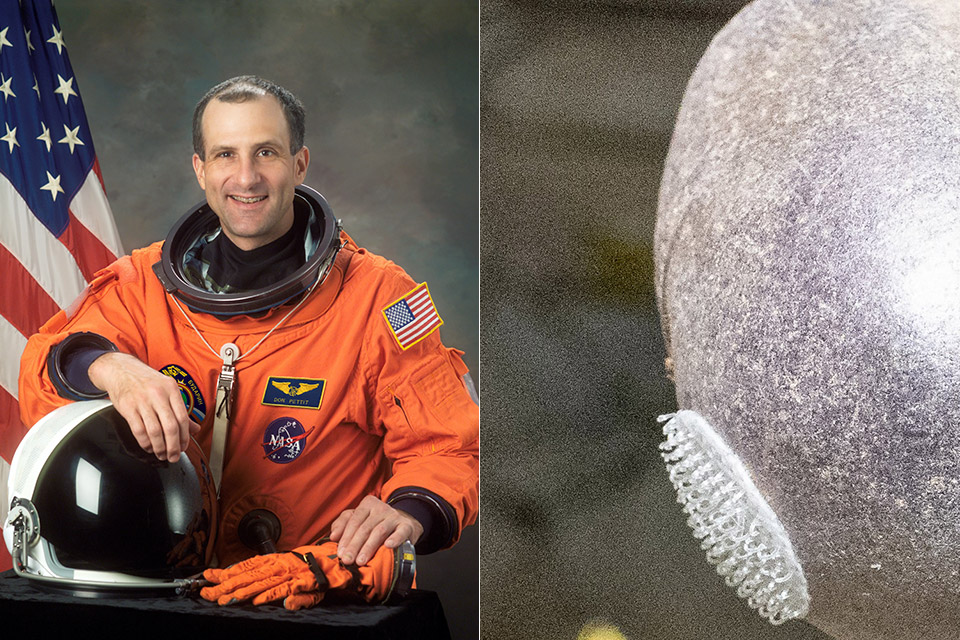
Photo credit: Don Pettit
During Expedition 72, NASA astronaut Don Pettit used his free time on the International Space Station to work on a quite interesting side project. He went ahead and coaxed an early purple potato to sprout in a small improvised garden he’d created on his own. He’d removed a bit of the tuber and placed it in a container with grow lights connected, fastening it in place with a small piece of Velcro. This simple system kept everything stable even as the station zoomed around the Earth.
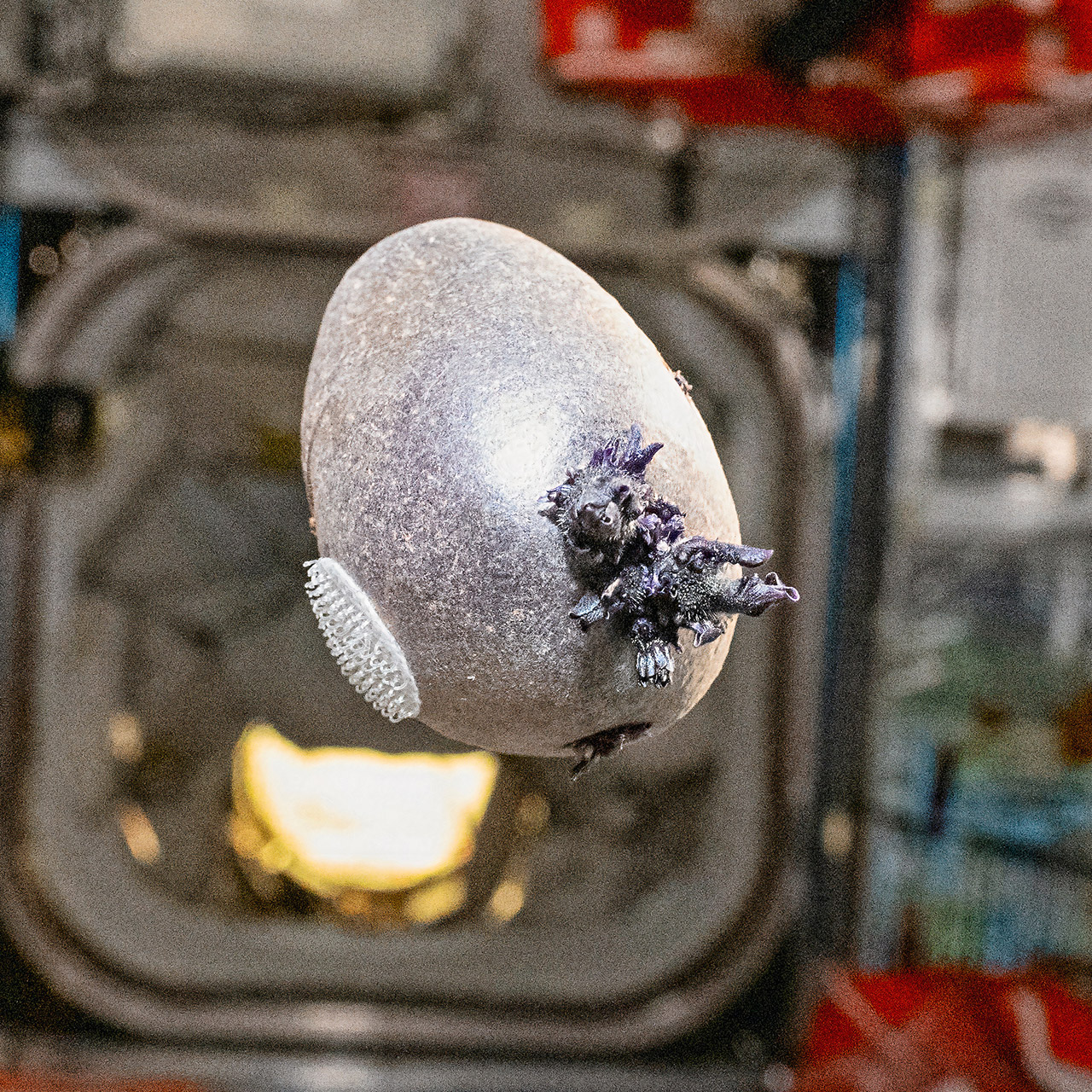
The potato had smooth purple skin and had grown into an oval form about the size of a huge egg. There were tiny little tendrils shooting out in all directions, looking like pallid threads snapped in mid-stretch. No dirt was visible on any of the surfaces. The photograph quickly went viral, and people went crazy in the comments section, asking all kinds of questions. Some wondered whether it was some unknown organism that had suddenly surfaced floating in space, while others compared it to some of the props seen in sci-fi films.
Sale

LEGO Technic Planet Earth and Moon in Orbit Building Set, Outer Space Birthday Gift for 10 Year Olds…
- Interactive model – Inspire kids to build a representation of the Earth, Sun and Moon in orbit with this LEGO Technic Planet Earth and Moon in Orbit…
- Educational space toy – Kids can turn the crank to see how the Earth and the Moon orbit around the Sun
- Includes months and moon phases – This solar system toy includes printed details, like the month and moon phases to help kids see how the Earth’s…
Pettit ended up naming his little specimen Spudnik-1 and explaining to everyone what they were looking at. He got the idea from a story about a lone explorer who had to cultivate potatoes on Mars to survive. This was just his own personal experiment to explore how a familiar food like a potato would behave far away from home.
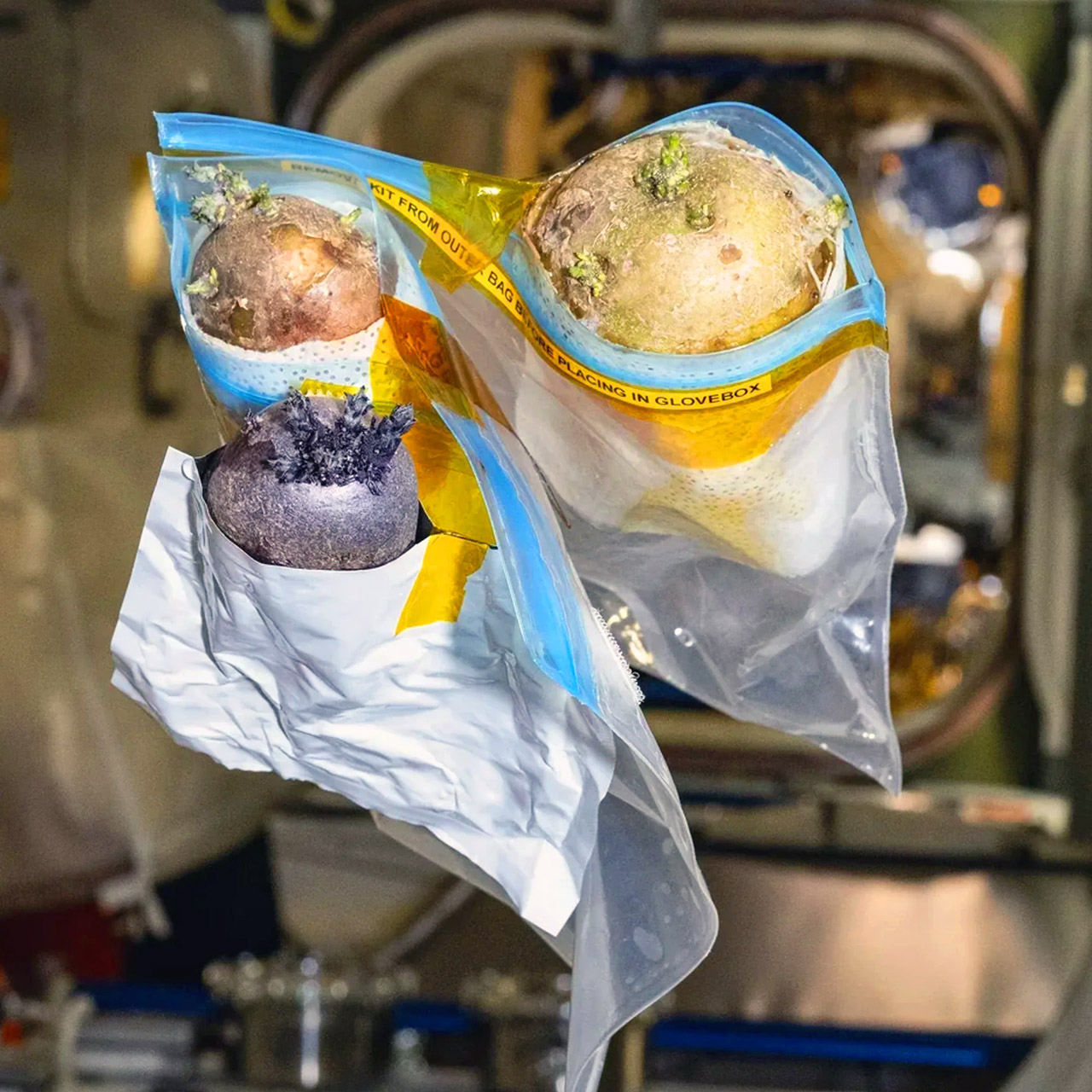
Microgravity changes everything about how a plant develops. Roots do not reach downward the way they would on Earth, instead spreading outward in every direction at once in search of water and nutrients. Shoots behave the same way, scattering rather than growing in a straight line upward. The whole plant takes on a loose, sprawling form that looks nothing like what you would find in a tidy garden back home. Growth is also slower than usual, since without the constant pull of gravity there is no physical stress on the living tissue to drive development forward.
Then there’s the fact that there’s no soil, so the potato skin remains smooth and even under the constant light of the artificial lamps, with no rough brown patches from hitting the earth. Moisture and light are properly metered, but that is the extent of management. It’s all simply these minor adjustments to try to imitate the natural pull of gravity and the cycle of sun and rain that we take for granted on Earth.
NASA teams have been cultivating a variety of plants aboard the station for years, including lettuce, Chinese cabbage, mustard greens, kale, and zinnias, all of which have survived under relatively comparable conditions. Of course, every harvest is a joy because it means they can consume some real food instead of vacuum-sealed meals. Of course, they collect a wealth of information that helps them plan for longer-term expeditions to the Moon or Mars, when every piece of food they bring must serve several functions.
Pettit kept things simple by selecting a potato variety that naturally contains a high concentration of the exotic pigments that give it its deep purple hue. It just so happens that those same molecules can help shelter cells from radiation, which is a significant benefit for longer missions. After the picture went viral, he kept folks informed with some fairly simple updates. The Velcro held the tuber in place, the grow lights provided a consistent supply of electricity, and then, well, it all came down to being patient and keeping an eye on things.
[Source]
