Foldable cameras are historically neglected — only with the Galaxy Z Fold 7 did Samsung finally bring a 200MP camera sensor fit to match the Galaxy S26 Ultra to its top folding phone. Even then, the phone’s secondary cameras are closer in quality to a base-model handset like the Galaxy S26. Innovation from companies like Google and Motorola are starting to give Samsung a run for its money. The Pixel 10 Pro Fold offers a telephoto camera with a low resolution but a long 5x optical zoom length. Now, the Motorola Razr Fold is here with a standout camera characteristic of its own: all three of the Razr Fold’s rear cameras are 50MP sensors.
I’ve spent the last week snapping over 100 photos with the Razr Fold and the Galaxy Z Fold 7 to try and figure out which Android foldable offers the better camera hardware. As it turns out, that was harder than I expected. The Razr Fold’s larger pixels and higher-resolution secondary cameras certainly help it capture more detail, and Motorola puts an emphasis on high dynamic range and brightness. That’s usually a good thing, but it can occasionally be to the Razr Fold’s detriment. Meanwhile, the Galaxy Z Fold 7 camera system is more consistent, even if it’s less exciting.
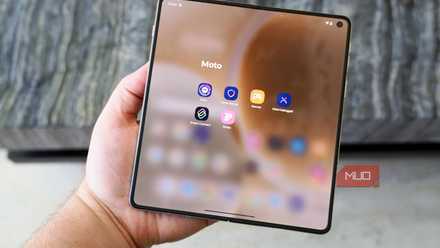
Motorola’s Razr Fold offers the one thing Samsung and Google foldables miss, at a lower price
Motorola finally told us the Razr Fold’s release date and price. It undercuts the Galaxy Z Fold 7 while offering a feature Samsung just removed.
Let’s take a look at Razr Fold and Galaxy Z Fold 7 photo samples so you can decide for yourself which foldable camera you prefer.
In the photo comparisons and galleries below, the left image was captured with the Motorola Razr Fold and the right image was captured with the Samsung Galaxy Z Fold 7.
How the specs compare
Samsung and Motorola clearly had different priorities

First, let’s review the specs. The Samsung Galaxy Z Fold 7 packs a 200MP main camera with an f/1.7 aperture, 0.6µm pixel size, and 1/1.3-inch sensor size. The comparable Razr Fold sensor is only 50MP, but offers an f/1.6 aperture, larger 1.22µm pixels, and a 1/1.28-inch sensor size. In other words, while Samsung offers more pixels, Motorola provides larger ones. This allows the Razr Fold camera to take in more light and provide more detail before pixel binning.
The secondary cameras are clear ticks in favor of Motorola. The Razr Fold has a 50MP ultrawide camera with a 122-degree field of view and a 50MP telephoto lens with 3x optical zoom support. Meanwhile, the Galaxy Z Fold 7 gives you a 12MP, 120-degree ultrawide camera. It also has a 10MP, 3x optical zoom telephoto lens.
Each foldable offers two selfie cameras — one on the cover screen and another on the main screen — and the rear cameras can be used to take selfies using the cover display preview feature. Both of Samsung’s front-facing cameras use 10MP sensors. Motorola, on the other hand, uses a 20MP cover selfie camera and a 32MP inner selfie camera.
Every camera sample captured with the Razr Fold and the Galaxy Z Fold 7 was taken using the default settings. The Motorola foldable captures photos at 12.6MP by default, while the Samsung foldable shoots at 12.5MP by default.
The Razr Fold offers detailed daytime shots
But the high dynamic range can be intense, and the lighting hit or miss
One thing quickly became clear as I took over 100 photos with the Razr Fold — the phone’s cameras aren’t nearly as consistent as I’d like. Sometimes, the colors and brightness in daytime shots leave a bit to be desired. In the camera comparison of the bay beach and signs above, the first photo looks dull, and the color of the water and sand isn’t quite right. The Galaxy Z Fold 7 shot might not be as detailed, but it does nail the color and detail.
Zoom in on the wooden barrier to see the differences for yourself. The Razr Fold camera sample masters the texture, color, and detail of the wood grain, while the comparable Galaxy Z Fold 7 shot looks flat.
Take another Razr Fold shot, and the colors are a completely different story. For instance, the Razr Fold captured this photo of a park below with colors that just jump at you. Whether you look at the sky, the white shells, or the brown mulch, every part of the photo features rich colors. The Galaxy Z Fold 7 camera sample isn’t bad by any means, but it doesn’t pop in the same way. The Razr Fold is yet again producing the more detailed shot. Zoom in on the closest park bench in the bottom-left corner of the image, and you’ll be able to again make out the texture of the surface.
Take another example, like the photos of a beach entryway below, and we’re back to seeing dull Razr Fold colors. The image looks slightly overexposed, with the sky blue appearing lighter than it should. The dune grass is another obvious tell — it is reproduced as a gray or silvery color, when it really looks closer to brown in real life. The Galaxy Z Fold 7 gets this right, with the sand appearing as the correct tan color and the dune grass replicated with brown and green hues.
Take a look at the image pairs from the Razr Fold (first) and Galaxy Z Fold 7 (second) below, and you’ll see more of what I mean. There are some photos that pop with color and include the perfect amount of light captured by the Razr Fold. Others, like the Delaware Ave street sign, appear overexposed. The Galaxy Z Fold 7 outputs are more consistent, even if they never give me the “wow” factor I get from some Razr Fold shots.
If you like vibrant colors, high brightness, and high dynamic range, you might be willing to live with the Razr Fold’s inconsistency in exchange for those occasionally Instagram-worthy shots. Others might prefer the Galaxy Z Fold 7’s color accuracy despite the lack of color pop and less detail.
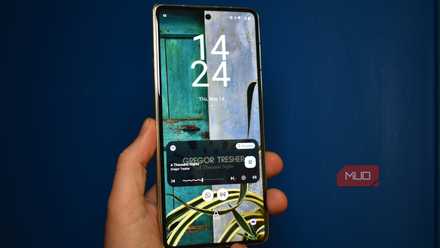
The Motorola Razr Fold’s cover screen is so good I barely use the folding display
Motorola got this completely right.
The zoom quality isn’t as different as you’d think
But the Razr Fold’s 50MP telephoto lens is clearly more detailed
The difference in resolution between the Razr Fold and Galaxy Z Fold 7 telephoto cameras is stark — the Motorola camera is 50MP, while the Samsung one is only 10MP. Even though both offer 3x optical zoom lengths, that’s only part of the story. The Razr Fold’s higher resolution does allow it to take more detailed telephoto shots at 3x and beyond. In the image pairs above, focus on the basketball hoop’s backboard. I can not only see the backboard clearly, but I can also make out the cell phone number and brand name of the hoop thanks to the Razr Fold’s detail.
In each set of photos, the Razr Fold camera sample comes first and the Galaxy Z Fold 7 camera sample comes second. The photos are ordered in 1x zoom, 2x zoom, and 3x zoom sets.
If you need more convincing, peek at the orange triangle hazard sign visible through the chain fence behind the basketball court. There’s actually a number inside that hazard sign, “104,” and you can only make it out when looking at the Razr Fold shot. Look at the Galaxy Z Fold 7 capture instead, and it’s hard to tell there’s even a number inside without knowing it’s there.
Focusing on the pavilion and wind vane in the image sets above, and it’s the same trend. The wood grain is incredibly detailed when captured with the Razr Fold, with richer colors. It’s true even of the wooden slats tucked away under the roof of the pavilion. If telephoto quality is your priority, the Razr Fold is the clear winner.
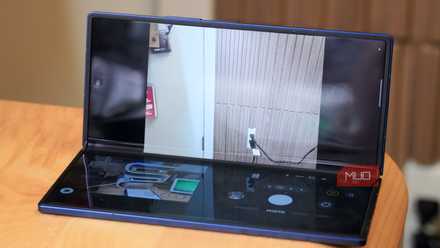
5 Android camera features you can only use on a foldable phone
Foldable phones provide a larger screen and more flexibility, but they also bring serious software upgrades to the camera.
You can’t go wrong with either foldable
The Razr Fold’s focus on HDR and brightness is certainly interesting

Foldable camera quality continues to improve, and that’s good news for everyone. Between the Razr Fold and Galaxy Z Fold 7, I have to give the main camera edge to Samsung. The photos from the Razr Fold with accurate colors and brightness look absolutely amazing, but too many of them end up overexposed and inaccurate. It’s hard to pass on the Razr Fold’s detail, but I must give credit to the Galaxy Z Fold 7’s consistency and color accuracy.
The telephoto camera is a major win for the Razr Fold. Honestly, the 3x optical zoom shots from both foldables pass the initial eye test. Pick a specific area of the photo to zoom in on, and the separation becomes clear. The Razr Fold reproduces the miniscule details of a scene, while the Galaxy Z Fold 7 misses them. Is that enough to justify choosing the Motorola foldable for the camera? Maybe, if you’re a fan of zoom shots. The concert and sporting event lovers are sure to enjoy the Razr Fold’s zoom lens and its 50MP telephoto sensor.
-

- SoC
-
Qualcomm Snapdragon 8 Gen 5
- RAM
-
16GB
- Storage
-
512GB
- Battery
-
6,000mAh silicon-carbon
- Operating System
-
Android 16
- Front camera
-
32MP external, 20MP internal
The Motorola Razr Fold is a formidable challenger to Google and Samsung foldables in the U.S., complete with a 6,000mAh silicon-carbon battery and stylus support. It packs slick Pantone colorways and an 8.1-inch foldable OLED display. Plus, it can charge at a whopping 80W over a cable and at 50W wirelessly. You can pre-order it starting May 14, with full retail availability beginning May 21.
-
- SoC
-
Snapdragon 8 Elite for Galaxy
- Display
-
8-inch foldable AMOLED, 6.5-inch cover screen
- Rear camera
-
200MP
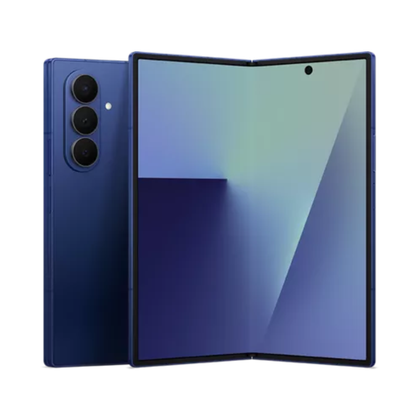
The Samsung Galaxy Z Fold 7 is a premium Android foldable with an 8-inch main screen and a 6.5-inch cover screen. It also sports a 200MP primary camera, a 10MP telephoto with 3x optical zoom, and a 12MP ultrawide lens.


