The Expanse is a sci-fi series that ran for six seasons across SyFy and then Prime Video, where you can stream the whole thing right now. It’s a fantastic drama set in a future where humanity has colonized both Mars and the asteroid belt. Political divisions build up between these different factions, and our lead characters try to keep things from bubbling over into outright war.
The show has gained a reputation for being scientifically accurate, and it’s true that The Expanse tries harder than, say, Star Wars or Star Trek to keep things plausible. But even the authors of The Expanse book series, James S.A. Corey, admit that those elements are mostly superficial. Generally speaking, The Expanse is another unrealistic sci-fi space opera, and that’s okay.
Credit where it’s due
The Expanse does at least TRY to come off as realistic
The Expanse takes space travel more seriously than a lot of stories in the genre. For instance, in the Star Trek universe, communication across space is instantaneous no matter how many millions of miles away from each other people are, which is waved away with talk of sending messages through a “subspace dimension.” On The Expanse, messages have to travel over huge distances, which means there can be long days when communicating between, say, Earth and Mars. That can be important to the plot, since the characters have to guess at what’s really going on as they wait for solid information to cross the void.
The Expanse also explains how there could be artificial gravity on a small ship like the Rocinante, which accelerates until around halfway through its journey from point A to point B before “flipping and burning,” turning around the firing its thrusters in the opposite direction, which creates thrust gravity and helps the ship decelerate through the long vacuum of space. On space stations, massive rotating structures create artificial gravity through centrifugal force. If people move towards or away from the center of rotation, they’ll experience a sideways force. That’s an example of the Coriolis effect, which we see in action in the video above where a character pours a drink into a glass and the water curves in space.
So The Expanse is making an effort, which is appreciated. But in a 2013 Reddit AMA, James S.A. Corey admitted that the effort only goes so far. “Oh my goodness, that hard SF label scares the crap out of us,” they said (James S.A. Corey is actually two people, Daniel Abraham and Ty Franck). “We honestly are not trying to do hard SF. We aim for plausibility. A few plausible details that make everything else feel real and lived in. Those details come out of our very amateur level reading of actual spaceflights and new technologies.”
The Expanse isn’t actually scientifically realistic
It’s just drawn that way
Once you look beyond the surface, there are lots of ways that The Expanse doesn’t hold up to scientific scrutiny. Ships in this world are powered by the “Epstein Drive,” a fusion engine that is somehow able to produce high thrust for long periods of time without a massive need for fuel. And although an engine like that would produce tons of heat and radiation that would endanger the crew, those concerns are mostly hand-waved away.
Then there’s a device called a recycler, which can break down nearly any kind of matter and rebuild it into something else almost instantly, basically The Expanse’s version of Star Trek’s replicator. It’s not that such a device couldn’t conceivably be possible at some distant point in the future, but the efficiency of the recycler seems out of step with other technologies in The Expanse. For example, we’ve invented a machine that can remake matter itself, but this future is lacking pretty much any advanced advanced AI, robotics, or nanotechnology.
There are other things clearly done to punch up drama, like the way the show brings spaceships close together for combat sequences even though it’s more likely that they would stay very far apart, or how you’ll occasionally sound effects in soundless depths of space. In a way, the attempts The Expanse makes at being scientifically accurate make these lapses stand out more. If you’re watching something like Star Wars, where characters can lift things with their minds using the Force, you don’t really care when other parts of the story also aren’t realistic. But if The Expanse has a reasonable explanation for artificial gravity, you wonder why it can’t manage the same thing when it comes to engine technology.
Scientific accuracy is overrated
The Expanse proves it
Having said that, the show’s reputation for scientific accuracy is mostly undimmed, so it looks like it did what it was trying to do: include enough plausible details that people wouldn’t care much about all the stuff that isn’t realistic. It’s a trick and it worked.
“Hard SF has a lot of math. We were told there would be no math. We’re writers,” James S.A. Corey joked in that Reddit AMA. “But all kidding aside, we like human stories and adventure more than we like exhaustive examinations of technology or ideas. There’s room for both kinds of work in the genre, we hope. Space Opera, the kind we write, is about sentiment.”
The takeaway from this irony is that most sci-fi stories don’t need to be scientifically realistic to be good. The Expanse tries a little harder than others, but at the end of the day the reason it’s still beloved to this day is the same reason that any show gets a following: the characters are relatable, the drama is crackling, and the stakes are high. It’s an exciting, well-written show, whether it’s accurate or not.
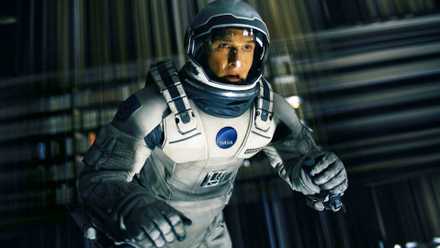
These time-travel movies actually try and get the science right
Unravel the mysteries of time travel in these scientifically-grounded movies.
For those who demand math
Most sci-fi shows considered “scientifically accurate” are like The Expanse: there are a few details that gesture at scientific rigorousness, but they’re mostly superficial. Even Gattaca, which NASA named as the most scientifically realistic movie ever, has some oversights.
That said, there are some harder sci-fi stories out there for people interested. Consider the 2017 sci-fi novel Dichronauts by Greg Egan, set in a world with strange physics that Egan actually did the math to figure out. Or there’s Kim Stanley Robinson’s Mars trilogy, about the slow terraforming of the Red Planet, which been praised for its detailed descriptions of engineering and areology.
Whether either of those works will ever be turned into a realistic movie or series is another question entirely.

- Release Date
-
2015 – 2022-00-00
- Network
-
SyFy, Prime Video
- Showrunner
-
Naren Shankar, Mark Fergus, Hawk Ostby
-

-

Dominique Tipper
Naomi Nagata
-

-