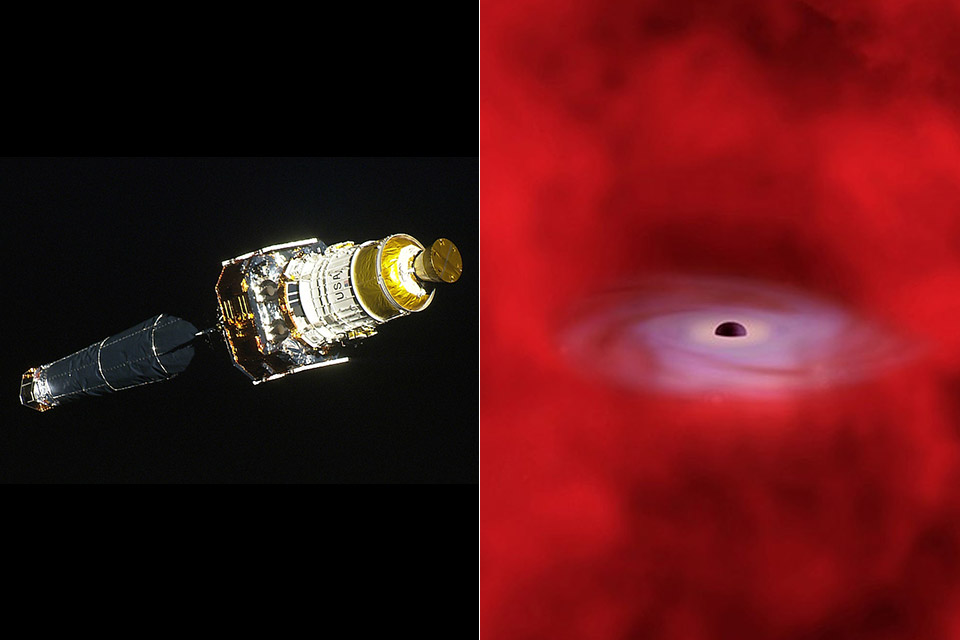
New discoveries shed light on the early cosmos by combining two of the most powerful telescopes available, the James Webb Space Telescope (JWST) and the Chandra X-ray Observatory. Interestingly, Webb spotted hundreds of little red dots dispersed throughout the sky practically as soon as it began observations. These little red dots are so far away that their light is stretched out to longer wavelengths as it travels and appears in the photographs as red dots.
Many of them are located at distances of 12 billion light years or greater. Astronomers have been scratching their brains for years, wondering what was fueling these red dots. It appeared that a thick layer of gas was around them, and that gas would conceal the typical powerful signals from a black hole devouring adjacent material. The Chandra X-ray Observatory will now play an important role in solving the enigma. Its detectors detected X-rays coming from one of the red dots. The one they discovered has the official designation 3DHST-AEGIS-12014 and is around 11.8 billion light years away. It checked all the boxes except one, yet this one standout object emitted X-rays that Chandra had detected years before. The old X-ray data, which dates back more than ten years and is the result of an eight-day survey, began to make a lot more sense as the new Webb data arrived.
Sale

Gskyer Telescope, 70mm Aperture 400mm AZ Mount Astronomical Refracting Telescope for Kids Beginners…
- Superior Optics: 400mm(f/5.7) focal length and 70mm aperture, fully coated optics glass lens with high transmission coatings creates stunning images…
- Magnification: Come with two replaceable eyepieces and one 3x Barlow lens.3x Barlow lens trebles the magnifying power of each eyepiece. 5×24 finder…
- Wireless Remote: This refractor telescope includes one smart phone adapter and one Wireless camera remote to explore the nature of the world easily…
The fact that X-rays are observable at this point indicates that the black hole is in a specific stage of its life cycle. As the black hole consumes the gas, it thins out, and the once uniform cloud of gas splits into patches. Chandra detected X-rays coming out from the material that falls into the black hole and seeping through those holes. The fact that the intensity of the X-rays varies over time supports the idea of dense patches of cloud material rotating through and traveling across our line of sight.
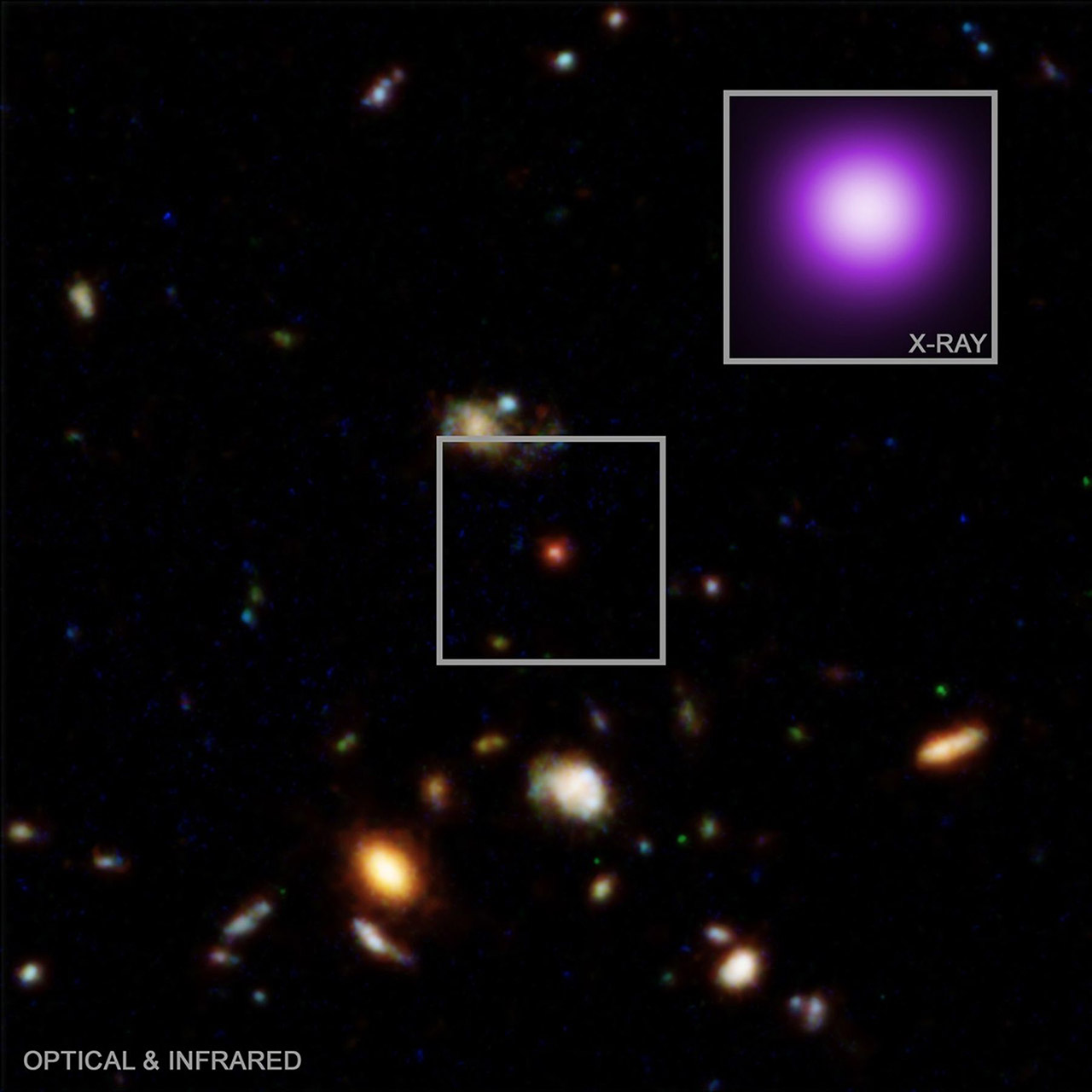
In the end, the gas simply fades away, and the object ceases to appear as a small red dot and becomes a supermassive black hole that we can see sucking in material in X-rays, and our discovery demonstrates that we are catching one of these things in the midst of that transition. It provides us with a glimpse into something that was previously unknown.
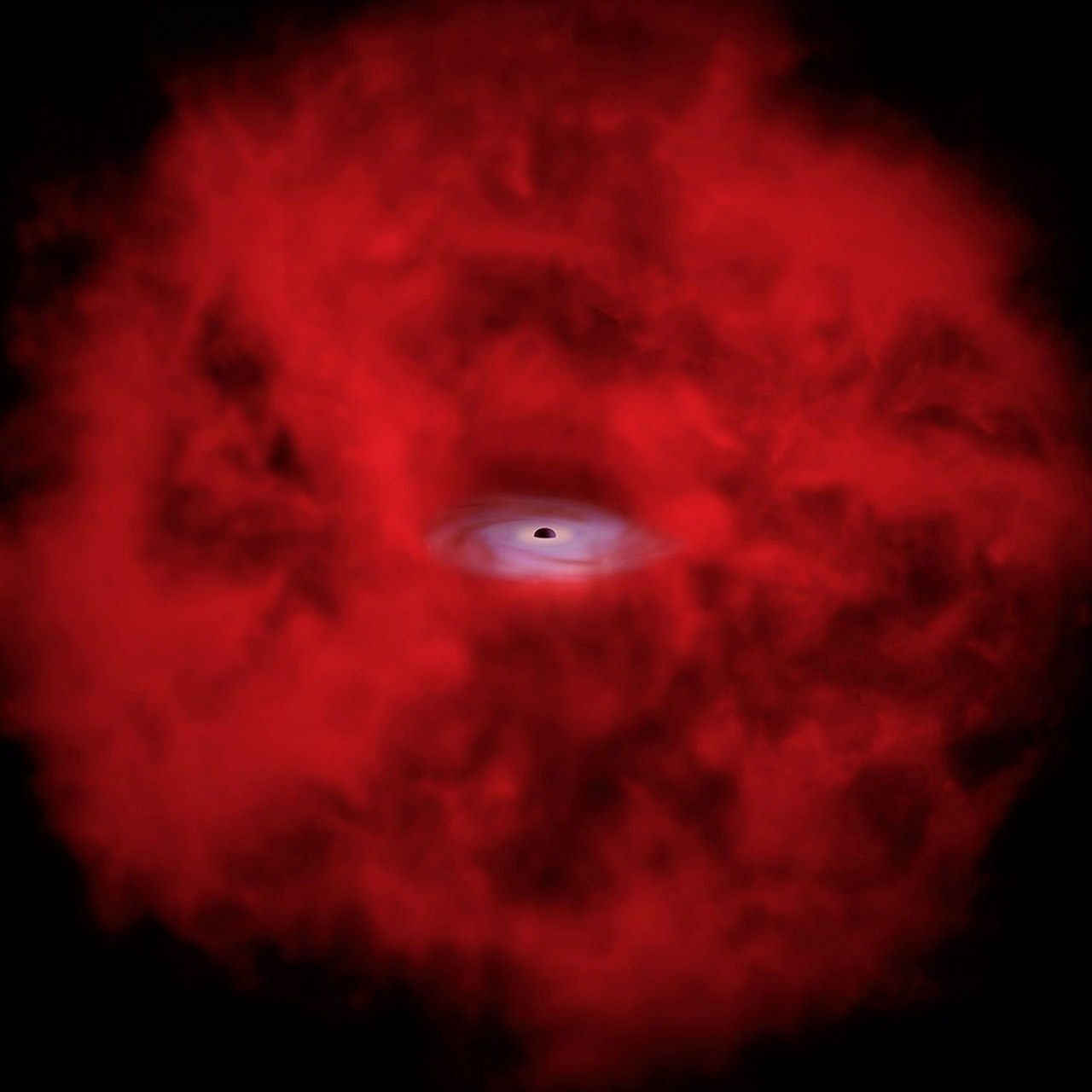
This suggests that there could be hundreds, if not thousands, of “little red dots” out there. By examining even one of them as it changes, we can gain a better understanding of how these supermassive black holes were able to grow to such vast masses so fast after the big bang. The same Chandra and Webb will continue to explore the skies for new examples like this one, and each time we find one, our understanding of how black holes and galaxies formed when the universe was young will improve slightly.
[Source]
