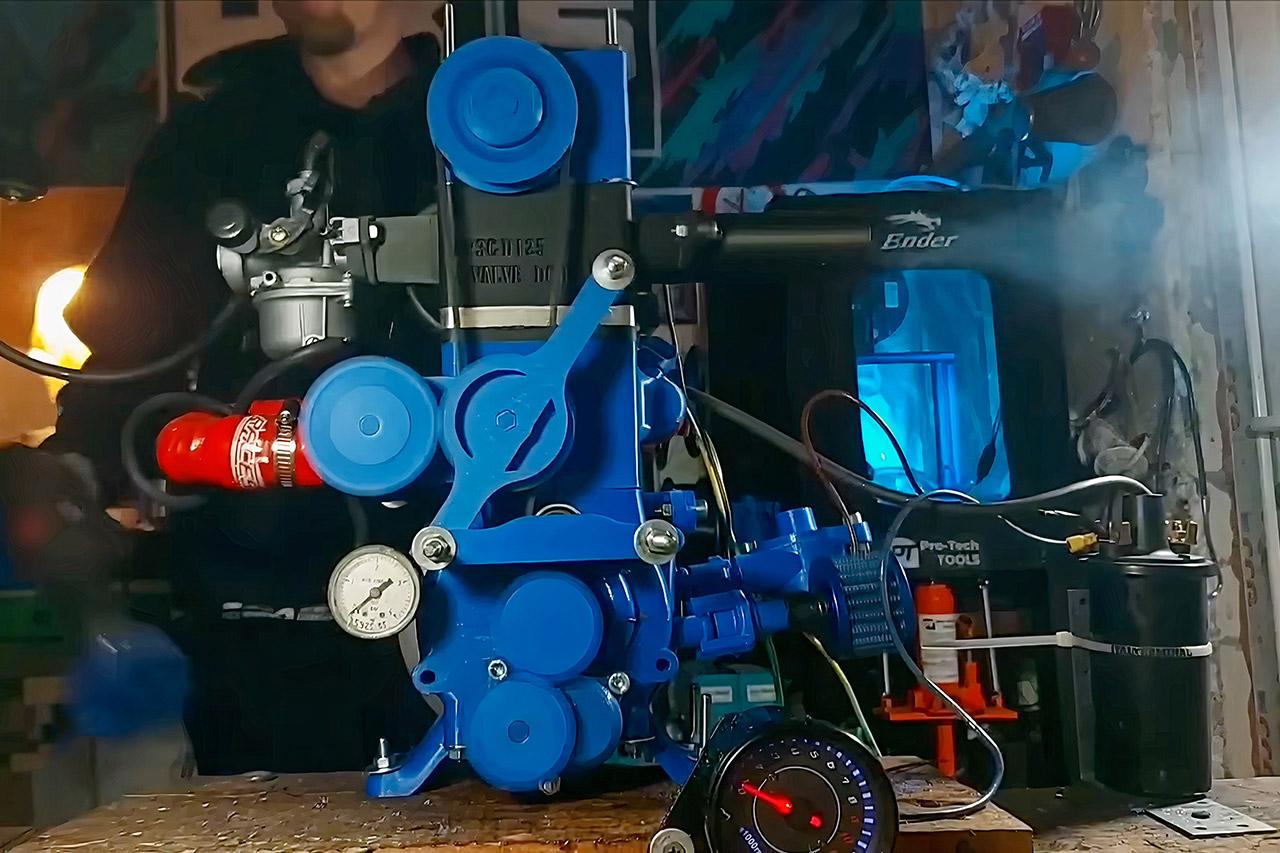
Alexander worked in his workshop for years on a simple goal: to turn spools of everyday filament into a workable internal combustion engine. That is, anything with a few hundred horsepower to get the aging bones going. His third generation of this made-from-scratch engine, known as the AP3 Carbon D125, has recently met that target. The new design surrounds a 125cc single-cylinder four-stroke engine, which is commonly found in scooters.
The majority of the engine parts were created in his workshop using an Elegoo Centauri Carbon 2 Combo printer and a variety of different types of filament, specifically ASA, ABS, and PET-CF, but the cylinder bore is lined with a stainless steel sleeve, giving the entire thing a bit more reliability than the other parts. A friend at a CNC shop delivered the head, which was machined from aluminum to contain four valves and dual overhead cams. Bearings, belts, and some odd bits of hardware were required to complete the engine. The previous attempts taught us a lot of hard lessons, as the second engine ran for four minutes before heat melted the cylinder body and killed the compression completely, the nuts were in some awkward spots, torque was impossible to apply evenly, and water and oil mixed inside the head. Alexander had to virtually dismantle everything and start from scratch.

Bambu Lab A1 3D Printer, Support Multi-Color 3D Printing, High Speed & Precision, Full-Auto Calibration…
- High-Speed Precision: Experience unparalleled speed and precision with the Bambu Lab A1 3D Printer. With an impressive acceleration of 10,000 mm/s…
- Multi-Color Printing with AMS lite: Unlock your creativity with vibrant and multi-colored 3D prints. The Bambu Lab A1 3D printers make multi-color…
- Full-Auto Calibration: Say goodbye to manual calibration hassles. The A1 3D printer takes care of all the calibration processes automatically…
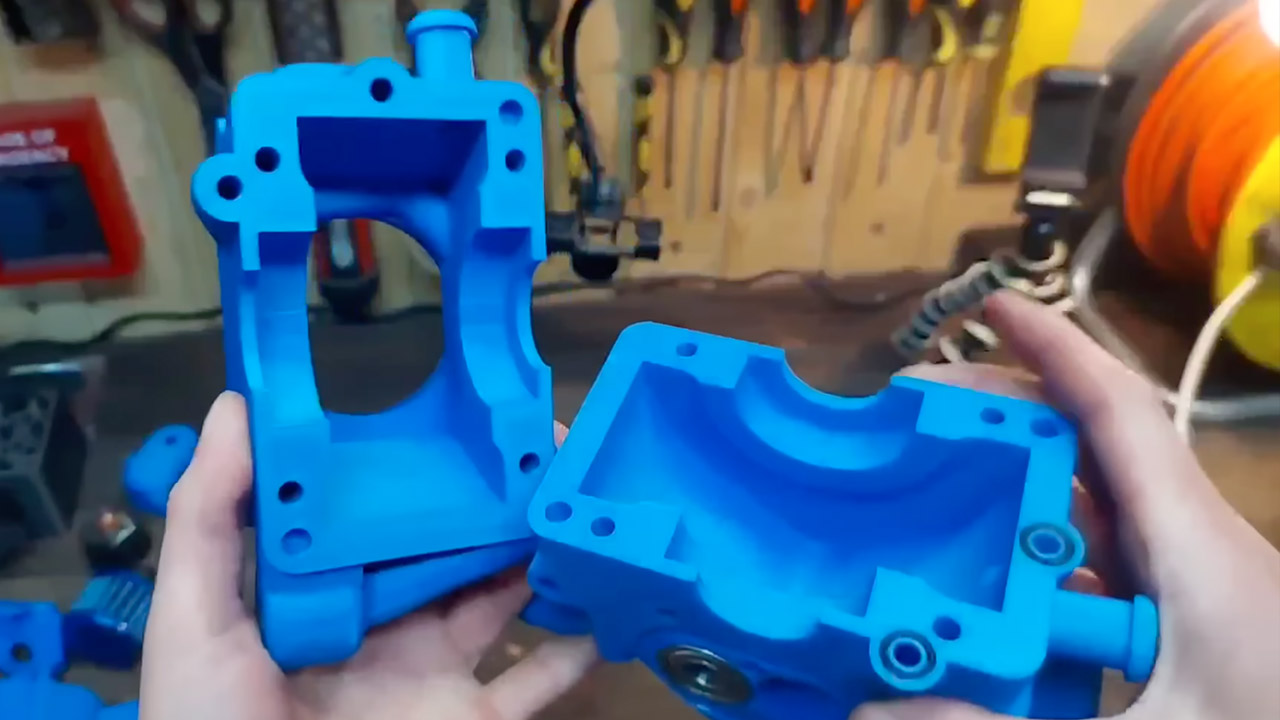
This time, however, he put an oil pump directly into the crankcase. Four small bearings and a pair of gears revolve inside a printed enclosure to accomplish this. A basic pressure regulator fits in the main gallery and ensures that the oil gets to where it needs to be. There’s no need for an external pump this time. He also installed a separate positive crankcase ventilation system to keep the oil where it belonged. The cooling system underwent a similar makeover. A mechanical water pump was printed onto the cylinder body. Its impeller rotates on bearings and a timing belt. Coolant circulates through passages in the cranium and around the sleeves. Long story short, there are no fancy electric pumps and no mysterious leaks between the oil and water lines.
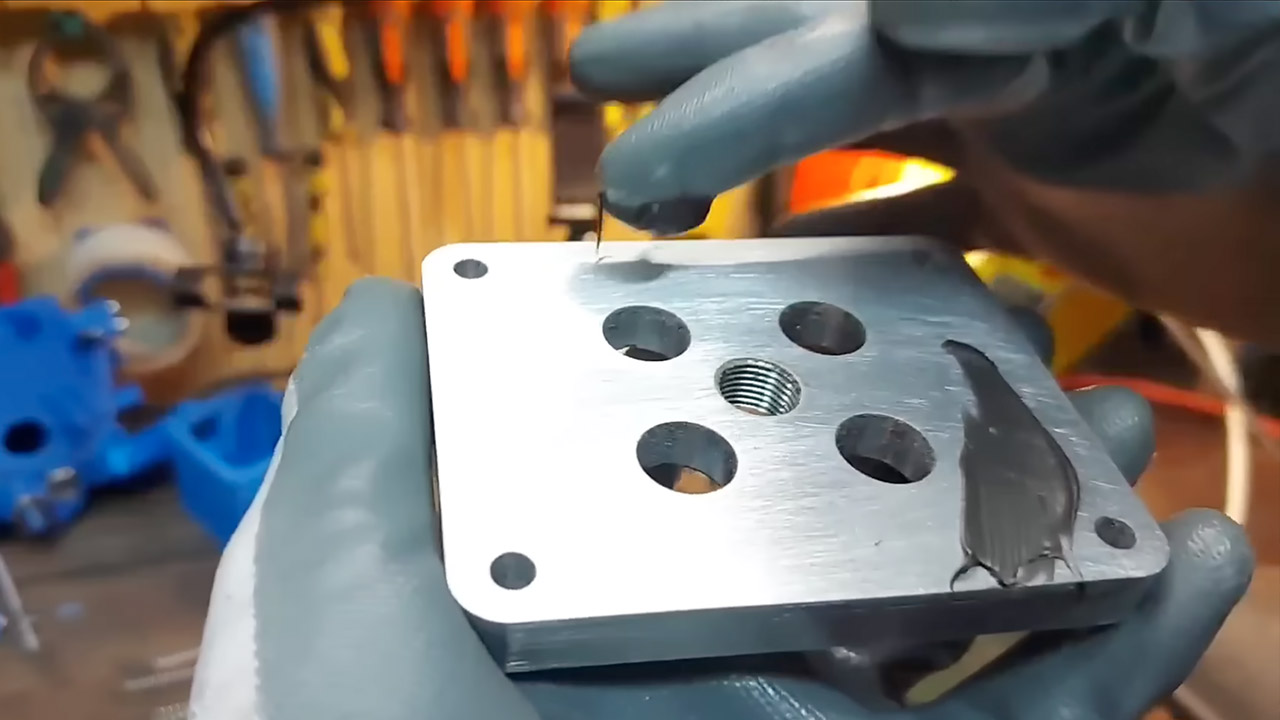
Now, he used the old crankshaft from his prior attempts, but first checked it with a dial indicator. The needle changed only 0.05 millimeters, which is well within the tolerance for a 125cc engine. He also created a head gasket with braided copper wire around the sleeve and a high-temperature material rated for 1,000 degrees Celsius. Putting it all together was a tedious task. Alexander hand lapped the valves and carefully sealed each joint. When everything was ready, he filled the crankcase with 10W40 and attached it to a test rig.
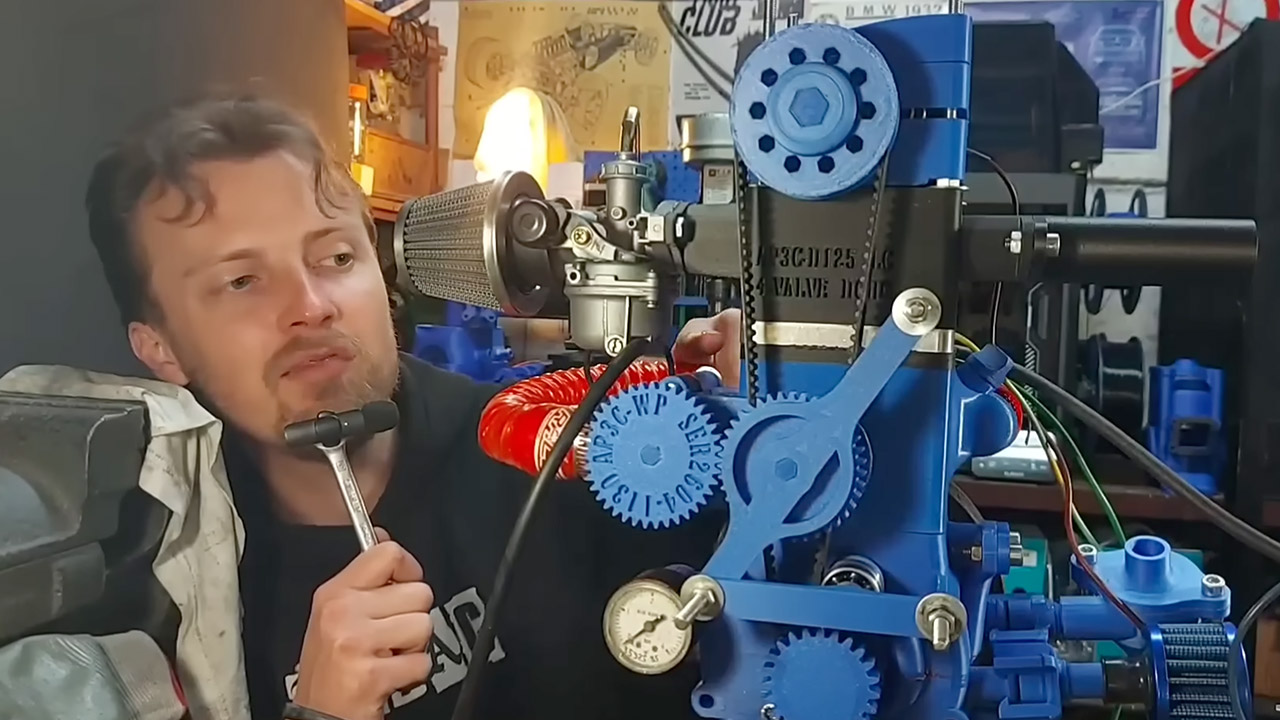
The initial crank brought instant effects, and this time it caught, settled into a steady idle, and kept the compression, which was a good start; however, a brief timing check revealed that the water-pump pulley was spinning at the incorrect speed due to a slipped tensioner. A little tweak and it was all set. On the second run, the pump operated well and the coolant flowed properly. However, the oil pressure gauge remained silent, either because the sender required calibration or because the tolerances were just a little too loose, and a suspected vacuum leak appeared on the intake side where the epoxy had not yet been entirely applied. Still, it ran smoothly enough to demonstrate that the main architecture held together properly.
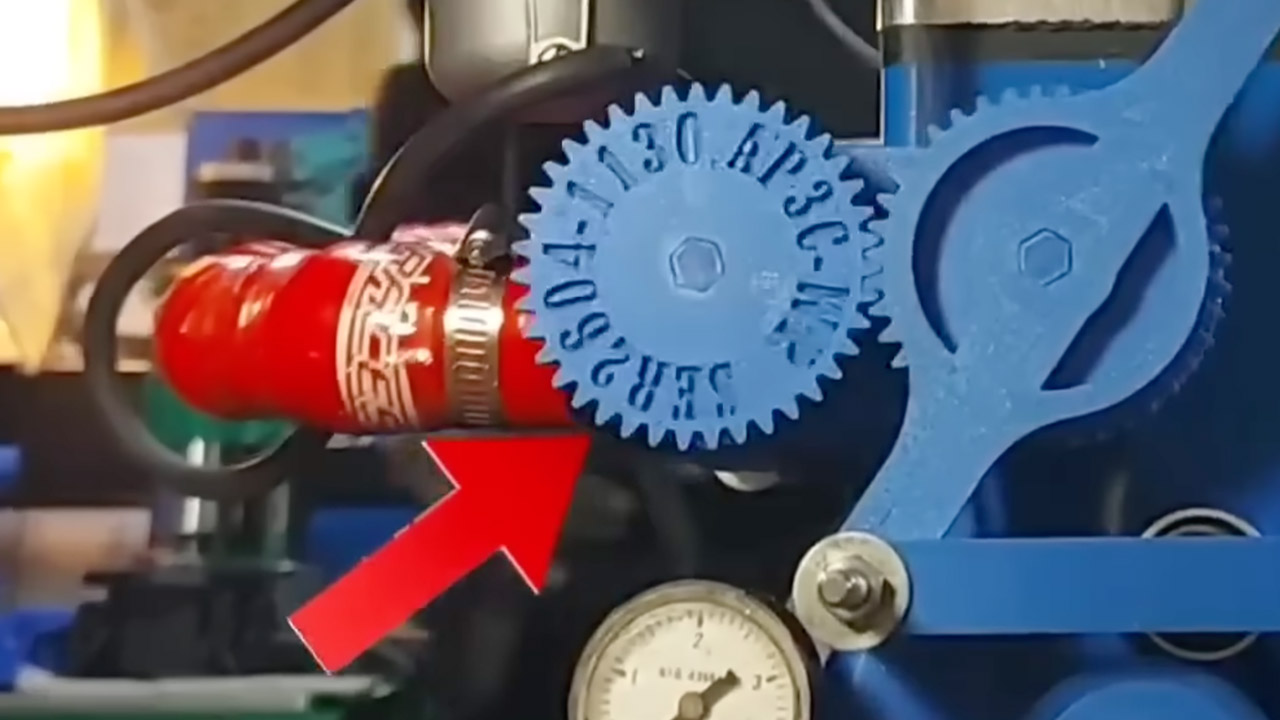
Alexander believes the crankcase oil pump was the true game changer; seeing the oil pour through the gallery during a bench test gave him the confidence to put the rest together and see it operate. Every printed part not only survived, but appeared to manage the heat and vibration of the first few minutes with ease.
[Source]
