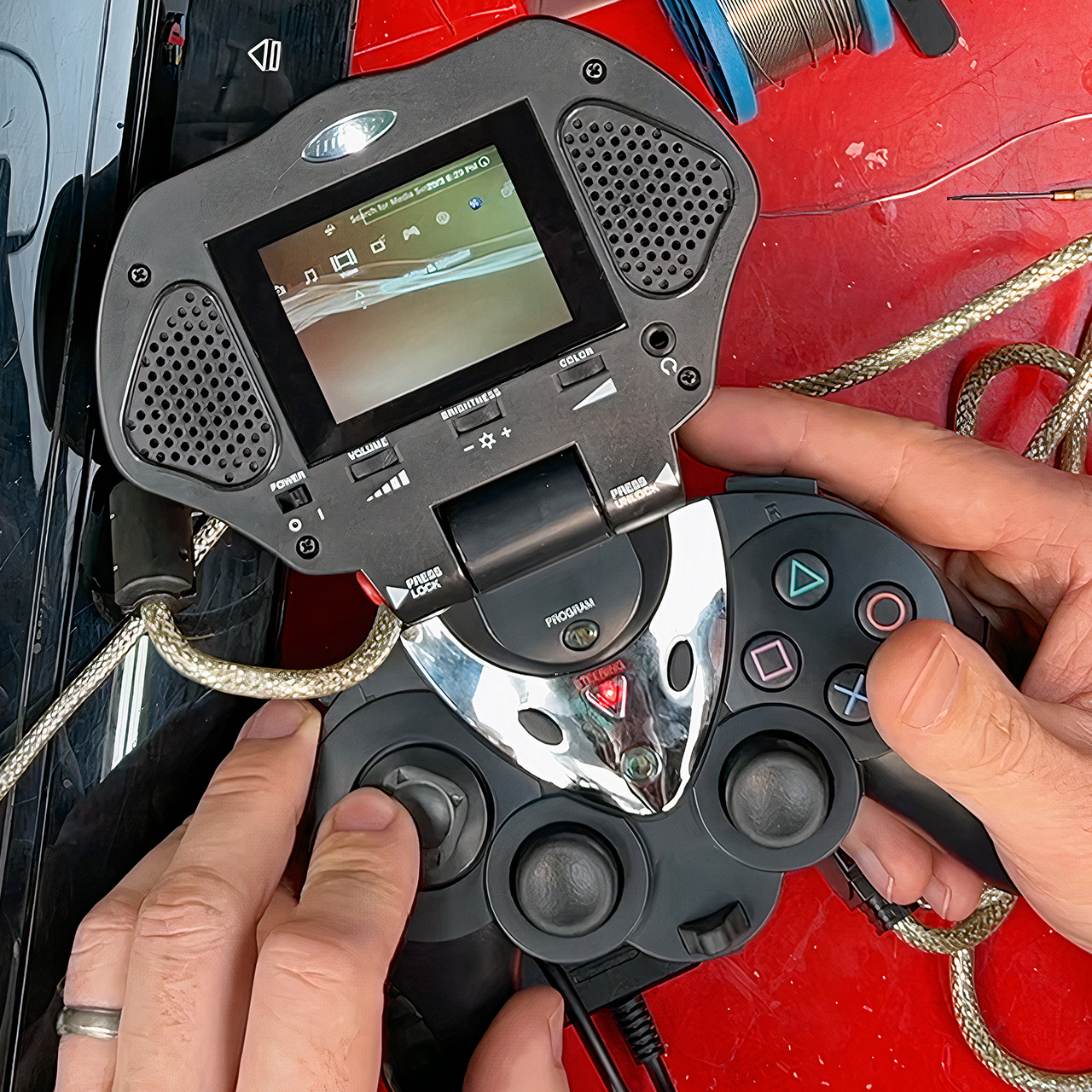
James Channel continues to shed light on old, forgotten gaming gear that still has a few tricks up its sleeve. His latest segment delves deeper into a device from 2003 that appears to be an early prototype for the PlayStation Portal. More specifically, the Intech Controller and Game Screen (model PS2-750). It’s an odd combination of a full PlayStation 2 controller and a little built-in screen and speakers that allows you to play on the go, away from the big living room TV.
This device turned up in pretty shape after sitting unused for years. James begins the unboxing process by cracking it open and going over the connections required to hook everything together. Three connections connect the handheld device to the console: one goes into the controller port, another handles the video and audio signal, which can be routed to the TV, and a third provides power via a dedicated 7.5v supply. Once everything is connected, the screen displays whatever the PS2 is outputting, and the controller responds to the inputs. Stereo speakers are included into the machine, and a headphone port is available if you want a quieter experience.
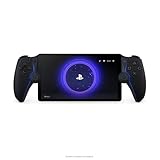
PlayStation 5 Portal Remote Player – Midnight Black
- Play Your Game Collection with Remote Play – PlayStation Portal Remote Player can play compatible games you have installed on your PS5 console…
- Cloud Streaming from the Game Catalog and Classics Catalog – Discover an awesome library of PS5 games on the PlayStation Portal Remote Player with…
- Cloud Streaming for PS5 Games in Your Library – With PlayStation Plus Premium, stream select digital PS5 games in Your Library from PlayStation Store…
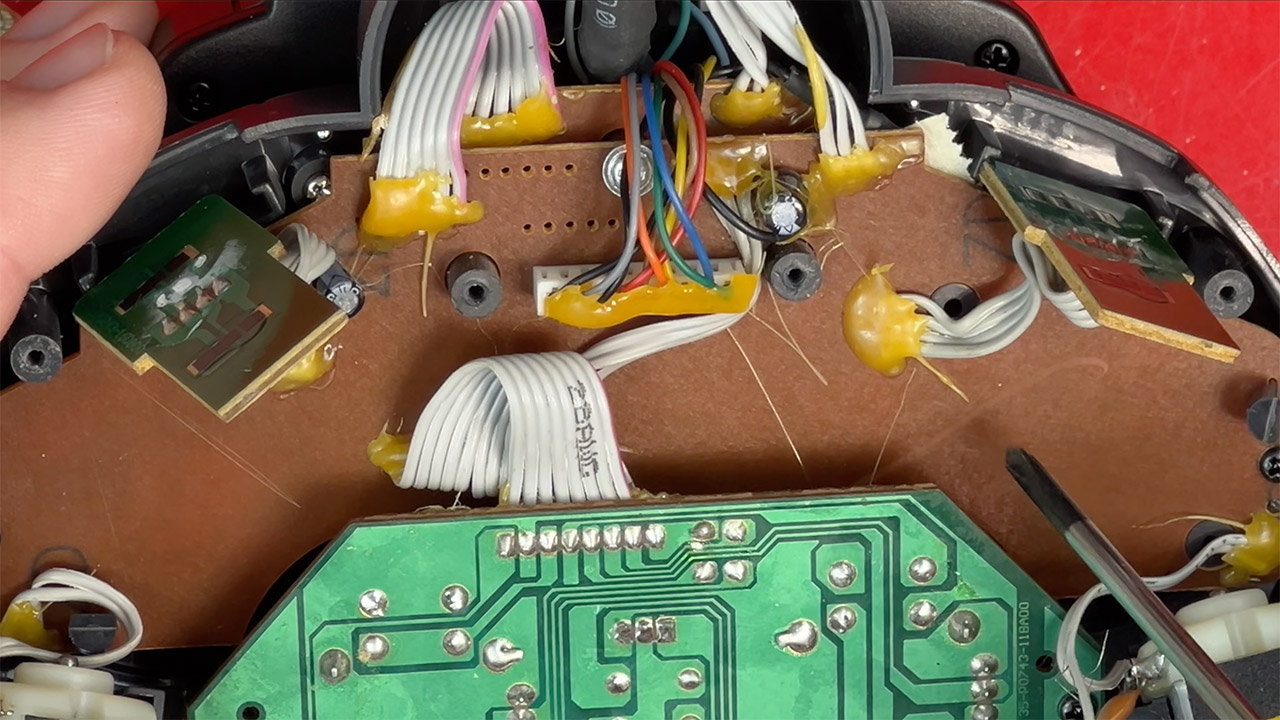
As James disassembles the device, you can clearly see the type of build you’d expect from a third-party attachment back in the day: simple yet a little rough around the edges. Everything is held together using brown circuit boards and plenty of hot glue. Inside, you’ll discover a modest 2.5-inch LCD with an old-school fluorescent backlight from before LEDs were popular. The controls on this gadget include dual analog sticks, a directional pad, some face buttons, shoulder triggers, and a few extras such as a turbo button and a programmed macro key. Even a rumbling motor for vibration feedback with adjustable strength. He points out that the screen is only compatible with NTSC consoles, and the text in some games can become crowded, especially if the game is running at a higher resolution.
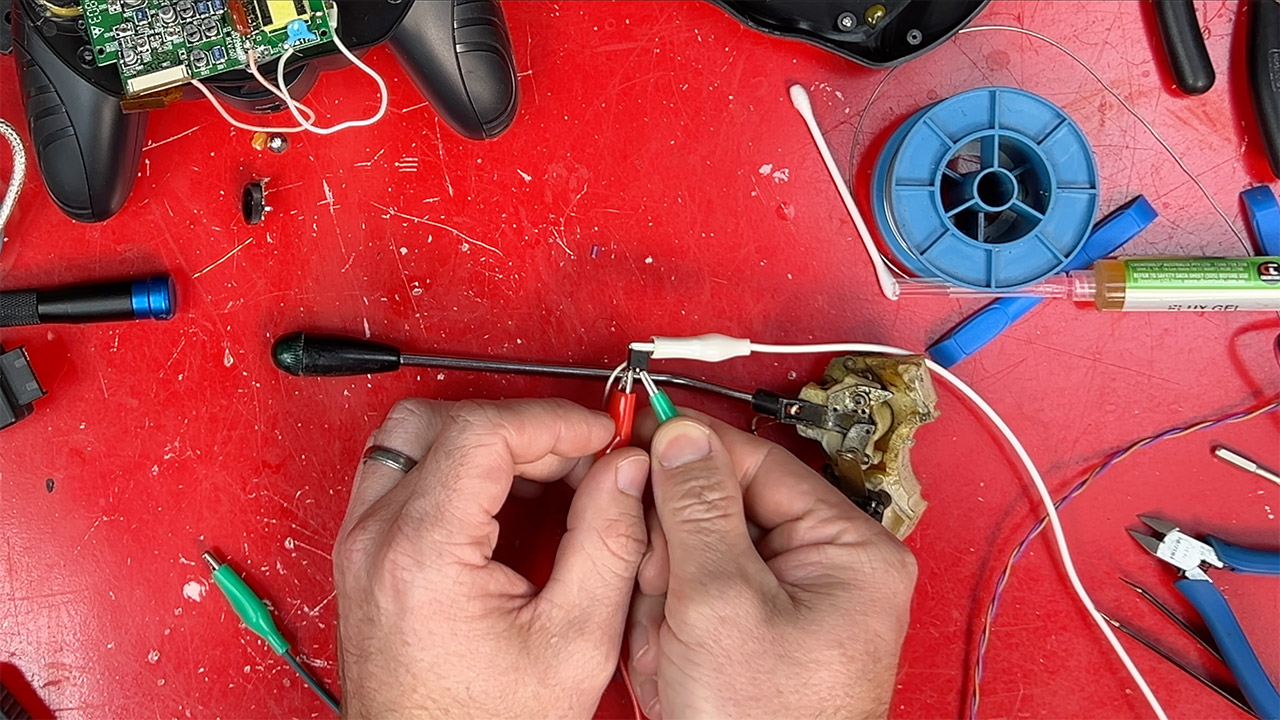
When James finally has the chance to turn it on, things don’t go well. A burnt smell and dead audio indicate that at some point in the past, someone crossed their wires and installed the incorrect voltage polarity. He traced the damage to a basic 7808 voltage regulator that overheated, melting some of the surrounding electronics. He painstakingly desoldered the damaged component, replaced it with a new one, and was able to turn the volume back on after a rivet fused in the heat. It turns out that the LCD also has vinegar syndrome, which is a typical condition in which the polarizing layer on the screen fades and causes the image to appear dark or blurry. James was able to rig up a remedy by carefully cutting a new layer from a spare laptop screen, aligning it, and fixing it in place to restore the colors to their old state.
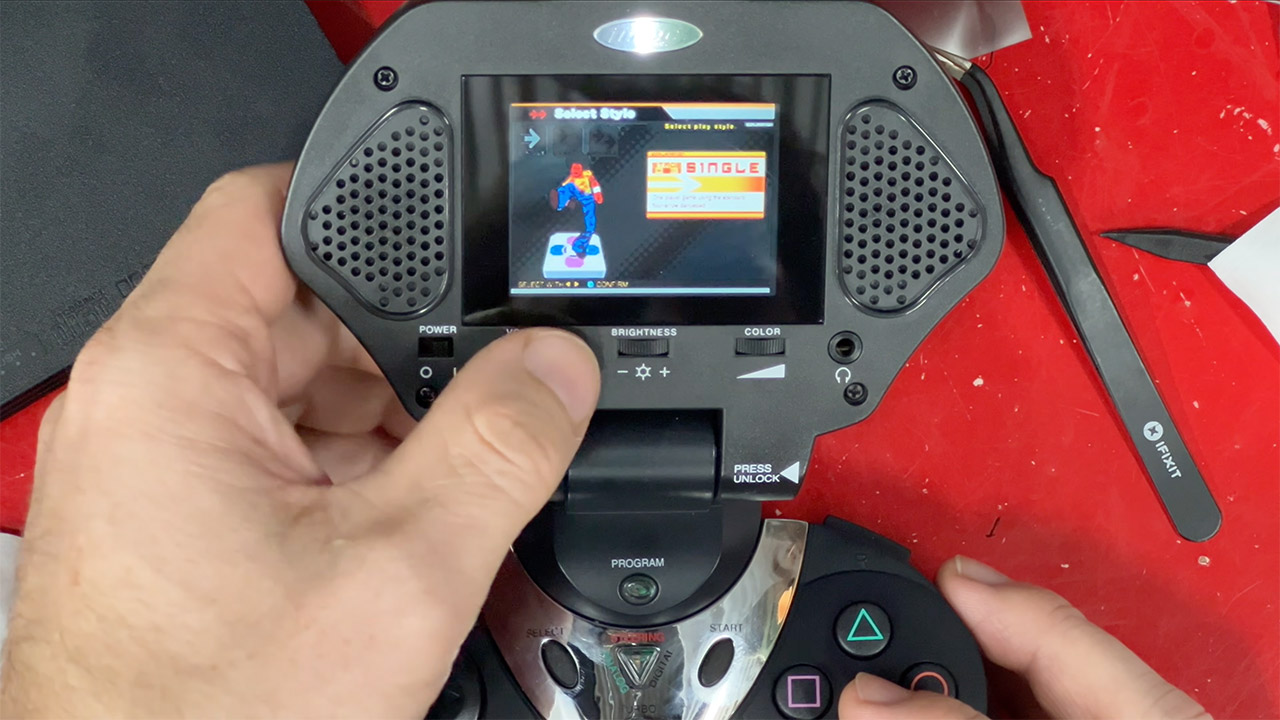
With all of the repairs completed, James tests it with some actual games, including Dance Dance Revolution and Katamari Damacy. It’s very surprising that the small screen can offer playable visuals, even if the colors are washed out by today’s standards. The controller still feels familiar for short periods, but the directional pad is stiff and the grips have become sticky with age. He even gets the controller side to operate with a PlayStation 3 by simply plugging in a USB adapter, demonstrating that the input side is still functional after all these years.
