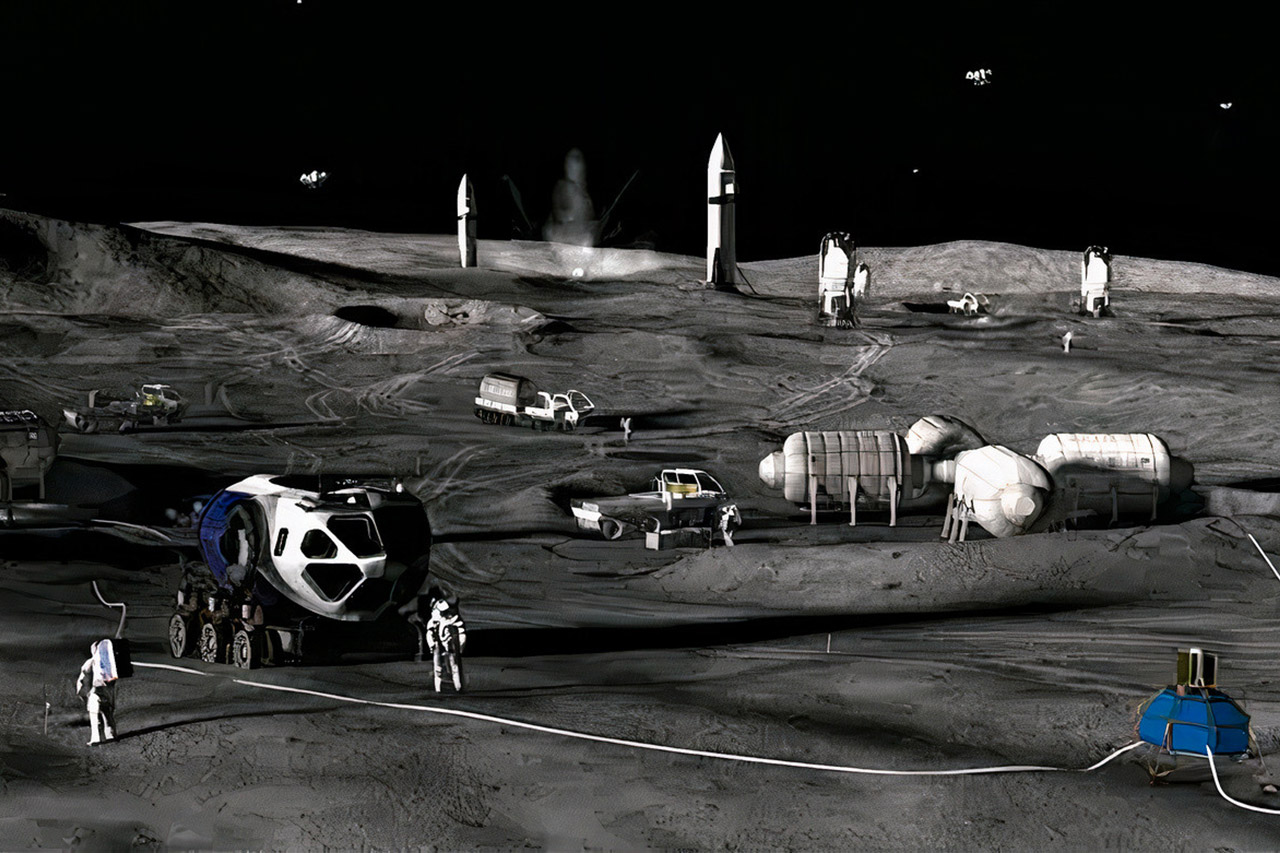
NASA Administrator Jared Isaacman laid out an ambitious and expensive vision for returning humans to the Moon and keeping them there. The plan carries a $20 billion price tag and is focused on building a permanent base capable of supporting long term operations rather than short visits. It also signals a broader cultural shift at the agency, moving away from decade long timelines and toward getting things done in months.
Several key details emerged at the Ignition event on March 24th. Isaacman told the audience to expect a crewed lunar return before the end of the current presidential term, with landings becoming increasingly frequent from there. The Artemis mission schedule has already been restructured to support that timeline, with Artemis III now focused on hardware testing in Earth orbit next year and a second mission joining it in the same period. From Artemis V onward, crews will be touching down on the surface at least once a year, accelerating to every six months once operations are running smoothly. Each landing is designed to deliver more equipment and experience that feeds directly into building the permanent base.

LEGO Technic NASA Artemis Space Launch System Rocket Building Toy for Boys & Girls – STEM Learning…
- BUILD AN OFFICIAL NASA ROCKET – Kids prepare to explore outer space with the LEGO Technic NASA Artemis Space Launch System Rocket (42221) building…
- 3-STAGE ROCKET SEPARATION – Young builders can turn the hand crank to watch the rocket separate in 3 distinct stages: solid rocket boosters, core…
- STEM BUILDING TOY FOR KIDS – This educational rocket kit was created in collaboration with NASA and ESA to showcase the authentic system that will…
The base will be built out in three different phases. The first focuses on testing designs and systems using small robotic delivery vehicles and rovers. The second begins establishing basic shelter and supply lines to allow astronauts to stay for extended periods. The third brings full habitation modules, power systems, and mobility vehicles online, eventually allowing crews to live and work on the surface year round. NASA plans to keep costs down and timelines tight by leaning on commercial rockets and reusable hardware wherever possible, and international partners from Japan, Italy, and Canada are already contributing rovers and shelter systems that slot directly into the existing plans.
Funding for the base will build on existing Artemis allocations, with a dedicated portion directed toward surface infrastructure. The $20 billion commitment covers landers, habitats, power systems, and the logistics needed to turn a series of individual landings into a functioning outpost. Officials expect the first permanent hardware to reach the surface by the end of the decade, with crews following shortly after.
Running alongside the lunar base effort is something equally ambitious. NASA’s Space Reactor-1 Freedom is a nuclear powered spacecraft designed to move people between planets, and it is currently on track to reach Mars by the end of 2028. Upon arrival it will deploy miniature helicopters to conduct reconnaissance of the surface. The nuclear electric propulsion system is central to the whole concept, cutting travel time roughly in half and allowing the vehicle to carry far more payload than conventional chemical rockets could manage. Engineers see this mission as the proving ground for deep space nuclear propulsion, and if it delivers, the same reactor technology could eventually be adapted to provide a continuous power supply for the lunar base as well.
