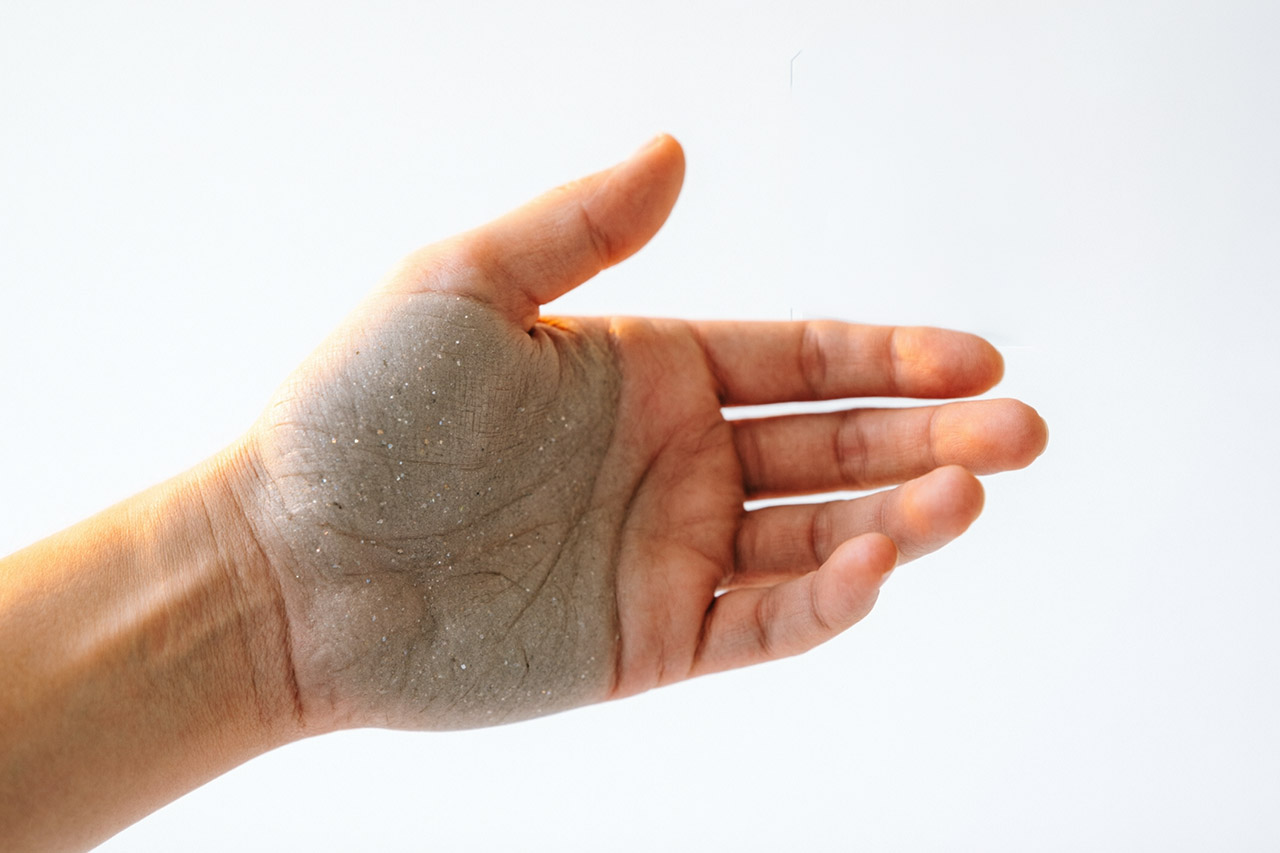
Every year, millions of tons of sawdust accumulate in mountains as a result of lumber mills around the world producing wood products. The majority of it is either put into a furnace to generate energy or ends up in landfills, where it does nothing but release all of the carbon it has accumulated. However, researchers at ETH Zurich have discovered a technique to convert that garbage into solid panels that will work well as inside walls and partitions.
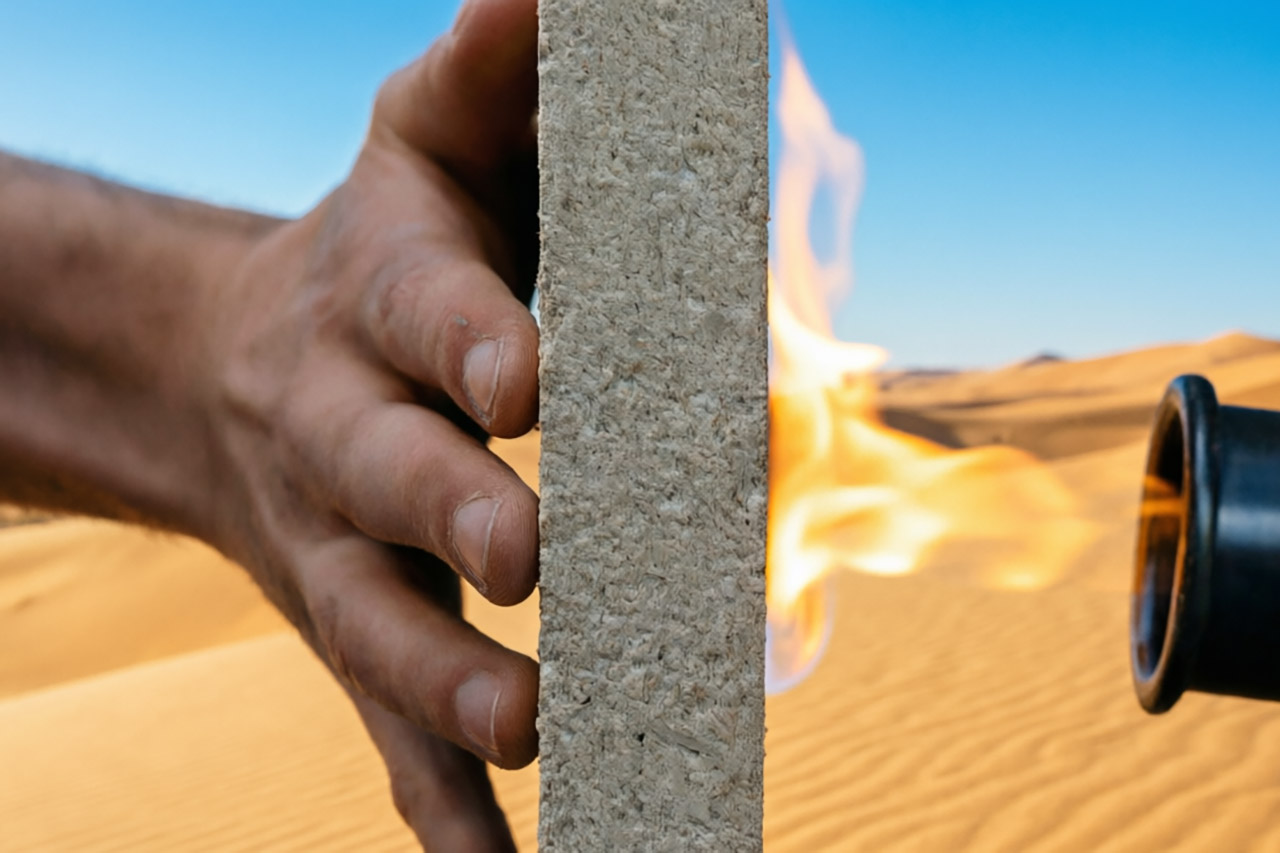
Photo credit: Dan Vivas Glaser / from Kürsteiner R et al. Chem Circularity 2026, CC BY 4.0
The main ingredient in these panels is struvite, a mineral that occurs naturally in sewage treatment plants. One issue is that it clogs pipes, but that’s not all it does; it also has some built-in fire resistance. There is one catch, though: the mineral is extremely brittle on its own, and mixing it evenly with wood particles is difficult. However, this challenge was overcome when the team discovered that an enzyme extracted from watermelon seeds could be used to help guide how the struvite crystals grow.
The enzyme takes a simple mixture of a mineral precursor called newberyite and a small amount of water and leads it into creating enormous crystals that spread across the gaps between the sawdust particles. This secures everything in place and makes it solid. All the team needs to do is combine the enzyme, struvite, and water, pour the mixture into a mold, and allow it to sit under pressure for two days. After that, simply allow the slabs to air dry at room temperature until ready to use.
The fire safety tests provide a solid indication of how effective these panels are. When untreated spruce wood is exposed to a standard heat source, it will catch fire in about fifteen seconds, but panels made this way will wait for over 45 seconds before ignition even begins, giving people at least three times more time to escape. Once the fire starts, the struvite breaks apart and releases water vapour and ammonia gas, which basically sucks the air right out of the room while also cooling the surface. That results in a thin coating of inorganic debris and burned wood, which effectively protects the rest of the panel.
They’re also quite sturdy, as they can be compressed sideways and hold up far better than raw spruce lumber. They’re also much lighter than traditional cement-bonded particleboards because they use a lot less binder, 40% struvite versus 60-70% cement in those older options, making them a direct replacement for traditional materials in interior partitions where fire codes require some level of protection.
They’ve already got recycling covered. Simply grind up an old panel and heat it to 100 degrees Celsius, then sift out the sawdust to leave behind the mineral precursor, which can then be reused in new batches. If you’re feeling particularly useful, you can even use the leftover newberyite as a slow-release fertilizer for plants. Cement boards, on the other hand, tend to go straight to the tip after the structure they’re in is demolished.
Ronny Kürsteiner developed the method as part of his dissertation at ETH Zurich, in collaboration with colleagues from Empa and the Polytechnic University of Turin, and the team is now considering using raw struvite from sewage plants as a steady supply to keep costs low on a larger scale. Early results look good, and they believe these panels meet the fire safety criteria of today’s cement choices while being lightweight and easy to handle.
[Source]
