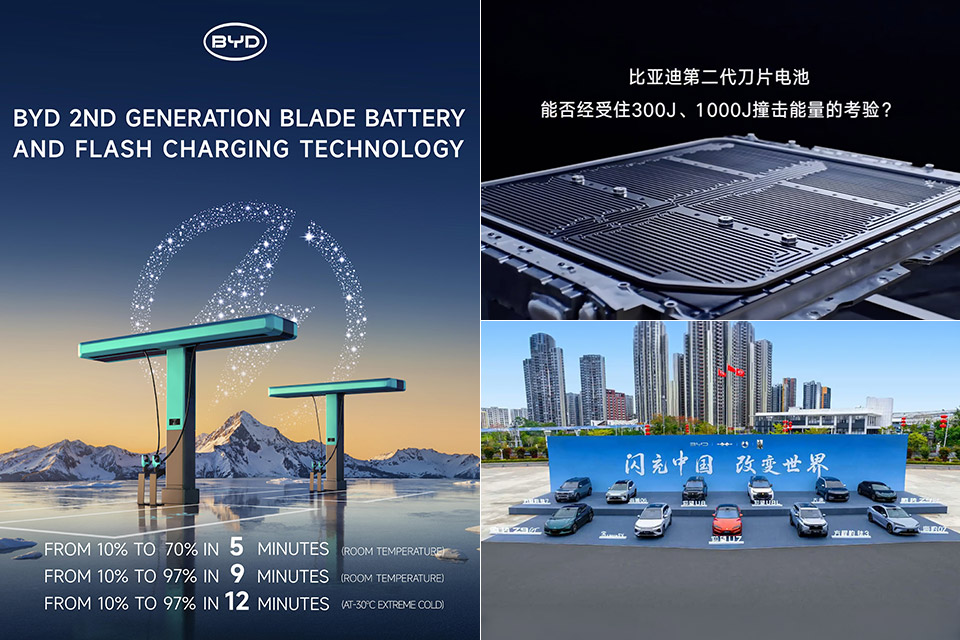
BYD just revealed the second generation of their Blade Battery, and the specifications alone are impressive. This lithium iron phosphate battery can charge from 10% to 70% in under five minutes using a suitable charging station. If you push it a little farther, it will reach 10 percent and then 97 percent in nine minutes under typical conditions. Even after resting at -30 degrees Celsius for a full day, the battery can charge from 20 percent to 97 percent in 12 minutes.
>
China’s BYD unveiled its next generation Blade Battery and FLASH Charging Technology:
10% to 70% in 5 minutes (room temp)
10% to 97% in 9 minutes (room temp)
10% to 97% in 12 minutes (−30°C extreme cold)
This is unbelievably fast, faster than the phone’s flash charging. pic.twitter.com/2LOBD0wGbs
— Li Zexin 李泽欣 (@XH_Lee23) March 6, 2026
The range statistics are also fairly accurate in terms of charging times. The battery in the luxury Yangwang U7 vehicle lasts 1,006 kilometers on the CLTC test cycle in China, or around 625 miles. Models such as the Denza Z9GT exceed that by 1,036 kilometers. Of course, real-world driving circumstances and driving style will reduce those estimates slightly, but you’re still looking at numbers that are significantly greater than what most people require for daily use or longer trips. Energy density additionally increases by around 5% over the original Blade design, resulting in approximately 190 to 210 Wh/kg at the cell level in some combinations. All of this means more capacity in the same space while retaining the features that made the first version famous.
Sale

Portable Power Station with AC Outlet Power Bank for Camping Essentials Small Electric Mini Generator…
- 【99.9Wh High-Capacity Battery】With an impressive 99.9Wh battery capacity, our Tenlike portable power station ensures that you can keep your…
- 【Type-C 60W & 2/3-Prong Ports 120V 120W(MAX)】Type-C supports 60W PD fast charging, with an AC rated power of 80W and a maximum output of 120W. It…
- 【6 Output Ports】Equipped with 6 versatile output ports, this power station is designed to meet 90% of your daily device charging needs. 1 AC…
Safety is obviously a key consideration here; as is customary, the Blade design employs long flat cells organized in a pack designed to withstand crushing and punctures. Nail penetration tests reveal no evidence of a fire or explosion, and the pack outperforms China’s tightest regulations by far, which need cells to avoid thermal runaway difficulties for hours. Plus, the chemistry does not rely on any of the more volatile elements commonly found in high-nickel batteries, ensuring that runaway reactions are properly contained.
Cold performance is another area where this design really shines; traditional lithium-ion packs tend to slow down dramatically below freezing because the lithium ions move so slowly, but BYD has this covered with their updated thermal management and cell chemistry, which keeps charging rates surprisingly close to normal even in the depths of winter, with only a few minutes extra to get the same job done compared to room temperature.
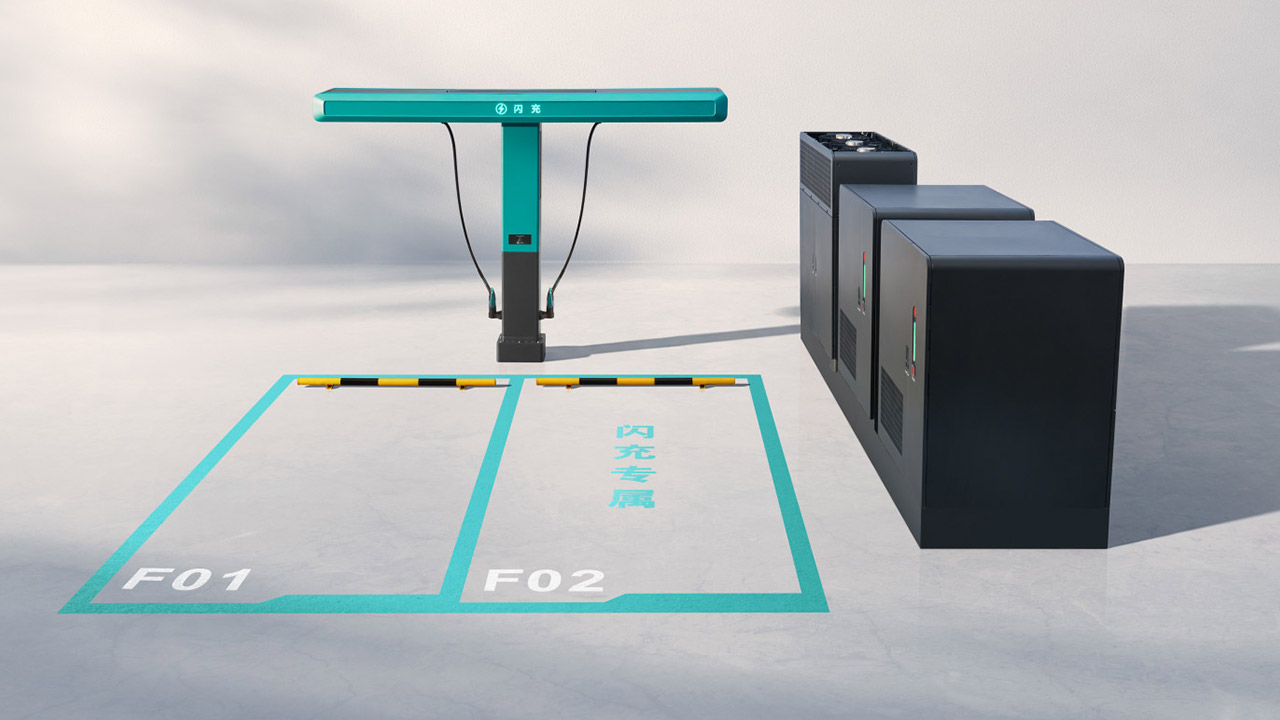
All of this speed and range are great, but the charging infrastructure is what allows you to use these capabilities in the real world. BYD’s method, termed Flash Charging, can withstand peaks of up to 1,500 kW at 1,000 volts. Their stations are also a great addition, as they are intended for simple access, with tiny interfaces and built-in batteries to assist relieve the grid’s pressure. BYD has already deployed over 4,000 of these in early 2026, with plans to increase to 20,000 by the end of the year, including 2,000 along highways spaced around every 100 kilometers. Many of these will employ a station-within-a-station design with on-site batteries.
The battery will first appear in luxury models like the Yangwang U7, then roll out to roughly 10 vehicles, including the Denza Z9GT, Seal 07, and Sealion 06. If you’re one of the happy owners, you’ll be able to enjoy a lifetime warranty on the cells in some situations, as well as additional capacity retention guarantees.
