
Indoor drones are not just smaller drones.
They are built differently.
When GPS disappears, ceilings get low, and walls close in, flight becomes about precision, protection, and intelligence. Some rely on cages. Some rely on AI. Some rely on raw camera power. The best combine all three.
Here are the indoor drones that truly matter in 2026, broken down point by point.
The FPV cinewhoop built for tight cinematic work
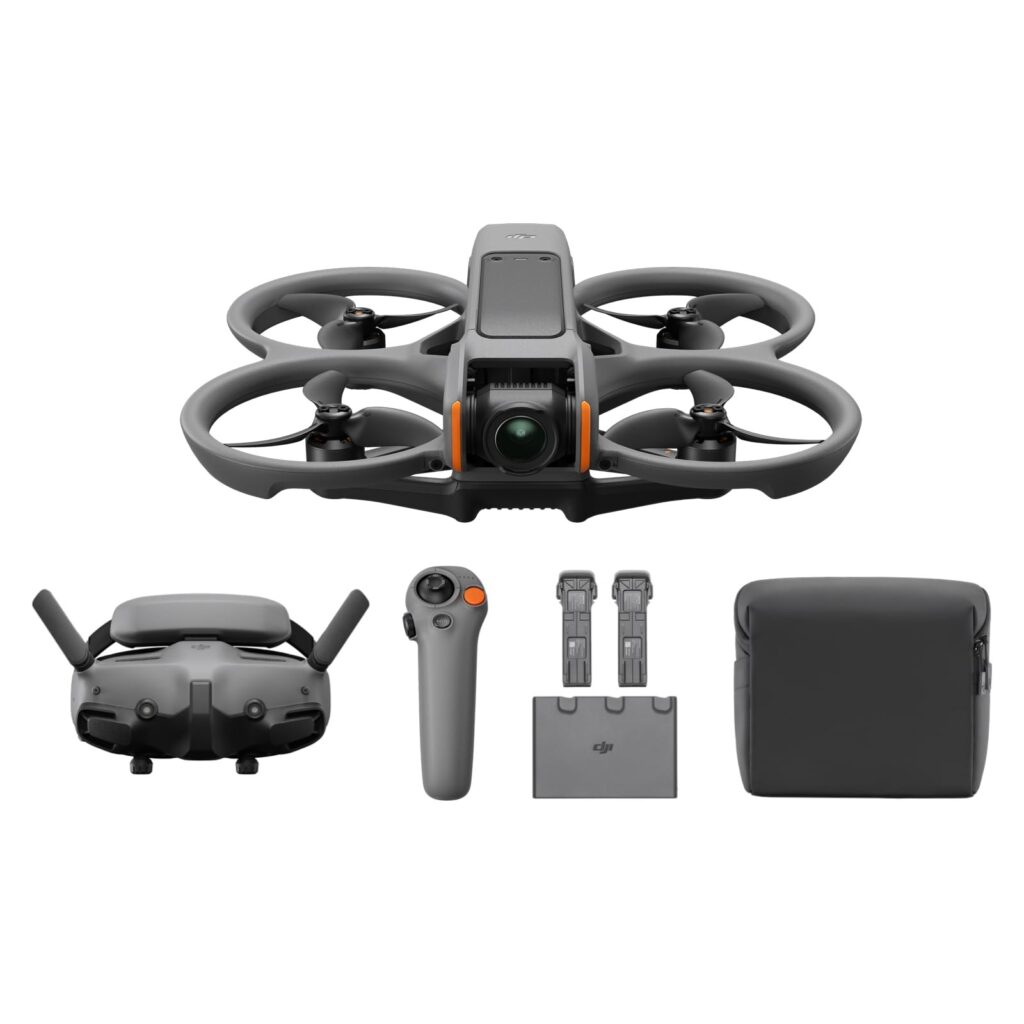
This is what happens when FPV meets safety.
The Avata 2 is compact, fully guarded, and stabilized. It shoots 4K at 60 fps on a 1 over 1.3 inch sensor, mounted on a 3 axis gimbal.
Built in prop guards allow it to fly close to walls, through doorways, and around people with confidence.
Why it works indoors
- Integrated propeller cage
- 3 axis stabilized 4K video
- Small, maneuverable frame
- About 18 minutes of flight
Where it shines
Action scenes. Indoor sports. Dynamic real estate tours. Any shot that needs motion and drama in confined space.
Disadvantages
The Avata 2 relies heavily on its prop cage and pilot skill rather than full 360 degree sensing. In tight, complex indoor layouts, that means situational awareness is partly manual.
Its roughly 18 minute battery life also limits longer indoor shoots, especially if multiple retakes are needed.
The lightweight hybrid with serious sensing
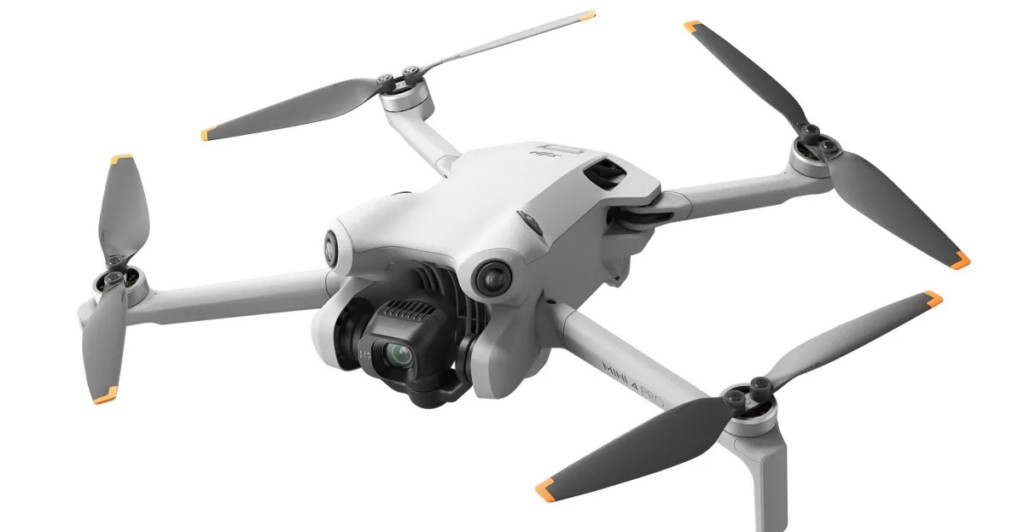
At 249 grams, it is light.
But it is not basic.
The Mini 4 Pro carries a 48 MP camera with 4K60 recording and a 3 axis gimbal. More importantly, it features omnidirectional obstacle sensing, making it one of the safest traditional drones for indoor work.
Why it works indoors
- Full directional visual sensors
- Strong 34 minute hover time
- Professional image quality
Where it shines
Events. Interior architecture. Commercial content that requires both indoor and outdoor shots in one session.
Disadvantages
Despite its strong sensing system, the Mini 4 Pro is still a traditional open-prop drone. It is not built to absorb contact, so indoor flying still requires caution.
It is also less agile than cinewhoop-style drones in extremely tight spaces like stairwells or narrow corridors.
Dual cameras. Long flight. Big flexibility.
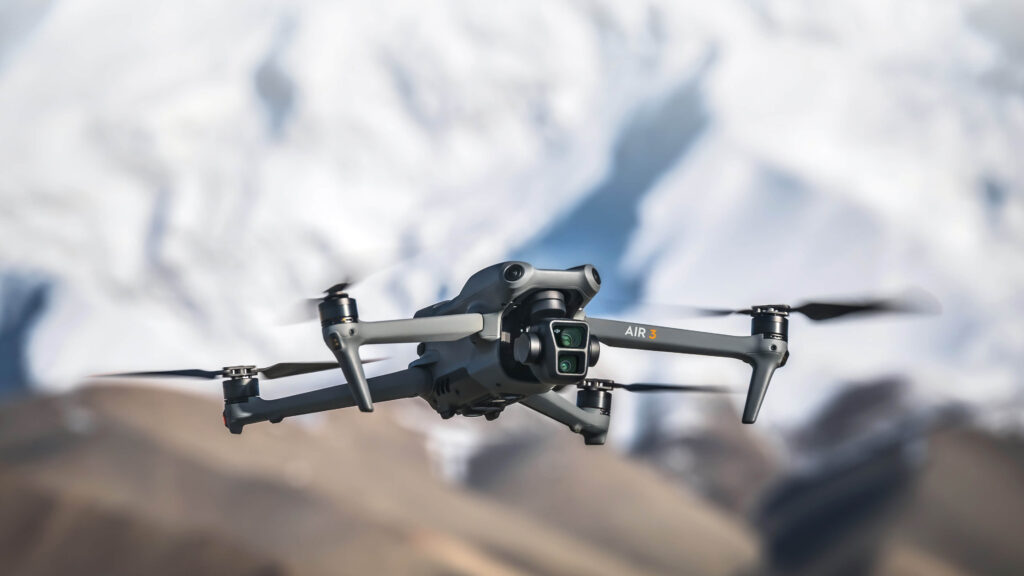
The Air 3 brings two 1 over 1.3 inch cameras, wide and telephoto, both capable of 4K60 video.
It also delivers up to 46 minutes of flight time. That endurance changes indoor workflows. Fewer landings. Fewer interruptions.
Why it works indoors
- Omnidirectional obstacle avoidance
- Dual focal lengths for creative framing
- Industry leading flight time
Where it shines
Concert halls. Exhibition spaces. Large indoor venues where you need both reach and precision.
Disadvantages
At 720 grams, the Air 3 is physically larger and more intimidating indoors. Tight interiors can make it feel oversized.
While it offers excellent obstacle avoidance, it is not designed for contact. In very confined environments, that can limit creative freedom.
Maximum resolution in controlled environments
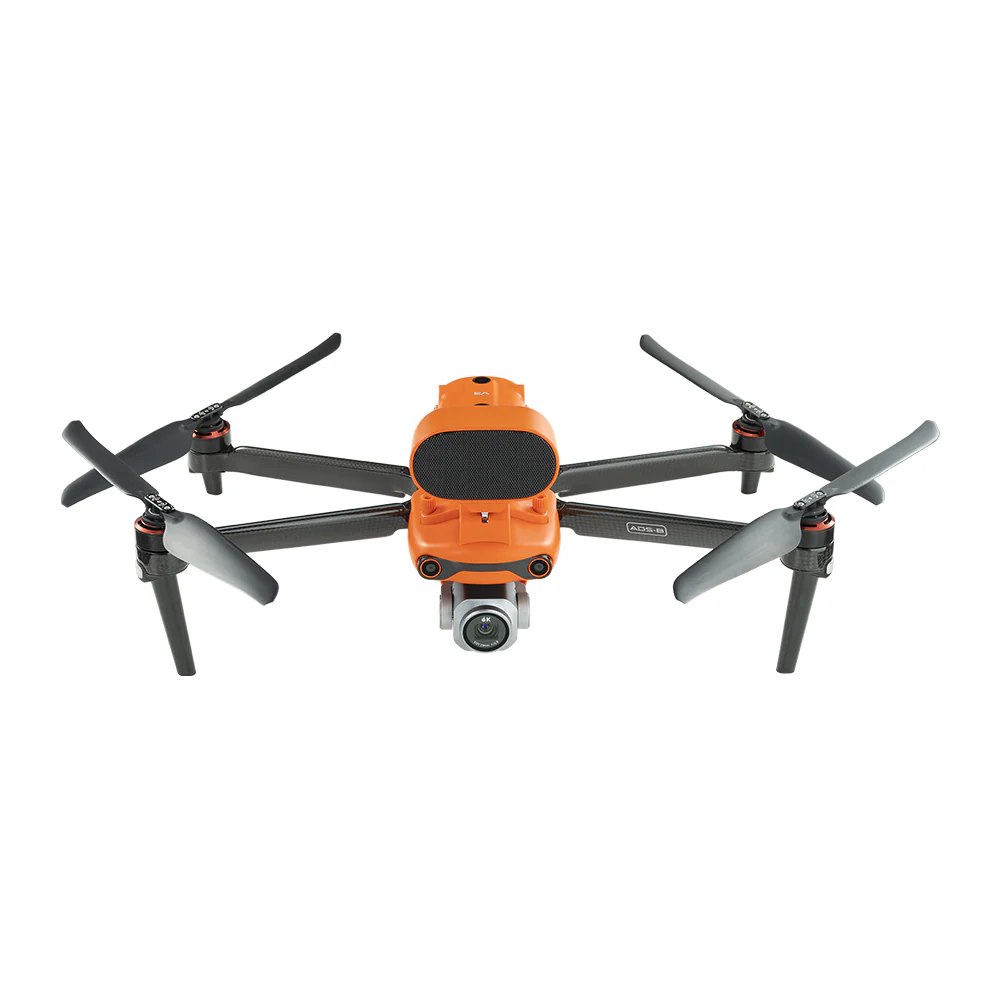
If detail matters most, this is the tool.
A 1 inch 20 MP sensor capable of 6K video at 30 fps. Full 360 degree obstacle detection. Around 40 minutes of endurance.
Why it works indoors
- Large sensor for better low light
- High resolution capture
- Full coverage sensing
Where it shines
Film production. Photogrammetry. High end architectural capture.
Disadvantages
The EVO II Pro is heavy and relatively bulky for indoor work. It was designed primarily as a high-end cinematic and mapping drone, not a confined-space specialist.
There is no protective cage, so accidental impacts can be costly.
The caged content machine
This one is about simplicity.
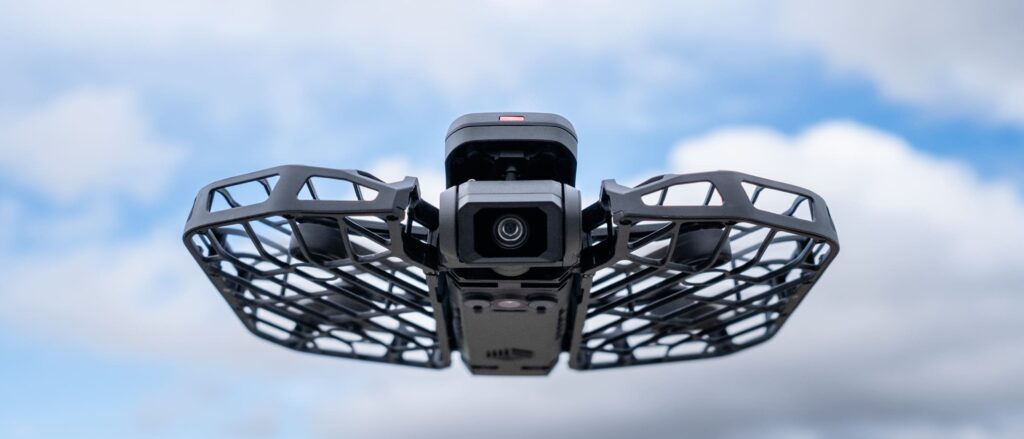
A foldable drone with a full protective cage, 4K60 capture, and 2 axis stabilization. It launches quickly and does not require complex setup.
Flight time sits around 16 minutes.
Why it works indoors
- Protective cage absorbs contact
- Simple operation
- Built for close human interaction
Where it shines
Weddings. Social media. Sports training. Fast content capture.
Disadvantages
The 2 axis stabilization means it lacks full mechanical roll correction, which can slightly reduce cinematic smoothness compared to 3 axis gimbal drones.
Obstacle sensing is minimal. The cage protects the drone physically, but it does not intelligently navigate complex environments.
Autonomy first. Pilot second.
This is where autonomy becomes serious.
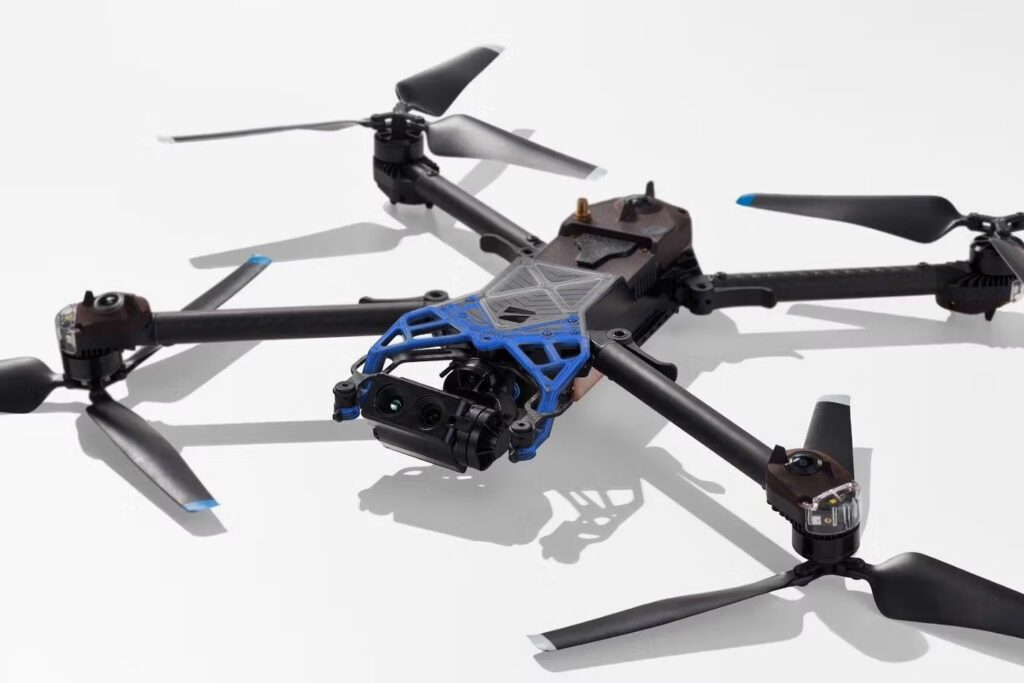
Six navigation cameras deliver true 360 degree obstacle avoidance. It carries both a 4K color camera and a thermal sensor. Around 35 minutes of flight time.
Why it works indoors
- Industry leading autonomy
- Thermal plus color imaging
- Strong reliability in complex layouts
Where it shines
Industrial inspection. Search and rescue. Security operations.
Disadvantages
The sensor size is smaller compared to larger cinematic drones, so pure image quality and low light performance are not its strongest traits.
It is also priced at enterprise level, making it inaccessible for most independent creators.
7. Skydio X10
High resolution inspection platform.
The X10 is not subtle.
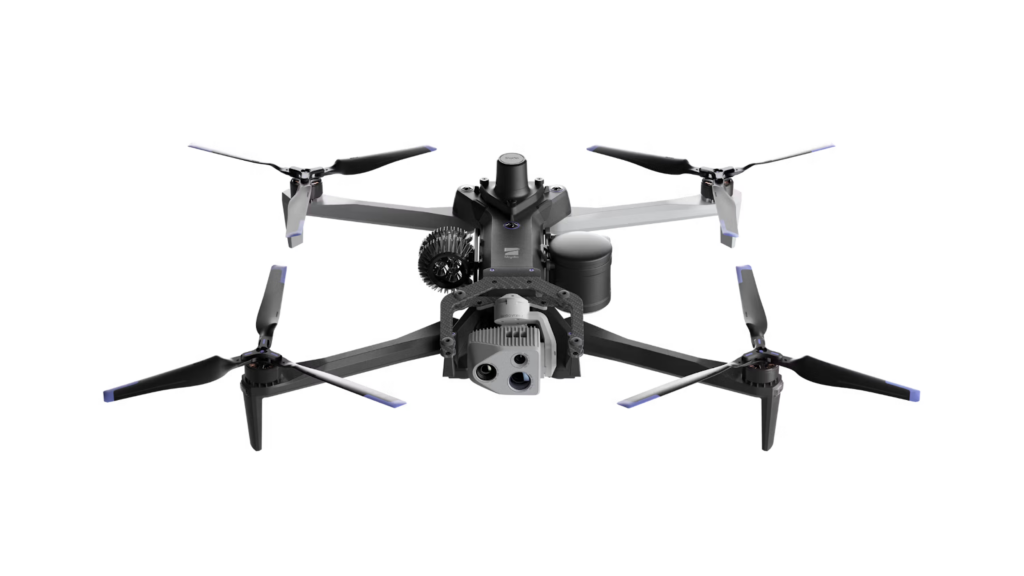
Multiple high resolution cameras plus high grade thermal imaging. Full 360 degree avoidance. Around 40 minutes of endurance.
Why it works indoors
- Advanced inspection imaging
- Modular enterprise capabilities
- Extreme situational awareness
Where it shines
Utilities. Defense. Complex industrial mapping.
Disadvantages
This is enterprise hardware through and through. Its size and weight make it impractical for very tight interior spaces.
For most indoor creative projects, it is overpowered and financially unjustified.
8. Flyability Elios 3
Built to crash. Built to survive.
This is a different philosophy.
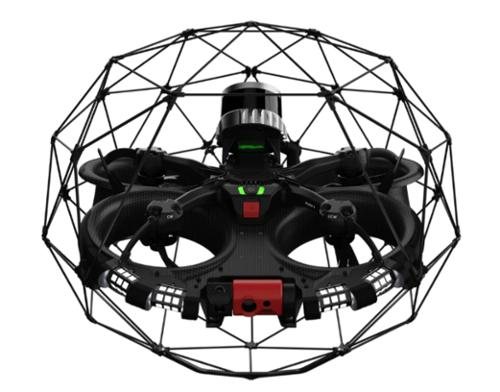
Instead of avoiding collisions, it accepts them. The carbon fiber cage protects the drone completely. It carries 4K imaging, thermal sensing, onboard lighting, and LiDAR for mapping.
Flight time is short, around 8 to 10 minutes.
Why it works indoors
- Fully collision tolerant
- LiDAR mapping
- Built in lighting for dark spaces
Where it shines
Mines. Tanks. Nuclear plants. Places where crashing is expected.
Disadvantages
Flight time is short, which limits extended inspection runs.
Image quality, especially in very low light, does not match open professional cinematic drones due to the enclosed cage design and industrial focus.
9. Flyability Elios 2
The proven confined space workhorse
The predecessor to the Elios 3, it shares the same cage philosophy.
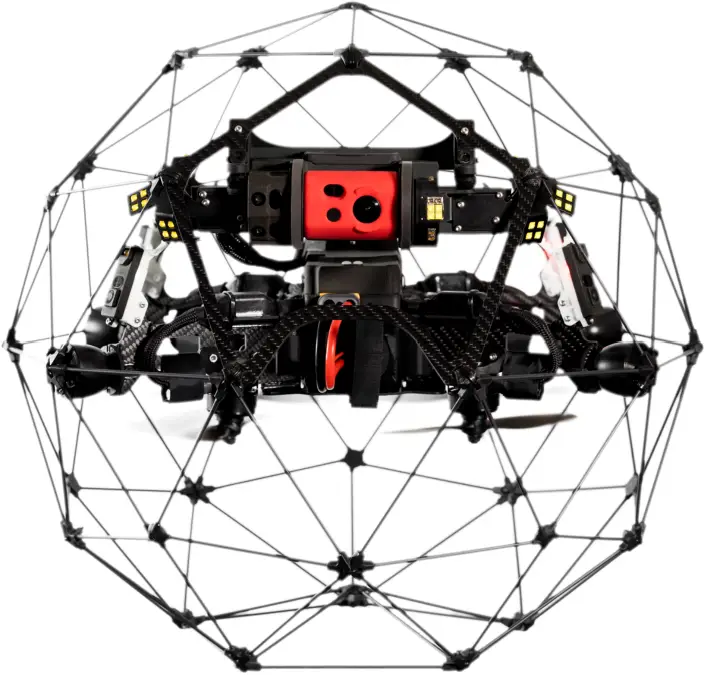
Image Credits: Flyability
4K camera, thermal imaging, powerful lighting, under 10 minute flight time.
It still does one thing very well – survive where others cannot.
Why it works indoors
- Fully collision tolerant cage
- LED lighting for dark and confined environments
- Thermal imaging for inspection detail
Where it shines
Underground shafts. Industrial vessels. Confined infrastructure where impact is expected and unavoidable.
Disadvantages
Compared to the Elios 3, it lacks newer mapping and sensor advancements.
It also relies on its cage rather than intelligent avoidance, which makes precise navigation more dependent on pilot control.
10. Parrot ANAFI USA
Thermal zoom without training wheels
A 21 MP camera with strong zoom and integrated thermal sensor.
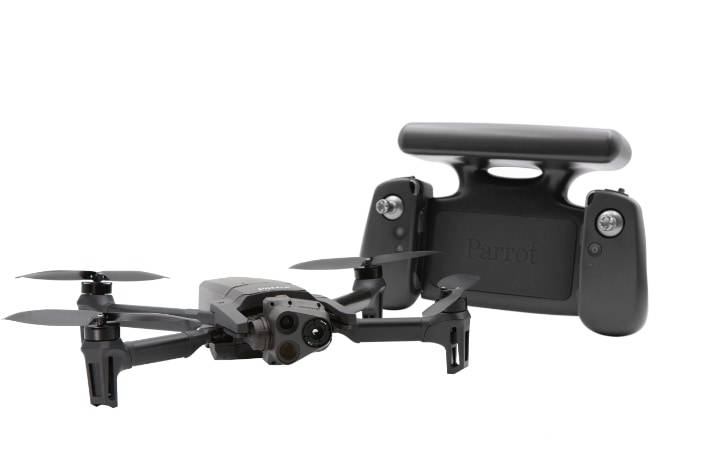
Image Credits: Parrot
There is no built in obstacle avoidance system. Indoor flight depends entirely on pilot precision.
Why it works indoors
- Strong zoom and thermal combo
- Quiet and rapid deployment
- Trusted in public safety roles
Where it shines
Law enforcement. First responders. Tactical inspections.
Disadvantages
Without onboard collision sensing, indoor use carries higher risk in complex layouts.
It is also significantly more expensive than consumer grade alternatives while offering less cinematic flexibility.
Final Take
Indoor drones are no longer a niche category. They are specialized tools built for very specific jobs.
If you care about cinematic movement in tight spaces, drones like the Avata 2 or Mini 4 Pro make sense. If autonomy and safety are critical, Skydio dominates. If you are flying inside tanks, tunnels, or hazardous environments, the Elios series exists for exactly that reason.
There is no single “best” indoor drone. There is only the right one for your environment.
Tight corridor? You need protection.
Crowded venue? You need sensing.
Industrial inspection? You need durability and mapping.
The real shift in 2026 is this: indoor flight is no longer compromise flying. It is its own category, with machines built specifically for walls, ceilings, obstacles, and zero GPS conditions.
Choose based on the room.
