
Every now and then, I come across posts from public intellectuals who commit to living without a smartphone—but many don’t stick with it. Take Joshua Rothman, for example. In a New Yorker article, he writes about considering a switch to a dumbphone, only to keep his smartphone and limit it using a mix of apps and extra devices. For kids, the situation feels even more challenging.
Catherine Anne Price and Jonathan Haidt recently published “The Amazing Generation,” which highlights role models for kids who want to push back against a screen-filled world. Haidt’s “The Anxious Generation” is also an excellent read, though that’s a conversation for another time. Below, I share my favorite gadgets that could replace your smartphone by 2030.
Related: What is a dumbphone? 4 reasons to ditch your smartphone
Why smart rings can’t replace your smartphone
For me, the biggest appeal of smart rings comes from how unobtrusive they feel. Unlike smartphones with bright screens, rings stay out of the way. They sit in the background and focus on health data such as sleep tracking, heart rate, and recovery insights.
Most premium smart ring manufacturers, from Oura to Samsung, lean into a discreet, screen-free design that mirrors traditional jewelry. That choice brings benefits, but it also sets limits. If you depend on your phone for navigation or fast message replies, a ring cannot fill that role.
For the minimalist: Light Phone
Elias Wachtel writes in The Atlantic that his friends were shocked when he pulled out his Light Phone, a modern take on old-school flip phones. I can see why.
The Light Phone III keeps everything super simple. A black-and-white OLED screen, no internet, no social media, no news, no email, and zero apps. That’s the whole idea. Light imagines it as either a no-frills companion for nights and weekends or a full-on smartphone replacement for anyone wanting less screen time.
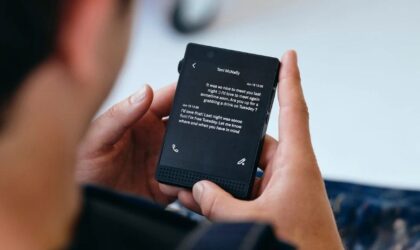
Light Phone III
A simple phone with a camera and some optional tools available.
However, the Light Phone III isn’t flawless. Texting can feel slow without autocorrect, and the music player is frustrating. You can upload songs from your computer, but everything gets lumped into one giant playlist. The player itself offers almost no control. Here’s hoping the next version of the Light Phone gets closer to replacing a smartphone.
If you want to capture memories, take photos and videos, or record voice notes from your life in detail, you don’t have to rely on your smartphone or carry around a separate camera.
Take the Ray-Ban Meta Glasses, which first came out in 2023. The second-generation Ray-Ban Meta Gen 2 improves on the original and might be the best camera-equipped smart glasses for most people right now.
You can get them in prescription, clear, tinted, or transition lenses, and in Wayfarer, Headliner, and Skyler frames. At first glance, they look just like regular Ray-Bans, but each pair hides a camera that lets you snap photos and record videos anytime.
For the post-smartphone future: Meta Orion AR glasses
From the outside, the Meta Orion AR glasses look like a regular pair of spectacles, with a thick frame and dark lenses. That look hides a very different idea.
At Meta headquarters in Menlo Park, California, Bloomberg got a rare hands-on session with the Orion. The glasses showed YouTube clips and text chats, handled video calls, and suggested recipes after a scan of a table full of food items. Eye motion guided the screen. A wristband read small finger moves and turned them into clicks or scrolls.
Many tasks that live on a phone or laptop now feel faster and more immersive on Orion. Rahul Prasad, a senior leader at Meta Reality Labs, shares that view and points to ease as a key shift.
Meta CEO Mark Zuckerberg expresses a similar vision in a conversation with The Verge.
It’s not like we’re going to throw away our phones, but I think what’s going to happen is that, slowly, we’re just going to start doing more things with our glasses and leaving our phones in our pockets more.
Before you go
The Light Phone strips life down to essentials and forces focus. Ray-Ban Meta Glasses make capturing moments effortless, and Meta Orion AR glasses hint at doing tasks hands-free and more naturally. I want to move toward tools that enhance my day instead of keeping me glued to my smartphone. For me, the future isn’t phone-free—it’s smarter and more intentional.
Grigor Baklajyan is a copywriter covering technology at Gadget Flow. His contributions include product reviews, buying guides, how-to articles, and more.
