
It starts quietly.
A gentle vibration during a workout. A late night alert while you are asleep. A message saying your rhythm looks irregular. No wires. No clinic. Just a device on your wrist, constantly observing the rhythm that keeps you alive.
Heart monitoring has moved from hospitals to everyday life. What once required electrodes and clinical machines now lives inside titanium cases and bright AMOLED displays. In 2026, the best smartwatches do far more than count beats. They interpret patterns. They flag irregularities. They reveal how your heart responds to stress, recovery, sleep, and performance.
Here are the devices that define modern heart monitoring.
What Defines Serious Heart Monitoring in 2026
Before choosing a watch, understand what separates basic tracking from true heart insight.
Optical Heart Rate via PPG
Green and infrared LEDs measure blood flow changes beneath the skin. This enables continuous heart rate tracking and heart rate variability data throughout the day.
At rest and during moderate activity, today’s flagship watches deliver extremely strong accuracy. During rapid heart rate spikes, slight lag can occur. Still, premium devices now track remarkably close to clinical references in everyday conditions.
On Demand ECG
Electrocardiogram functionality has become a defining feature in advanced models. By placing a finger on a crown or bezel, users can generate a single lead ECG capable of identifying atrial fibrillation patterns in supported regions.
This turns a smartwatch from fitness accessory into proactive heart screening tool.
SpO₂ Monitoring
Blood oxygen tracking adds another layer of insight. While not a medical replacement, top watches provide consistent oxygen saturation estimates that help users monitor overall wellness and sleep patterns.
Together, these systems define real heart monitoring.
Best Overall for Advanced Heart Monitoring
Apple continues to set the benchmark.
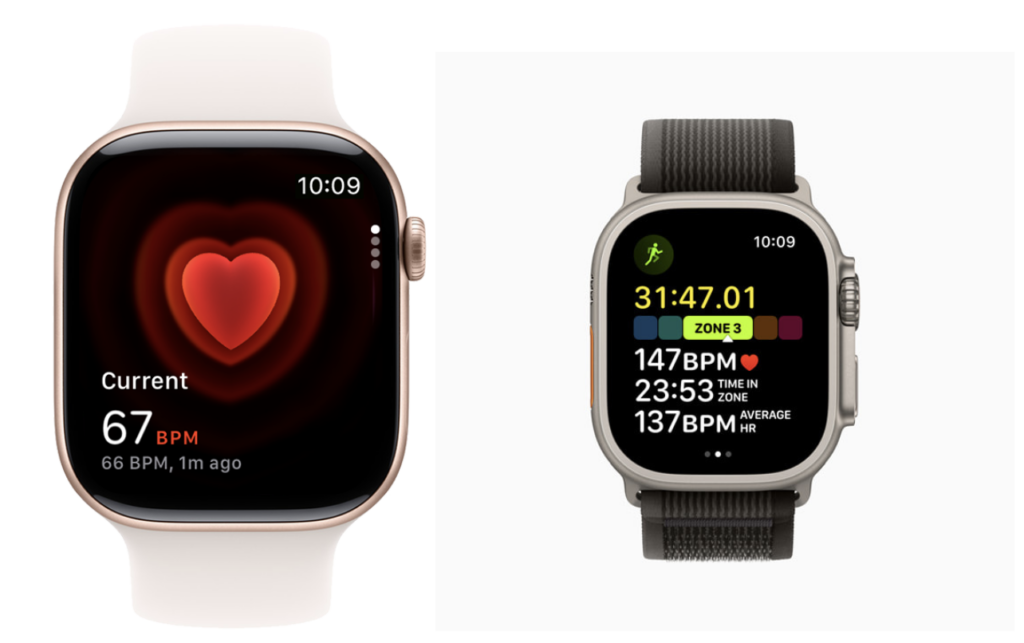
Image Credits: Apple
The Series 10 and Ultra 2 combine next generation optical heart sensors, ECG capability, and blood oxygen tracking. Rhythm notifications, emergency features, and deep health data integration make Apple one of the most comprehensive platforms available.
The Ultra 2 adds extended battery life, ultimate durability, and deeper water resistance.
Strengths
- Highly accurate ECG and rhythm detection
- Strong continuous heart tracking
- Seamless Apple Health integration
- Emergency alerts and sharing
Disadvantages
- Battery life lags behind many rivals
- Many advanced features require iPhone
- Premium pricing
Best for: iPhone users who want deep medical-style heart insight.
Best for Android Users Who Want ECG
Samsung’s BioActive sensor system integrates optical heart rate, ECG, and SpO₂ tracking.
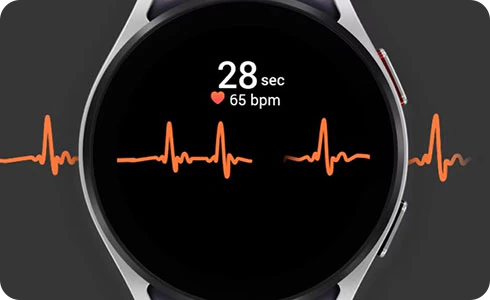
Image Credits: Samsung
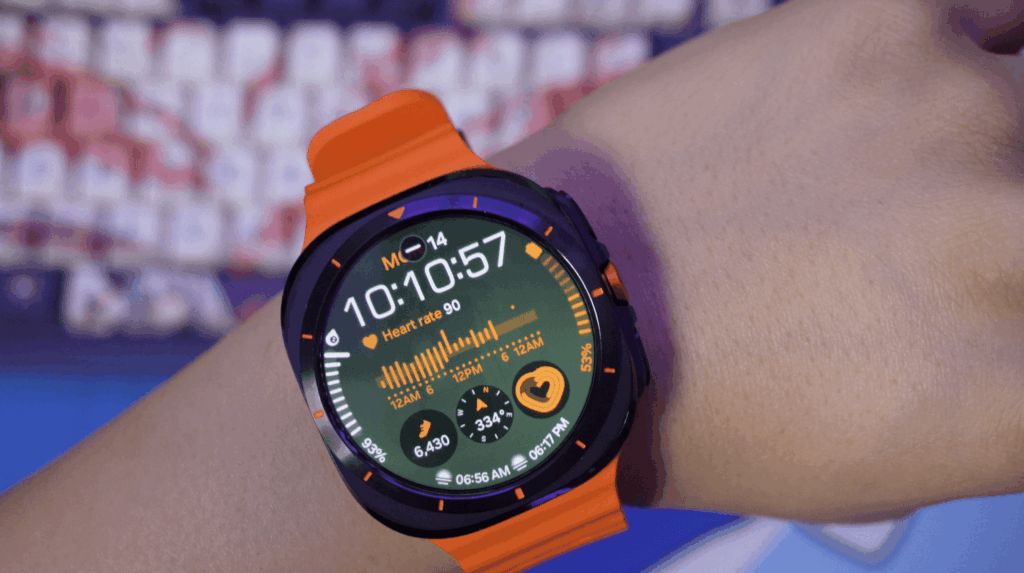
Image Credits: Sypnotix
The Galaxy Watch Ultra introduces a durable titanium build and significantly longer battery life. ECG and irregular rhythm alerts give Android users a credible alternative to Apple.
Strengths
- Solid ECG functionality
- Multi-day battery life
- Premium AMOLED display
- Android ecosystem integration
Disadvantages
- Some features restricted to Samsung phones
- ECG availability varies by region
- Health app can feel less intuitive than rivals
Best for: Android users who want advanced heart monitoring and battery longevity.
Best for Endurance and Performance Tracking
Garmin approaches heart monitoring from a performance perspective.
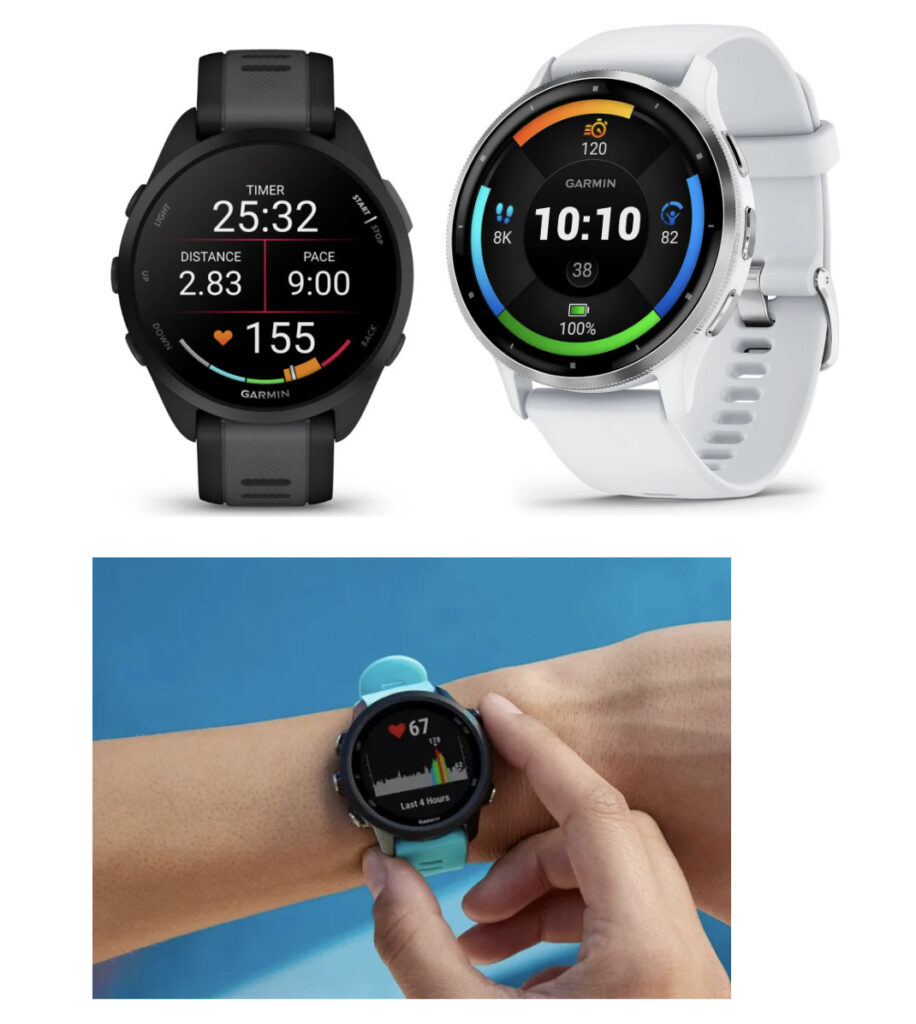
While most models do not include wrist-based ECG, Garmin’s optical heart tracking is highly respected during sustained exercise and endurance workloads. Advanced HRV, stress tracking, and recovery metrics make Garmin ideal for athletes.
Battery life is exceptional, often lasting well over a week.
Strengths
- Outstanding battery life
- Reliable exercise heart tracking
- Advanced performance analytics
- Broad device compatibility
Disadvantages
- No ECG on most models
- Rhythm alerts less advanced
- Health ecosystem less polished
Best for: Athletes and long-training users prioritizing battery life and performance metrics.
Best Balance of Wellness and ECG
Fitbit’s Sense 2 blends heart monitoring with broader wellness tracking.
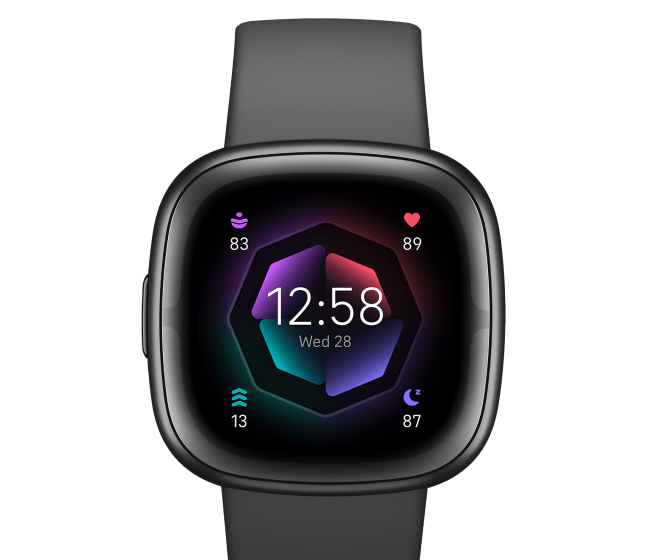
Image Credits: Google Store
It includes continuous heart rate tracking, ECG capability, SpO₂, and stress sensing. Battery life stretches around six days.
The Fitbit app places heavy emphasis on sleep, recovery, and daily readiness insights.
Strengths
- ECG support
- Strong battery life
- Excellent sleep and stress analysis
- Works with Android and iOS
Disadvantages
- Many advanced insights require a subscription
- Slight drop in accuracy during intense workouts
- Interface feels less premium than flagship rivals
Best for: Users who want balanced heart and wellness monitoring without flagship pricing.
Best Hybrid for Long Term Monitoring
If you prefer a traditional watch aesthetic, ScanWatch 2 stands apart.
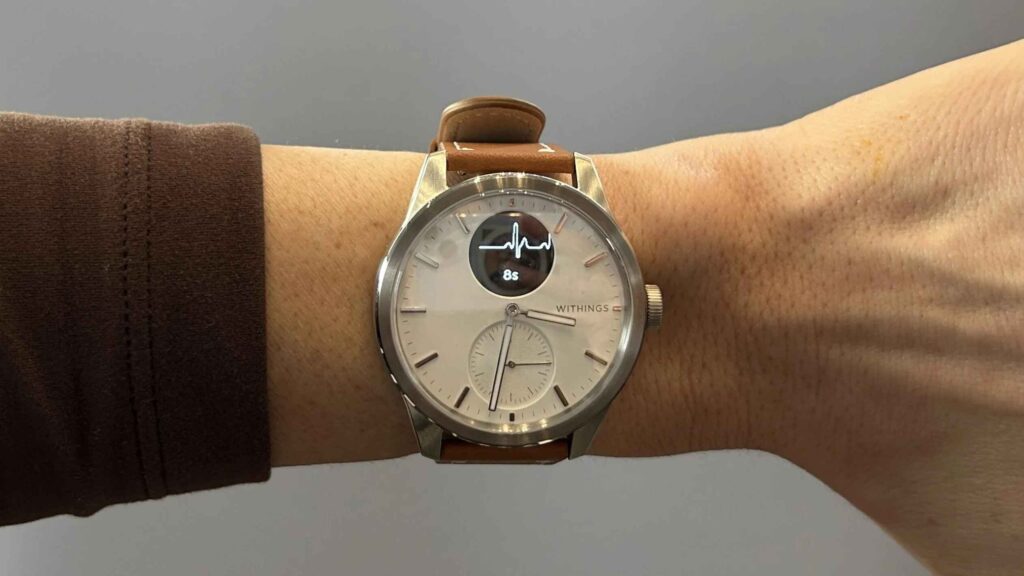
Image Credits: PCMag
It combines optical heart rate, ECG, and oxygen monitoring inside a hybrid analog design. Battery life extends close to 30 days – far beyond typical smartwatches.
Strengths
- Exceptional battery life
- Classic watch design
- Focused heart rhythm tracking
- Long-term trend visibility
Disadvantages
- Limited smart functionality
- Smaller, less dynamic interface
- Not ideal for interactive apps
Best for: Users who want long battery life and analog style without daily charging.
Best for Google Ecosystem Integration
Pixel Watch integrates Fitbit health features into Wear OS.
Image Credits: Google Store
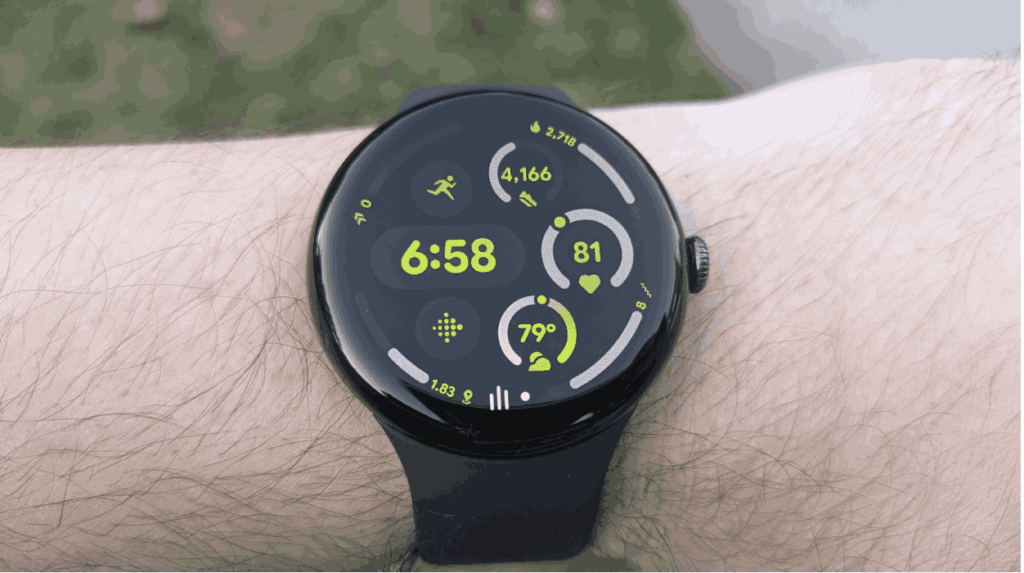
Image Credits: PCMag
It offers optical heart rate tracking, ECG, SpO₂, and advanced alert systems. While battery life is shorter, integration with Google services shines.
Strengths
- Full Fitbit heart feature set
- Clean, modern design
- Deep Google services integration
Disadvantages
- Shorter battery life
- Limited compatibility with iPhone
- Not as rugged for outdoor use
Best for: Android users invested in Google’s ecosystem.
Choosing the best smartwatch for heart monitoring depends on priorities:
- Need ECG and rhythm alerts? Apple, Samsung, Fitbit Sense, and Withings are strong picks.
- Battery life priority? Garmin and Withings lead.
- Athletic performance focus? Garmin excels.
- Deep ecosystem integration? Apple for iPhone, Samsung or Pixel for Android.
Final Verdict
Heart monitoring on the wrist is no longer experimental. It is precise, intelligent, and increasingly proactive.
The best smartwatches in 2026 do more than display heart rate. They recognize patterns. They issue alerts. They track oxygen saturation. They interpret stress and recovery.
Your heart never stops working.
Now your watch doesn’t either.
I’m a tech-savvy marketing strategist who’s always exploring how products fit into real-world behavior and market trends. Leveraging my professional experience in marketing, I evaluate gadgets from strategic and user-focused perspectives. At The Gadget Flow, I analyze features, benefits, and market impact to give readers a deeper understanding of the latest tech.
