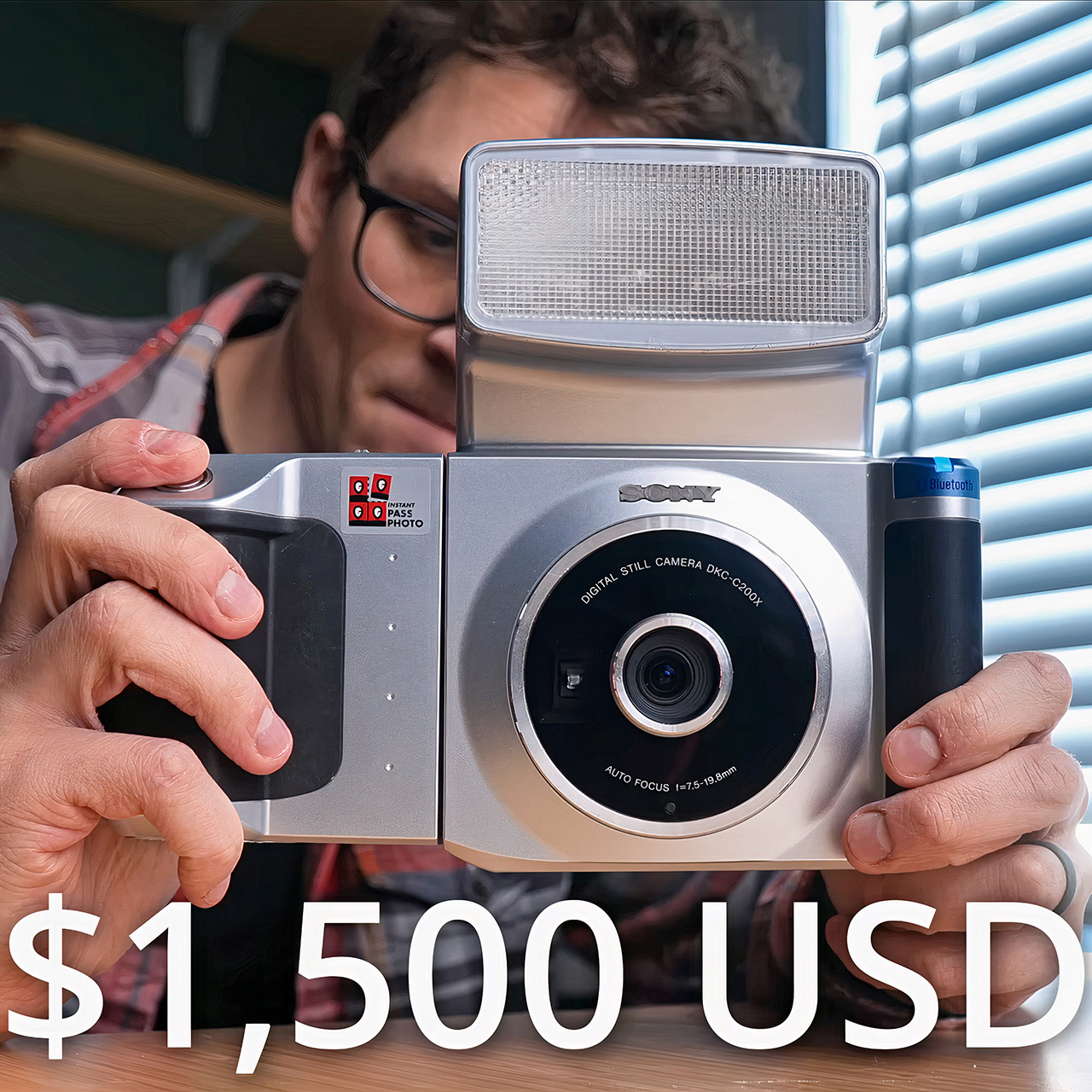
Long before phone cameras became the answer to almost every photography need, Sony released something in 2003 that took a very different approach to the whole idea of a camera. The DKC-C200X was built for one job and one job only, capturing passport and ID photos on the spot. Designed to work as part of Sony’s UPX-C200 system alongside a dedicated printer, the whole setup operated as a self contained unit with no cables or connections required, making it exactly what post offices and ID processing centers needed to turn around photos quickly and reliably
The body was unmistakably industrial, with chunky grips on each side and a large flash unit dominating the top. A swivel screen could tilt up to 90 degrees for easy framing, with built in grid lines to help operators align faces to the exact specifications required for official ID photos. Four AA batteries kept it running through a full working day, and despite the substantial build it was manageable enough for counter work. Inside sat a four megapixel sensor and a portrait friendly zoom lens, with built in memory rather than a card slot, holding up to 20 high quality shots or around 100 at lower resolution.
Sale

Insta360 X4 Air Starter Bundle – Lightweight 165g 8K 360 Camera, Invisible Selfie Stick, Replaceable…
- Lightweight & Portable (165g): A sleek 165g* camera bursting with potential. Ultralight, easy to use, full 360 creativity—you won’t even notice it’s…
- 8K 360 Video: Dual lenses capture every second of the family fun, all angles of your favorite spot, and every highlight in stunning 8K30fps. Finally…
- Shoot First, Frame Later: Never aim the camera, always get the shot. Just hit record, live in the moment, and pick the best angles later with easy…
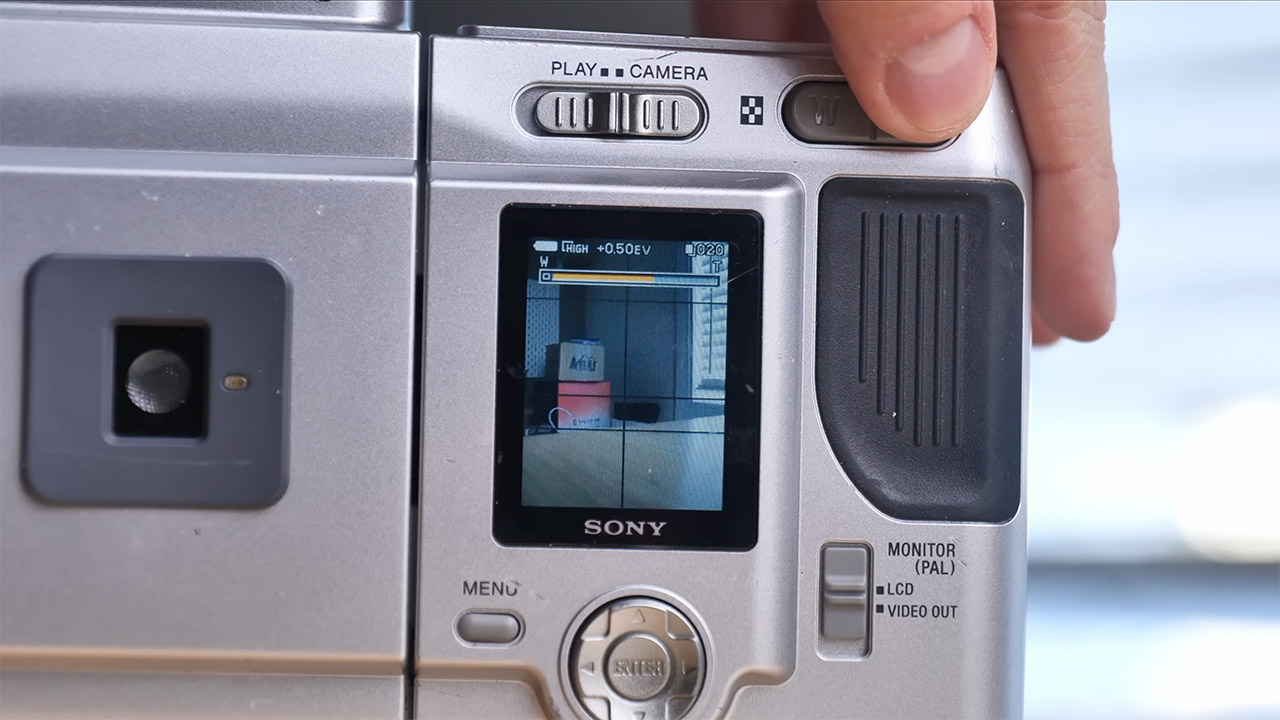
Operation was straightforward. Point, shoot, review the image on screen, select a print layout from the menu, and send it to the printer, which used dye sublimation at 403 dots per inch to produce a sharp print in seconds. One camera could communicate with up to three printers simultaneously to keep things moving during busy periods, and the printer handled multiple sizes and layouts, often fitting two standard passport photos onto a single sheet. The whole system launched at $1,500 and made an immediate case for itself by cutting film processing out of the workflow entirely.
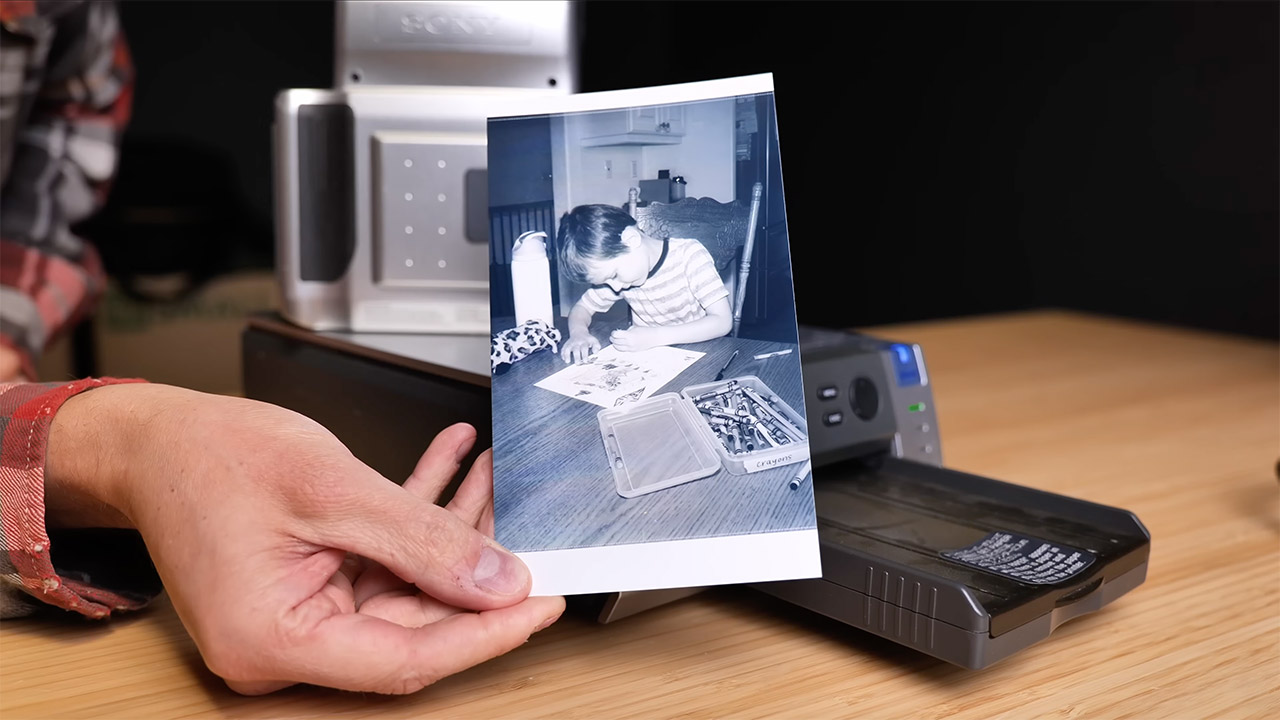
The DKC-C200X sits at an interesting moment in history, right at the point where dedicated digital hardware was beginning to replace traditional processes in professional settings, years before smartphones made purpose built devices like this feel unnecessary. The wireless link between camera and printer was genuinely ahead of its time, and the rugged build was well suited to a full day of heavy use. Today examples turn up mostly at auction or in the hands of collectors drawn to unusual hardware, and those who connect one to a modern computer via USB find the stored files are still accessible through a simple menu setting. A few have taken them beyond passport duty just to see what that oversized flash and solid construction can do with other subjects.
