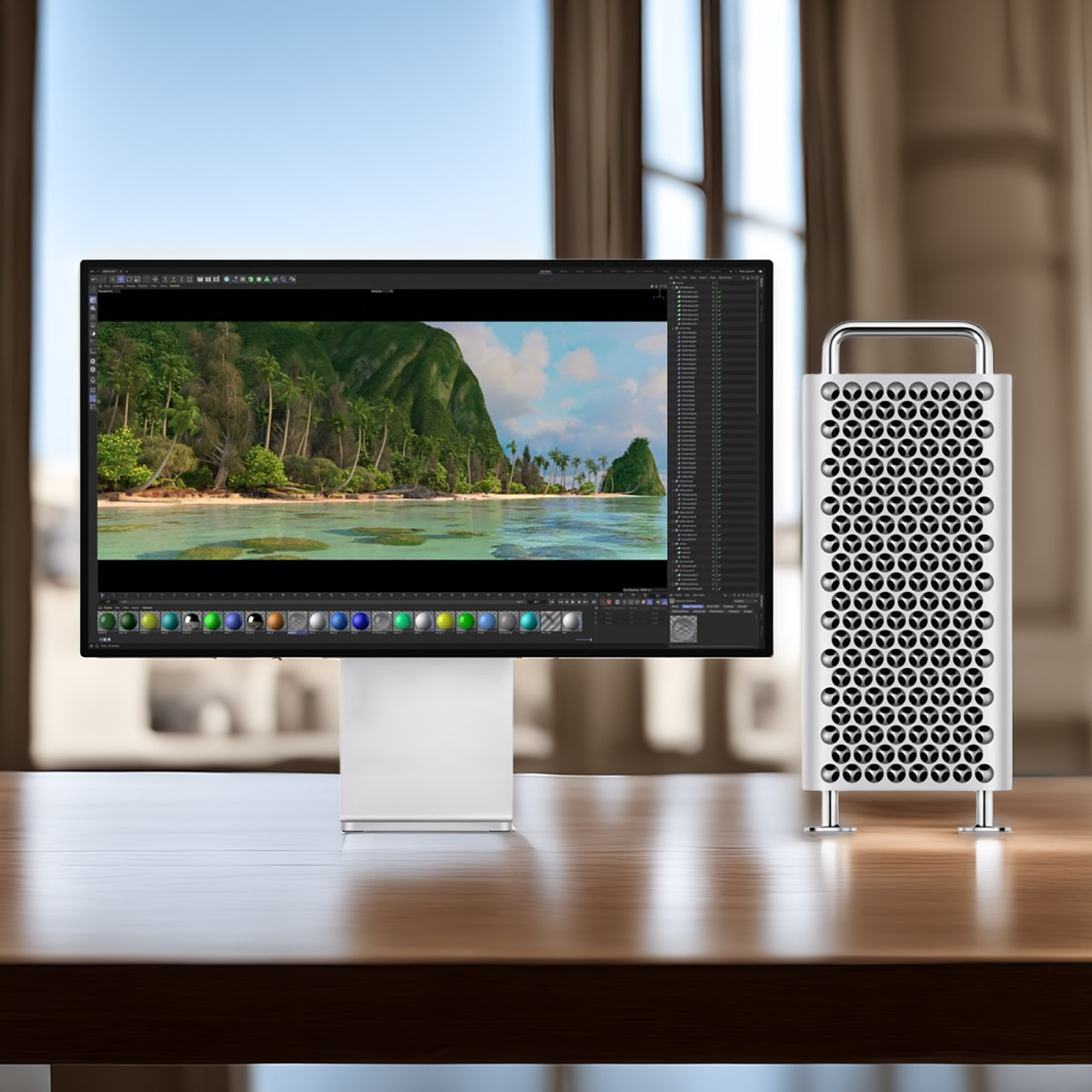
Apple has quietly pulled the Mac Pro from its online store, bringing an end to a machine that spent nearly two decades as the definitive choice for creative professionals who needed every last bit of computing muscle available. Built on the Power Mac foundation, the early towers earned their place in post-production houses and research labs by offering the kind of internal expandability that let users slot in extra storage, graphics cards, and specialized hardware as their needs grew, a level of flexibility that made them genuinely hard to walk away from.
Then 2013 arrived and Apple replaced the tower with a compact cylinder that looked striking but quickly revealed its limitations. The tight design restricted airflow badly and left no room for standard expansion cards, forcing users onto external connections that never matched the speed or flexibility of internal options. Heat built up fast under heavy workloads and upgrades were a headache. By 2017 Apple was publicly acknowledging the design had not worked out and promising something better.
Sale

Apple 2025 MacBook Pro Laptop with Apple M5 chip with 10‑core CPU and 10‑core GPU: Built for AI…
- SUPERCHARGED BY M5 — The 14-inch MacBook Pro with M5 brings next-generation speed and powerful on-device AI to personal, professional, and creative…
- HAPPILY EVER FASTER — Along with its faster CPU and unified memory, M5 features a more powerful GPU with a Neural Accelerator built into each core…
- BUILT FOR APPLE INTELLIGENCE — Apple Intelligence is the personal intelligence system that helps you write, express yourself, and get things done…
Three years later the Mac Pro returned in a tower form that earned the immediate nickname of cheese grater thanks to its perforated metal shell. PCIe slots, multiple drive bays, and support for high end graphics cards gave professionals the modular flexibility they had been asking for, and it felt like Apple had genuinely course corrected. The goodwill did not last long though. The 2019 model received just one meaningful update over its entire lifespan, a move to the M2 Ultra chip in 2023, and then nothing.
While all of that was playing out, the Mac Studio had been quietly making the Mac Pro look increasingly hard to justify. Comparable or better performance in a fraction of the size and at a significantly lower price, driven by the same Apple silicon that eliminated the need for traditional internal expansion in the first place. Most users found they could handle even demanding workloads without ever needing to open a case. The Mac Studio also received regular chip updates that kept it ahead of the larger tower in real world performance, and sales figures suggested most buyers had already figured that out for themselves.
With demand fading and no next generation tower waiting in the wings, the decision to discontinue the Mac Pro was more a matter of when than if. There is no replacement coming. The Mac Studio now sits at the top of the desktop lineup, with the Mac mini handling lighter professional workloads and the iMac covering the all-in-one end of the market.
[Source]
