
I’m not a doctor, but I’ve always believed the secret to longevity is simple: good sleep, real food, lots of movement, moderate stress, low exposure to toxins…you get the gist. Do all of that consistently, for decades. It’s not rocket science. And yet, the rise of longevity stations makes it feel like we’ve entered a new era of preventive health. It’s what I’m examining today.
Devices like the Withings Body Scan 2 and the NuraLogix Longevity Mirror promise something radically different from your smartwatch. Whereas typical wearables tend to focus on step counts or calorie burn, the next generation of wellness devices and check your arterial stiffness, vascular age, and cardiovascular risk. You can even get a longevity score after a 30-second facial scan.
That’s exciting and also a little intimidating. But it also makes me wonder, if discipline is still the foundation of long-term health, do we actually need a longevity station in our bathroom?
What Is a Longevity Station?
A longevity station is a new category of at-home wellness tech. But instead of tracking daily activity, longevity stations can determine your long-term health risks by analyzing biomarkers linked to cardiovascular health, metabolic function, nerve integrity, and even cellular aging.
The idea is to give people insight into their body’s current trends and predictions about what they might mean for the future At a time when preventive healthcare and early detection are becoming priorities, longevity stations try to bring clinical-grade advice to everyday life—right from your bathroom or bedroom.
The category is being defined by devices like the Withings Body Scan 2 and the NuraLogix Longevity Mirror. While they work differently (one uses advanced body scanning sensors and the other analyzes facial blood flow through optical imaging) both try to answer the same question:
How well are you aging?
Here’s what separates longevity stations from traditional health wearables:
- Predictive focus: They estimate future risk, including potential cardiovascular or metabolic concerns.
- Advanced biomarkers: Measurements can include arterial stiffness (Pulse Wave Velocity), vascular age, body composition at the cellular level, heart performance, blood pressure trends, and stress markers.
- AI-powered interpretation: Raw data is translated into health scores, risk assessments, and personalized guidance.
- Preventive intent: The goal isn’t diagnosis, early awareness.
It’s important to note that longevity stations are not meant to replace your doctor. They’re wellness “tools “that help you monitor patterns over time and potentially catch red flags earlier than you otherwise might.
In theory, they shift healthcare from reactive to proactive — from treating disease to managing risk. That’s pretty cool.
Withings Body Scan 2: A Personal Health Lab in Your Bathroom

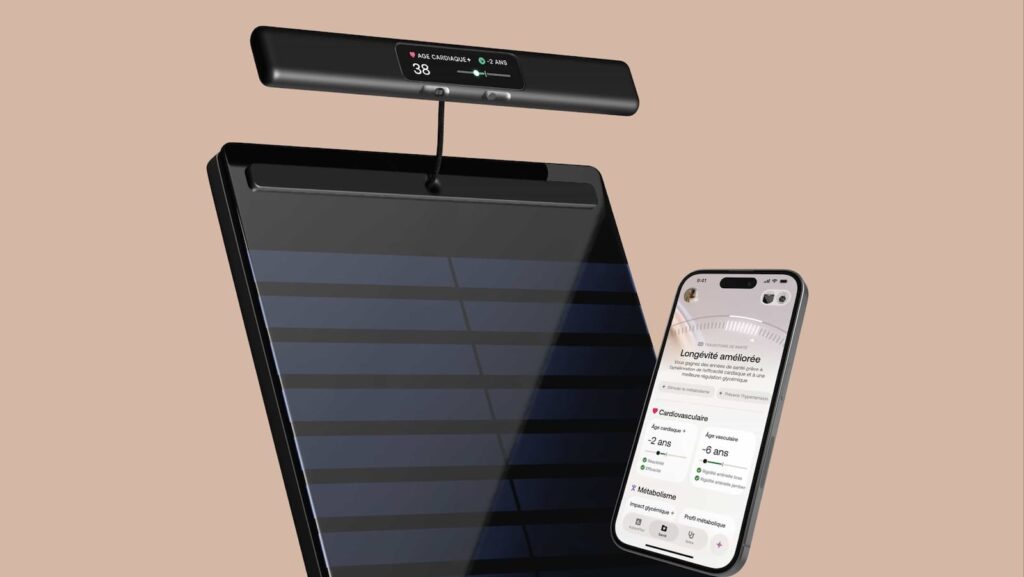
The Withings Body Scan 2 looks like a typical bathroom scale, but it acts more like a miniaturized health lab parked next to your vanity. At first glance, it looks familiar: a sleek, modern scale with a handle you can pull up for extra support. But spend ninety seconds with it, and you start to realize it’s doing things most people only experience in a clinic.
For example, it measures over sixty biomarkers—everything from your arterial stiffness and vascular age to nerve health and heart performance. It uses medical-grade tech like bioimpedance spectroscopy to peek into your body at a cellular level, and impedance cardiography to check how well your heart is pumping. The goal? Spot patterns before problems appear.
Until now, data like this would usually require a visit to a specialist’s office. Via the Body Scan 2, it can be done at home, saving you a trip. What’s more, the on-board AI interprets the results into actionable insights, and even nudges you if something looks off.
NuraLogix: A Smart Reflection on Your Health
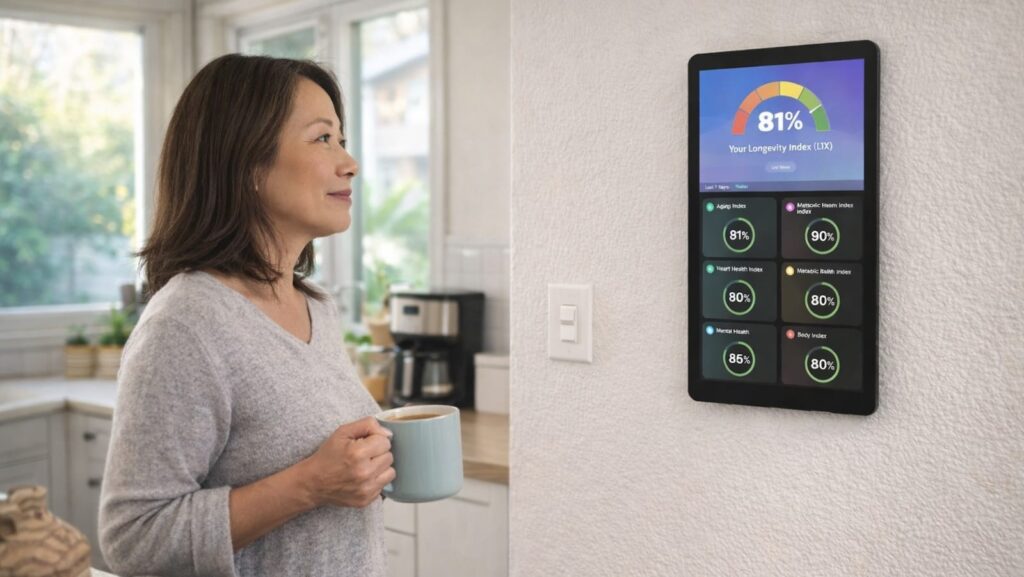
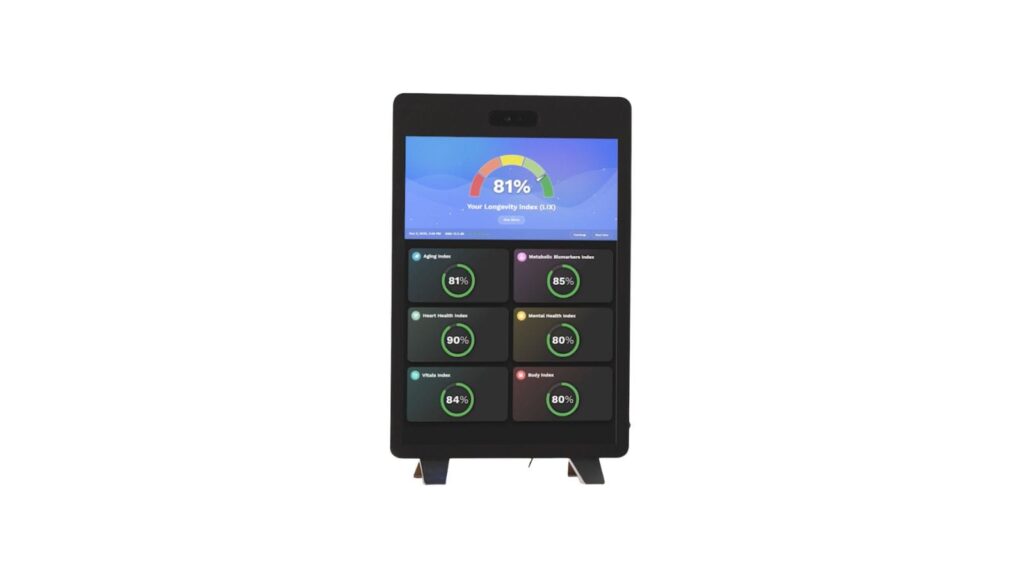
The NuraLogix Longevity Mirror is exactly what it sounds like: a mirror that gives you a snapshot of your long-term health. You stand in front of it for 30 seconds, and its Transdermal Optical Imaging (TOI) tech analyzes facial blood-flow patterns. This allows it to estimate cardiovascular health, metabolic function, stress, and physiological age.
All the data feeds into an AI trained on hundreds of thousands of patient records, producing a Longevity Index score (0–100) and personalized wellness suggestions. It supports multiple users, so it’s suitable for families.
Like Body Scan 2, NuraLogix focuses on wellness, not diagnosis. It can estimate metrics like heart rate and blood pressure, but it’s not a replacement for a doctor. What it does offer is a predictive glimpse of your health, encouraging better habits in everyday life.
The Bigger Question — Is More Health Data Actually Better?
Here’s where I need to be honest: more data doesn’t always mean better decisions. It can empower you — but it can also fuel anxiety and make wellness feel like a scoreboard you can never win.
There’s real tension here. Devices that give you deep biomarker insight are designed to help you catch issues earlier. That sounds empowering in theory. But as health tech culture expands, there’s a growing conversation about the psychological impact of constant tracking and optimization. At large health and biohacking gatherings, leaders warn that relentless data monitoring can devolve into a kind of stress‑inducing obsession.
Then there’s data fatigue — that feeling of being bombarded with metrics that don’t all move the needle in meaningful ways. People in biohacking communities often express frustration with the volume of conflicting signals from different devices, apps, and metrics. They can make health feel like an endless puzzle rather than a path to well‑being.
So I think the real question here is “Will more data make me healthier, or just more anxious?” There’s a psychological trade‑off in predictive tracking technology that’s rarely discussed in product briefs but very real in people’s lived experience.
Who Should Actually Consider a Longevity Station?
If you’re wondering if longevity hubs are worth it, the answer isn’t cut and dry. Longevity stations do have audiences they can genuinely benefit, and those audiences aren’t all the same.
Data‑Driven Personalities
If you love insights and actually act on trends — not just look at them — a longevity station can give you structure. People who naturally respond to feedback thrive on data because it doesn’t add anxiety, it adds accountability.
People With Family History of Chronic Disease
If heart disease, diabetes, or hypertension runs in your family, early indicators matter. Devices that illuminate risk patterns before they become health problems can be a real advantage.
Biohackers and Health Enthusiasts
Biohackers — the folks already exploring sleep tracking, nutrition tweaks, and optimization protocols — will get the most mileage here. These devices give more granular input so they can refine strategies they’re already committed to.
Midlife, Preventive‑Health Focused Adults
People in their 40s, 50s, and early 60s who are thinking seriously about longevity, risk reduction, and proactive health are also prime candidates. For them, longevity hubs can be solid tools in a broader lifestyle plan.
But, they’re not necessary for everyone. If you’re already consistent with sleep, movement, stress management, and healthy eating, and you don’t carry high risk, the real returns from a longevity station might be marginal.
And if you regularly feel anxious or overwhelmed by health metrics? You might increase stress just by adding another layer of numbers and signals to interpret. Devices can clarify risk, but they can also amplify worry for people prone to health anxiety.
The Real Key to Longevity Isn’t a Mirror or a Scale
Take a breath with me here, because I want to be clear: there’s a massive body of research showing that the basic principles of a healthy life matter—like, a lot. Tiny, consistent improvements in sleep, movement, and diet have been linked to longer, healthier lives. In fact, a study of nearly 60,000 adults found that even small increases in sleep, exercise, and healthy eating were associated with meaningful increases in predicted lifespan.
We know what matters:
- Sleep — supports recovery, hormonal balance, and mood.
- Exercise — helps cardiovascular health and metabolic resilience.
- Whole foods — provide nutrients that support immune function and cellular repair.
- Stress reduction — prevents chronic inflammation and supports mental well‑being.
- Sun protection — vital for skin health and cancer prevention.
- Consistency — is the multiplier that turns habits into health outcomes.
Tracking can’t replace these pillars. But tech can highlight where you could improve. Even better, they remove the comfort of guessing. When you see your patterns clearly and early, you can’t easily ignore trends that might hurt you later. As long as you remember that data is a tool, not the destination.
So… what’s the bottom line?
Longevity stations aren’t essential. You don’t need one to live a long, healthy life. But they can be powerful motivators, especially for people who use data to take action.
They won’t replace discipline—that’s still on you. But they can shine a spotlight on areas where discipline matters most. For the curious, self-aware, and those with a family history of chronic illness, they can be valuable tools.
