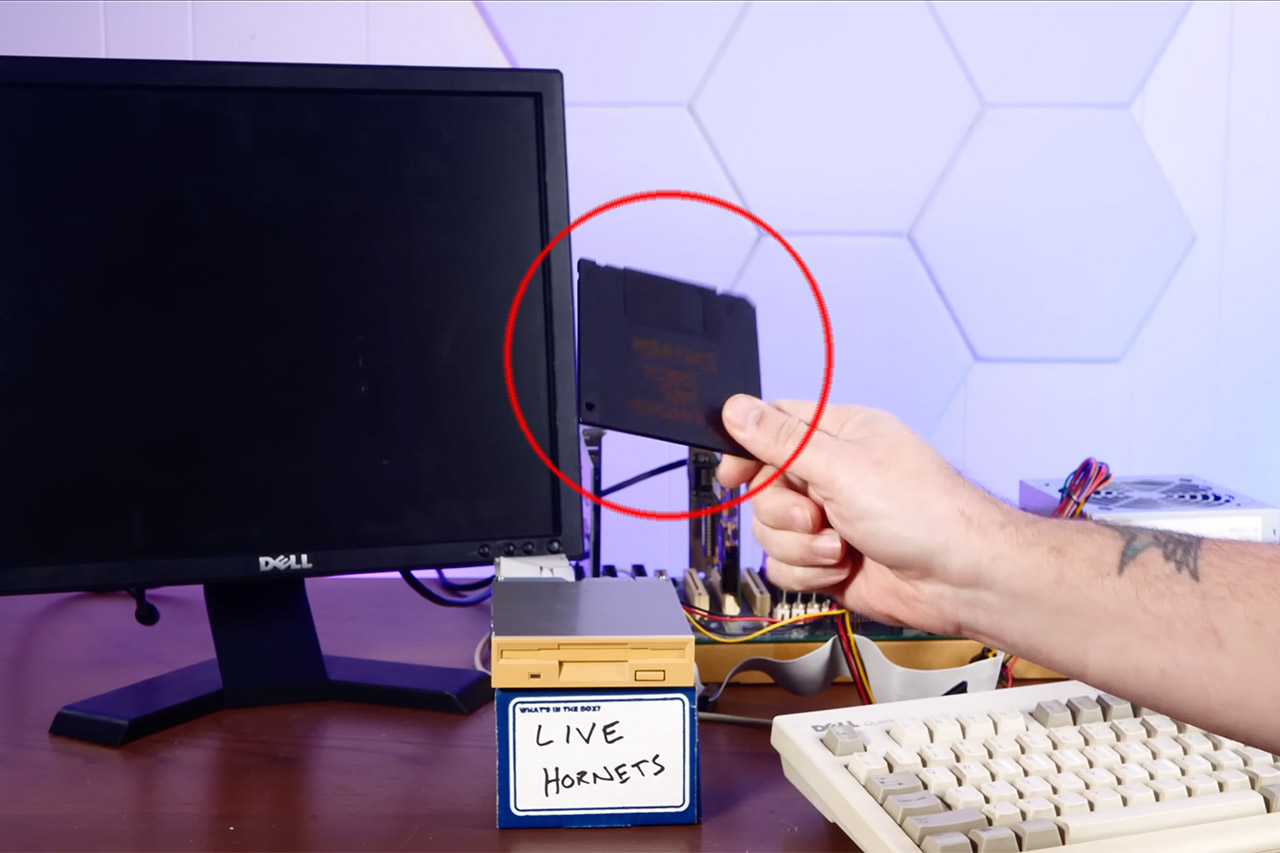
Today, a single 1.44MB floppy disk is sufficient to run an entire operating system and a functional web server. Despite the fact that hardware costs are soaring, this demonstrates that you don’t need the latest and greatest to support a server; just a little old-fashioned efficiency.
Action Retro, a retro computing enthusiast, accomplished this by booting ELKS (which stands for Embeddable Linux Kernel Subset) directly from a floppy disk. ELKS is a lightweight operating system that is only a quarter of the size of a standard operating system, yet it still has a full kernel, TCP/IP networking, device drivers, shell, and other features.
Sale

KAMRUI Pinova P2 Mini PC 16GB RAM 512GB SSD, AMD Ryzen 4300U(Beats 3500U/3550H/N150/N95,Up to 3.7 GHz…
- 【AMD Ryzen 4300U Processor】KAMRUI Pinova P2 Mini PC is equipped with AMD Ryzen 4300U (4-core/4-thread, up to 3.7GHz), Based on the advanced Zen…
- 【Large Storage Capacity, Easy Expansion】KAMRUI Pinova P2 mini computers is equipped with 16GB DDR4 for faster multitasking and smooth application…
- 【4K Triple Display】KAMRUI Pinova P2 4300U mini desktop computers is equipped with HDMI2.0 ×1 +DP1.4 ×1+USB3.2 Gen2 Type-C ×1 interfaces for…
ELKS is a lightweight version of Linux that was originally designed to run on some very old 16-bit machines, so old that it only goes up to the 286 era, but it still has a lot of life in it, as it runs well on 256KB of RAM, and in some cases as little as 128KB, whereas regular images require about 512KB. Of course, the secret to ELKS’ small weight is that it is fully bloat-free, with no new and fancy software or features to get in the way, just a lean, mean, and efficient machine that gets the job done.
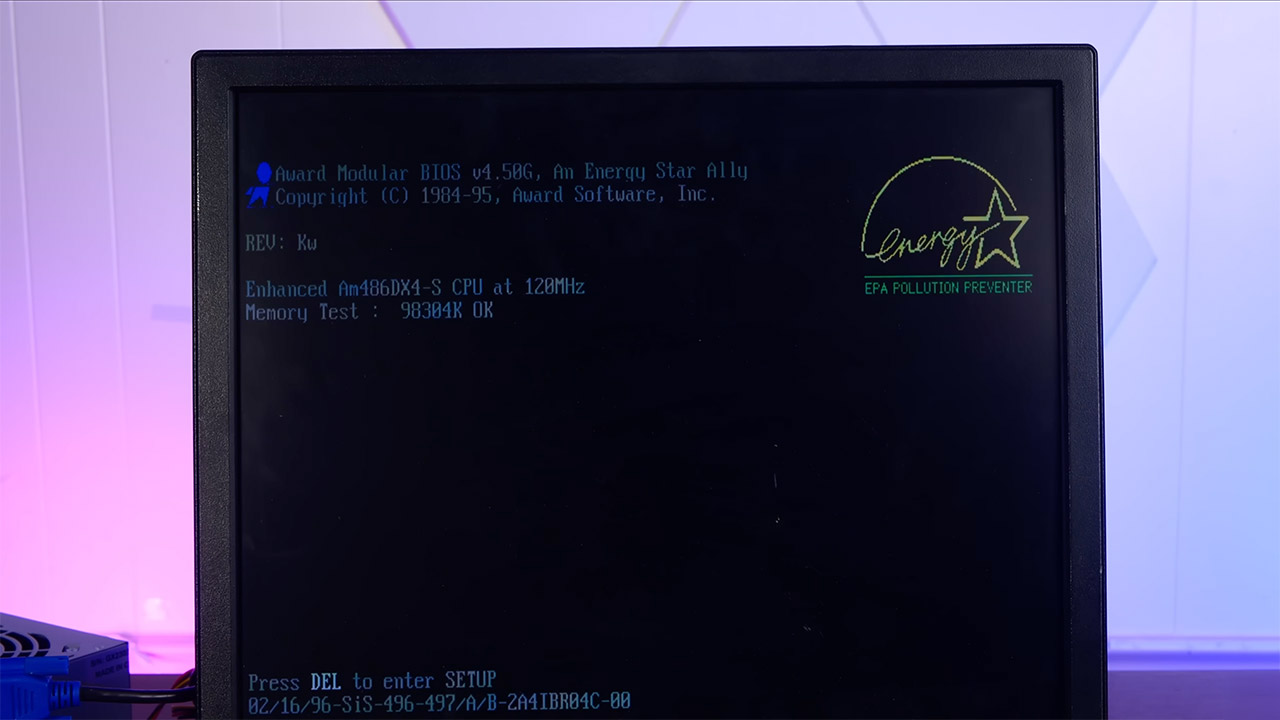
Action Retro made the disk by getting a bootable ELKS floppy image from the project’s GitHub source code repository. He then used his Mac’s dd tool to transfer the image on a regular 3.5-inch floppy disk. He chose a Socket 3 motherboard with a 120MHz AMD 486DX4 CPU to support the ELKS operating system, which he linked to a 3Com EtherLink III Ethernet adapter that happened to include ELKS drivers. The only accessories required are a keyboard, a visual card, and a floppy disk drive. A hard drive is not required because this is a simple system.
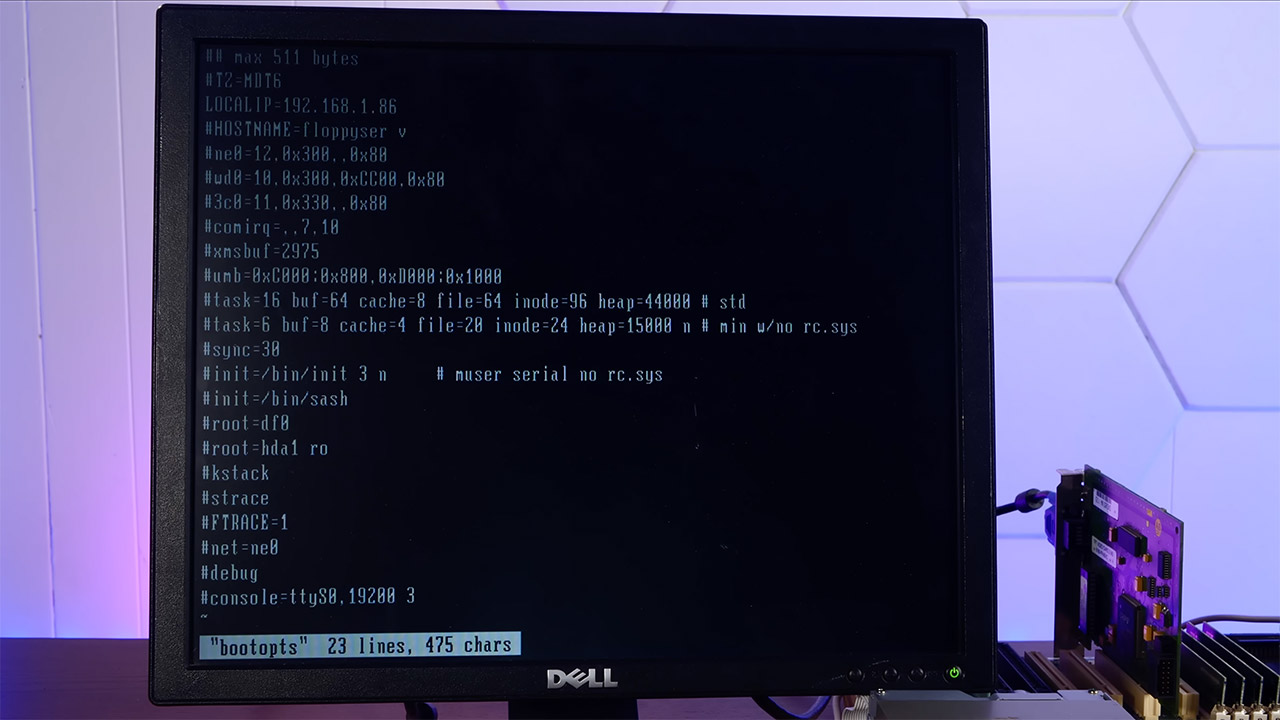
Booting is quick, as you are immediately sent to a command line. The network setup is a little more involved; you must manually update a few configuration files. In boot.opts, you specify a local IP address, hostname, and gateway. In net.config, you load the Ethernet driver and configure the netmask. At startup, the TCP/IP stack and its associated daemons are automatically launched.
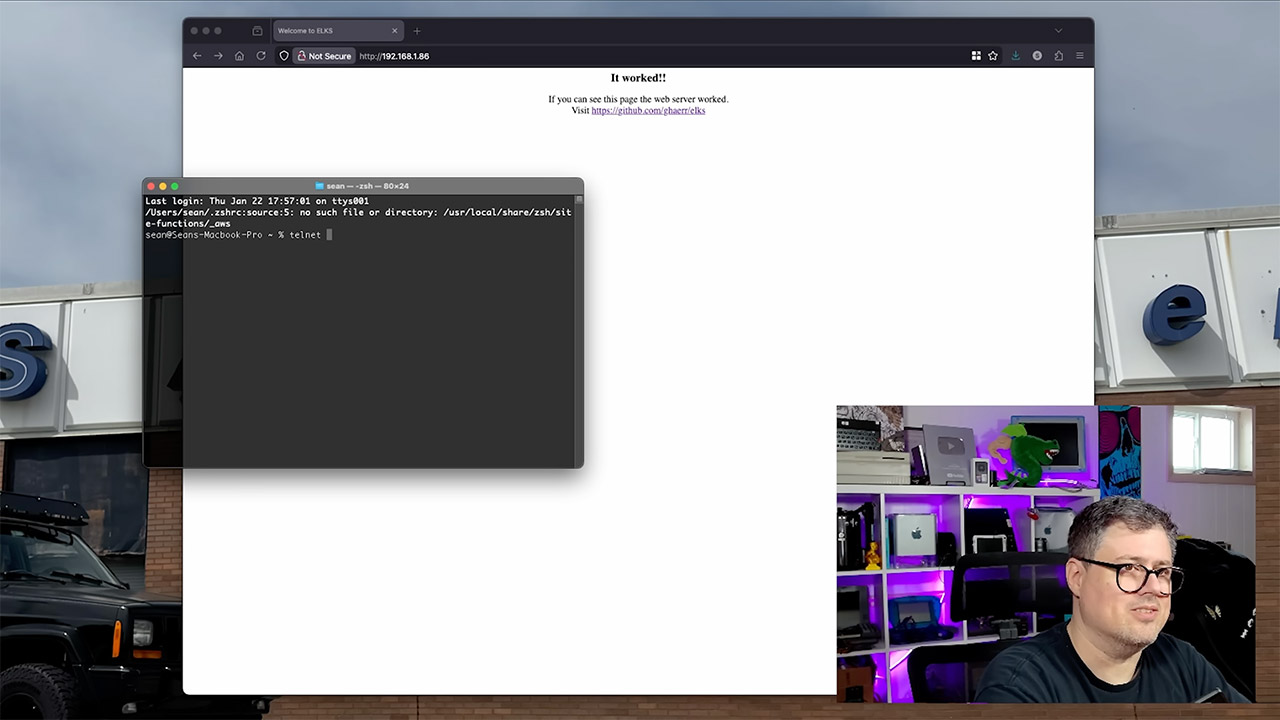
Once up and running, the HTTP server uses the floppy drive to offer rudimentary web pages. Action Retro even used FTP to upload a basic HTML file and a few JPEG photos from another PC. He used vi to edit the page on the ELKS system to ensure its perfection. Because this gadget is running on a floppy disk, the web pages are locally accessible; simply visit the associated IP address and you’ll be ready to go.
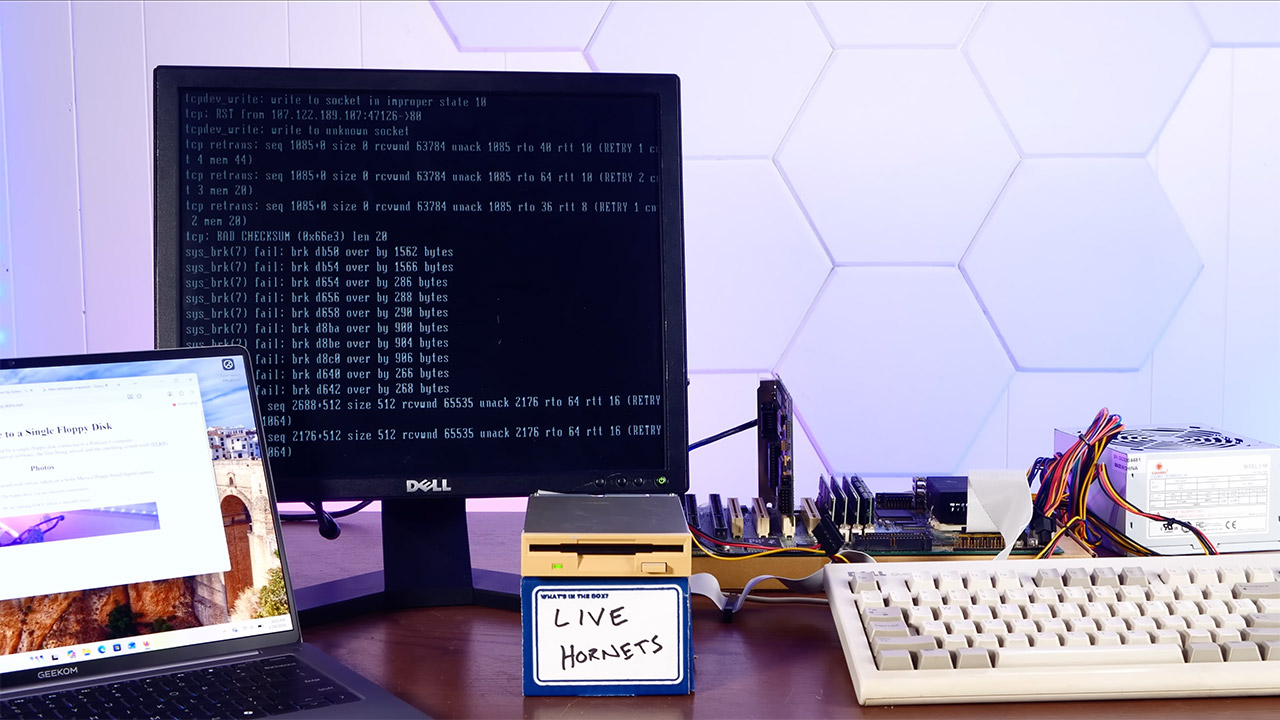
If you have an ancient PC, a working floppy drive, and the ELKS image, you can basically replicate this setup. Just go to the GitHub page, download the image, write it to a floppy drive, setup the networking, and boot; it’s truly that simple. The end product is a nice reminder that sometimes little is more; an outdated floppy disk can still produce a functional server with plenty of space to spare.
[Source]
