
Google’s rolled out its new entry Pixel phone. It brings fresh AI tricks, a few small hardware tweaks, and keeps the same price. The Pixel 10a arrives just before Apple plans to unveil its own budget iPhone.
I dug into the Pixel 10a spec sheet and placed it side by side with the Pixel 9a. After going back and forth more times than I want to admit, I wrote a guide breaking down what sets the 10a apart. I hope my Pixel 10a review helps you choose between the 10a, the 9a, or holding out for the iPhone 17e.
Design and display
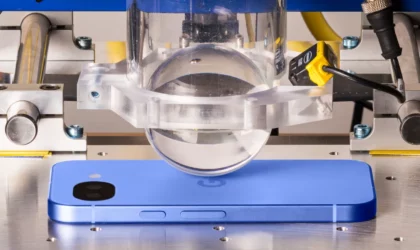
Google Pixel 10a
Affordable smartphone with “best-in-class camera system”
At first glance, I can’t spot any change from the Pixel 9a. The 10a has the same size, the same shape, and the same weight. If you place them next to each other, you might not know which one you’re holding.
I don’t love the look. Some people enjoy the flat back and the lack of a camera bump, but to me it looks like a colored brick with an odd camera cutout.
Google adds new colors: Fog, Obsidian, Berry, and Lavender. The back sits flat, and wireless charging increases to 10 W from 7.5 W. Still, don’t expect a major hardware leap.
Up front, you get the same 6.3-inch display with rounded corners and thick bezels. The hole punch remains in the top center, and the fingerprint sensor stays under the glass.
Peak brightness climbs to 3,000 nits, up from 2,700 on the 9a. That’s a small but welcome bump.
Google also leans into recycled materials. The aluminum frame uses 100% recycled aluminum with a satin finish, while the back cover uses 81% recycled plastic. The frame and back include recycled cobalt, copper, gold, and tungsten. I like that move.
Camera
Google says the Pixel 10a offers the best camera under $500. It packs a 48 MP main camera and a 13 MP ultrawide, and I agree with that claim.
If you want a solid budget phone and care less about the camera, check out the Motorola Moto G Power (2025) or the Samsung Galaxy A16 5G. Both cost under $300. However, if camera quality tops your list, a Pixel “a” model makes the most sense.
People who have used both the Pixel 9 and Pixel 9a say photos in good lighting look almost identical. The Pixel 9 pulls ahead once the light drops, which gives you a good idea of what to expect from the 10a. In bright scenes, you’ll get great shots. In low light, the flagship still holds an edge.
Battery life
The Pixel 10a keeps the 5,100 mAh battery, which I appreciate at this price.
According to Google, the phone delivers over 30 hours of battery life, and up to 120 hours with Extreme Battery Saver turned on. Charging speeds also improve compared to the 9a.
For most people, I expect the 10a to last two full days. That puts it among the longest-lasting phones you can buy.
My thoughts
Reviewing a phone blends facts with personal taste, so here’s what I love about the Pixel 10a and where I think Google missed an opportunity.
What I love
Quick Share tops my list.
On Pixel 9 phones (except the 9a) and Pixel 10 phones, Quick Share works in a smooth, native way, similar to AirDrop. If you use Apple devices alongside a Pixel, you can move files between them without much friction.
So if you own a MacBook and wonder whether you need an iPhone to stay in the Apple ecosystem, you now have more flexibility. With the Pixel 10a, you’ll miss some tight Apple-to-Apple perks, but you can find workarounds for file sharing.
The missed opportunity that bugs me
Take the iPhone 16e. Apple markets it as the successor to the iPhone SE. It packs an A18 chip and an OLED screen, which sounds great on paper.
Still, Apple left out MagSafe. The lack of magnets confused many people, including me.
Google had a huge opportunity here. Imagine magnets across the entire Pixel 10 line, from the 10 Pro Fold down to the 10a. That would have turned heads.
Instead, Google skipped that feature. I understand the reasoning. The 10a targets budget buyers, and costs must stay in check. Magnetic Qi2 charging, which appears on the flagship Pixel 10 models, doesn’t make it to this device.
So, like always, you face a trade-off. You get a strong camera, solid battery life, and a fair price. At the same time, you miss out on magnetic charging perks. For some people, that will not matter. For others, it might.

Rumor has it the iPhone 17e will bring back MagSafe, fixing what Apple skipped in earlier entry-level models.
Verdict
After spending time with the specs, I see the Pixel 10a as a safe, smart update rather than a bold jump. If you already own the 9a, I don’t think you need to rush out and upgrade. But if you hold onto an older phone and want strong battery life and one of the best cameras under $500, this one makes a lot of sense.
I like that Google keeps the price steady while it boosts brightness, charging, and AI features. That matters more to me than a flashy redesign. Still, I can’t help but feel Google left some excitement on the table with the lack of magnetic charging.
At the end of the day, you have to decide what you value. If magnets and ecosystem perks top your list, you might look elsewhere or wait for the iPhone 17e. If you just want a reliable phone that nails the basics and takes great photos, I think the Pixel 10a hits the mark.
