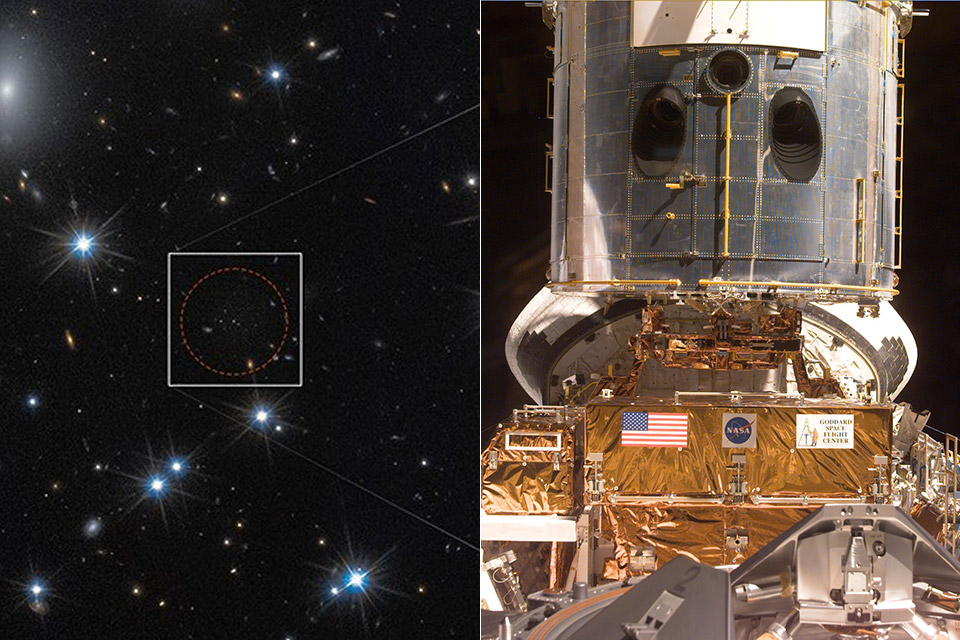
Hubble has just discovered one of the darkest galaxies known to exist. It’s named Candidate Dark Galaxy-2, or CDG-2 for short. This faint object is located in the Perseus galaxy cluster, around 300 million light years from Earth.
Most galaxies announce their presence with a dazzling display of illumination, but CDG-2 does the opposite, with hardly no light seen at all. It’s composed of approximately 99% dark matter, a mysterious, invisible substance that drags objects with its gravity but cannot be seen. The remaining 1% is merely ordinary matter, although even that appears scarce and dull.

Gskyer Telescope, 70mm Aperture 400mm AZ Mount Astronomical Refracting Telescope for Kids Beginners…
- Superior Optics: 400mm(f/5.7) focal length and 70mm aperture, fully coated optics glass lens with high transmission coatings creates stunning images…
- Magnification: Come with two replaceable eyepieces and one 3x Barlow lens.3x Barlow lens trebles the magnifying power of each eyepiece. 5×24 finder…
- Wireless Remote: This refractor telescope includes one smart phone adapter and one Wireless camera remote to explore the nature of the world easily…
A team of researchers at the University of Toronto, led by David Li, discovered CDG-2 by using an innovative method. They were looking for compact, tightly packed globular clusters, which are large, ancient balls of stars that can stick together even in the most chaotic settings. Their computer calculations suggested that there might be hidden galaxies in there, and Hubble provided images that confirmed them correct.
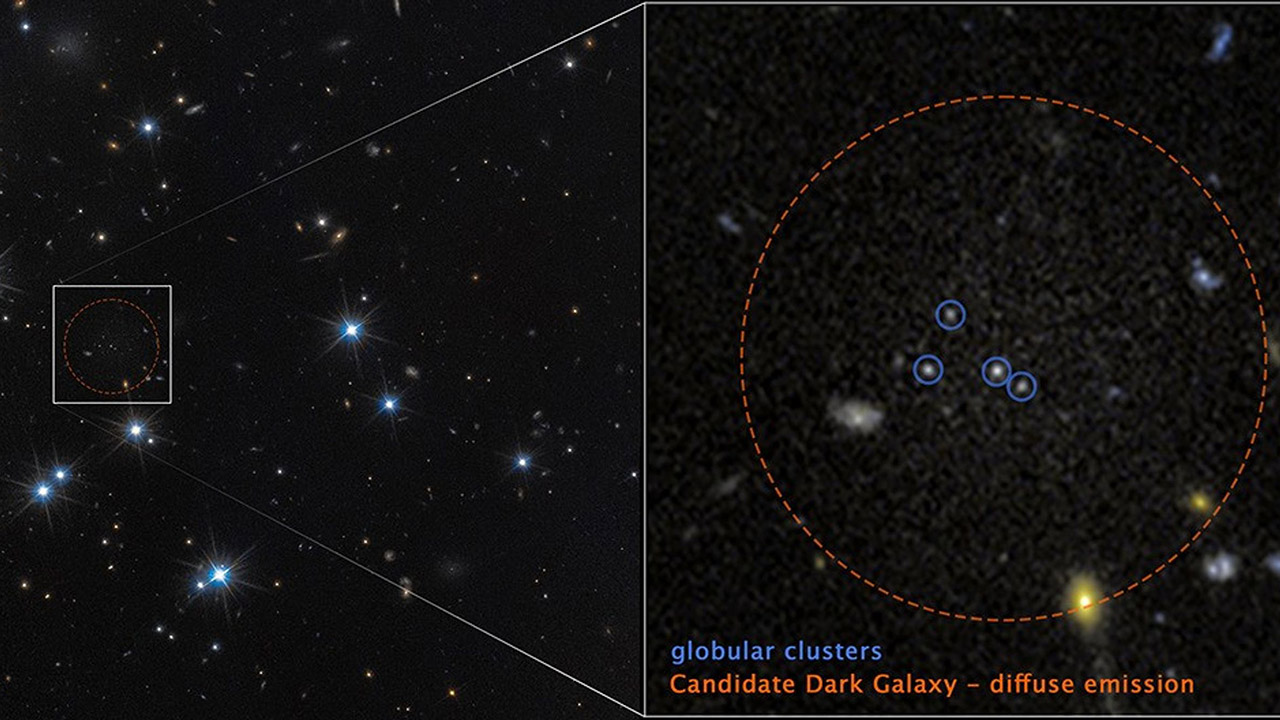
Hubble’s high-resolution images revealed four of these globular clusters clumped together, as well as a faint light surrounding them, very definitely indicating the presence of an underlying galaxy. Then, after more observations of the glow from the Euclid satellite observatory and the Subaru Telescope in Hawaii, it was obvious that the clusters belonged to a single extremely faint galaxy.
CDG-2 actually shines with the brilliance of around 6 million suns at its peak, but this is spread out over a large area. The five clusters account for approximately 16% of the light we can see, with the remainder coming from a collection of extremely faint, scattered stars. To put that into context, the Milky Way has far more of these little globular clusters, as well as a lot more light from all of its billions of stars.
CDG-2 most likely lost much of its gas, the substance that allows stars to form in the first place, due to being located in such a busy area of the cosmos, the Perseus Cluster. This discovery demonstrates how important globular clusters may be in detecting other galaxies that might otherwise go unreported, and low light emitters like CDG-2 challenge our understanding of how galaxies develop, particularly in crowded areas of the universe.
