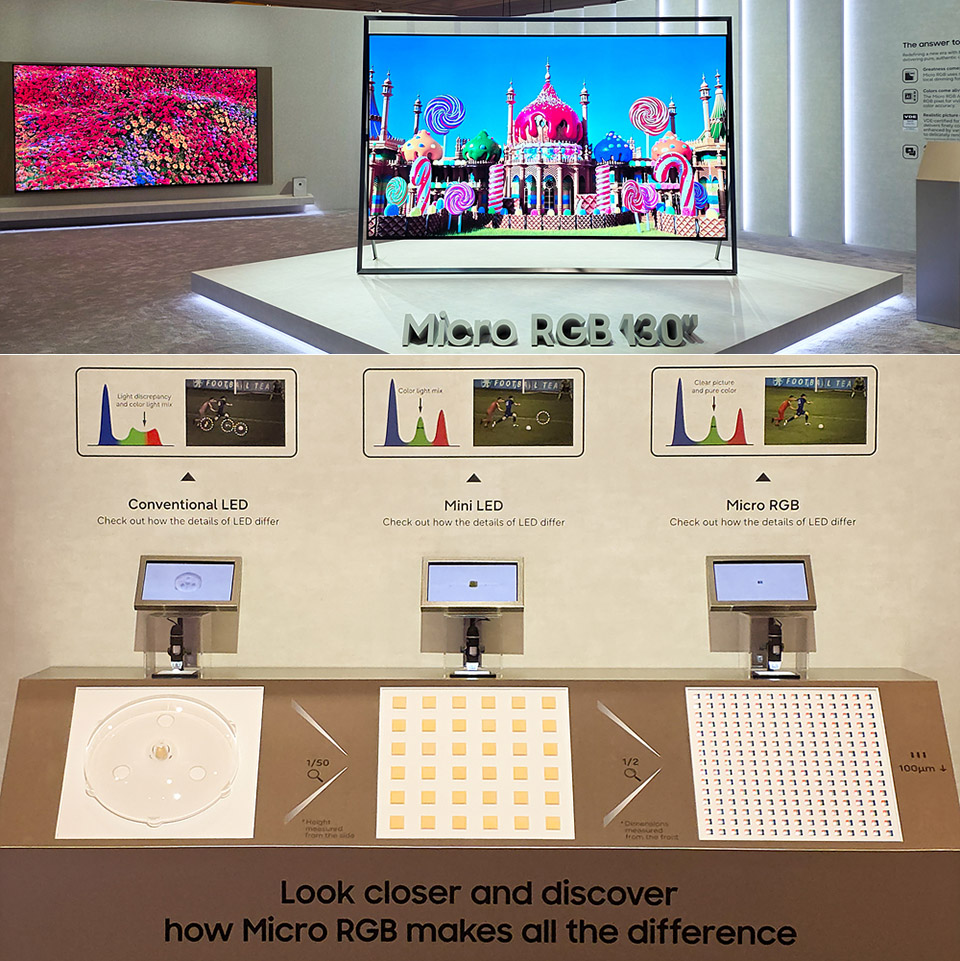
TVs have always struggled to produce a better image, relying on a variety of gimmicks and filters that build up layer by layer. Most current LED TVs operate by projecting a white or blue light behind an LCD display and then utilizing quantum dots or colored filters to convert that light into the reds, greens, and blues you see. It works well in most living rooms, but colors are sometimes washed out in bright environments or simply not realistic enough. OLED panels attempt to address a couple of these concerns by illuminating each pixel independently, but they struggle to get bright enough in rooms with high levels of sunshine, and the image degrades over time.
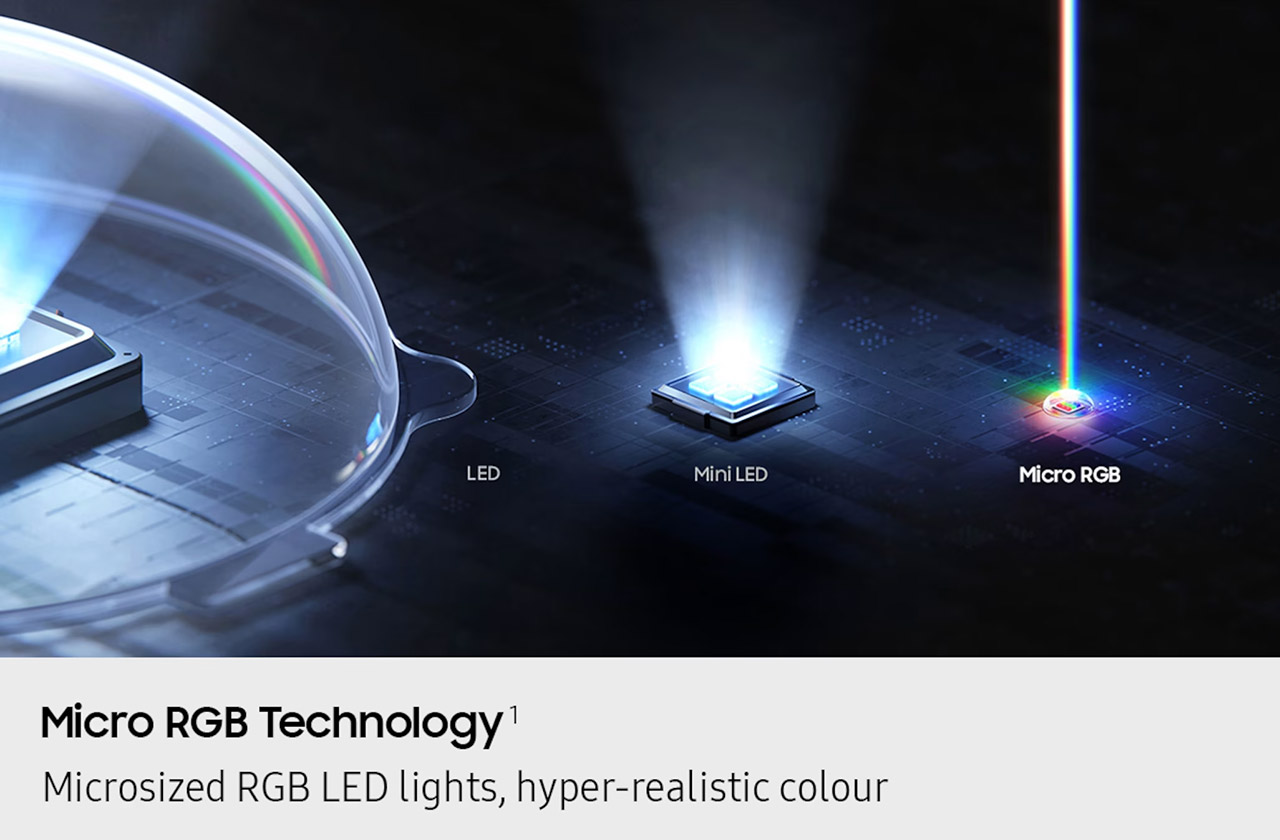
Then came Micro RGB, a new way of doing things. Manufacturers began placing tiny red, green, and blue LEDs directly in the backlight array. These tiny lights shine right through the LCD layer, eliminating the need for additional filters to create the image, and because each color comes from its own source, the TV does a much better job of recreating all of the varied hues while being pure. Samsung’s R95 series, for example, can cover the entire BT.2020 color gamut, which means it performs better at displaying colors that your actual eye can see. LG calls theirs Micro RGB evo and claims it performs as well as OLED in terms of color detail while still offering all of the benefits of LED technology.
Where Micro RGB truly shines is in the brightness department. Old backlights tend to spread the light around evenly or in large chunks, limiting how bright a highlight can get before the light starts to bleed into the darker areas; however, with individual RGB LEDs, you can have much more precise control over the dimming zones, allowing you to increase peak brightness without losing shadows. The result is a screen that manages glare far better in sunlight-filled settings, and reflections are significantly reduced thanks to the new anti-glare coatings. Similar RGB sets are now available on TVs of all sizes, ranging from 55 inches to monsters over 100 inches, indicating that the technology is no longer limited to the ultra-high-end market.
Micro RGB also increases contrast because there are so many more dimming zones, allowing you to turn the lights down or off in precise areas, which significantly reduces the unpleasant ‘halo effect’ that you used to get on prior mini-LED TVs. So your blacks appear deeper, and in dark scenes, all of the details will stand out without any distracting brights getting in the way. Response times are still bound to the LCD layer, so you won’t get the same level of motion handling as you would on an OLED or a complete MicroLED panel, but for movies, sports, and games, the image looks much cleaner and more realistic.
At CES 2026, a number of companies went all out with Micro RGB, showcasing some truly incredible products. Samsung had a 130-inch prototype with a single piece of glass that made the screen appear to be floating, which was really impressive. LG introduced a variety of sizes, including 75, 86, and 100 inches, and emphasized the high color fidelity. Even in real-life watching. Hisense began offering their own RGB screens, while Sony and a few others had their own models ready to go. The largest ones are still quite expensive, but as more and more screens are produced, you can bet your bottom dollar that prices will fall to a level that we can all afford.
[Source]
