
I, for one, hate folding laundry. Nothing feels more futile: I fold clothes only for it to get worn, washed, and then thrown back in the basket to be folded again. On repeat. Forever and ever. Plus, fabric is impossible to grab, and I always end up scratching myself when I’m in a hurry. So, a folding laundry robot should be my dream, right?
You bet it is. If I could plop one in my home, hand it my laundry, and come back at the end of the day to find it all folded, I’d be ecstatic. But there are two catches: it would have to be something I could actually afford, and it would have to work reasonably well on its own.
Enter Weave’s Isaac 0. Trouble is, it costs $7999 plus a $250 deposit (!!), can’t handle large blankets, inside-out clothes, or sheets, and still needs a human operator for tricky folds. In other words, it’s a robot that folds laundry… as long as you’re willing to babysit it.
The Promise vs. the Reality of Folding Laundry Robots
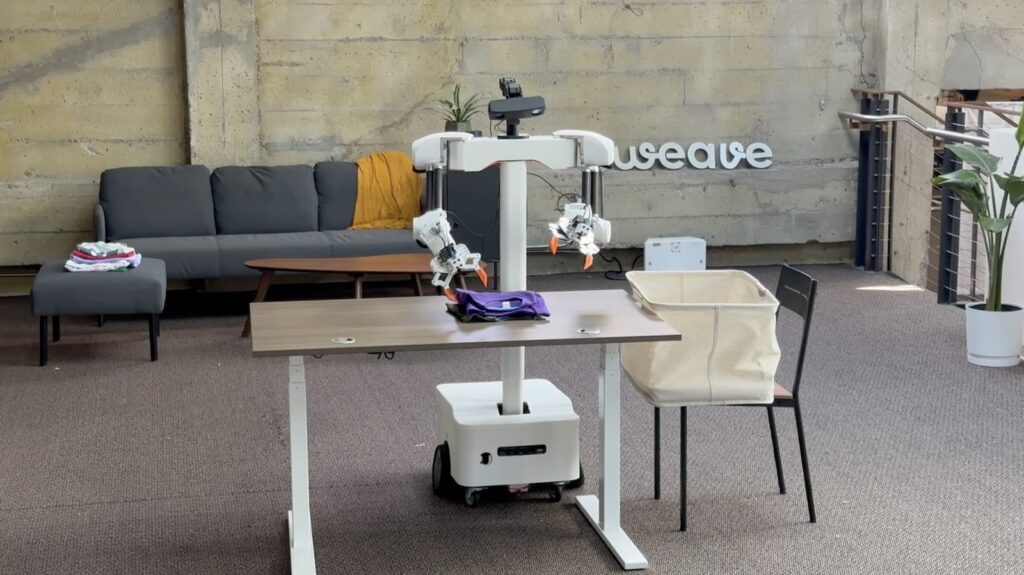
I don’t think I’m the only one who would love an automation trick for folding laundry. That’s why the promise of a folding laundry robot is so appealing. For families without regular in-home help, that time could be spent on so many other things.
That’s why, when LG introduced its CLOiD, a laundry-folding robot, at CES 2026—it got considerable attention. CLOiD could also handle light kitchen work and operate appliances. Journalists, however, noted that its folds were a bit sloppy and actions painstakingly slow.
Weave is entering the same market with its Isaac 0. Unlike CLOiD, Isaac 0 is a stationary robot that folds laundry only. You can set it up on your own over a weekend, plug it into a regular outlet and let it tackle your washed clothes.
It folds items like t‑shirts, long sleeves, sweaters, pants, and towels.
Sounds great, right? But before you picture robotic arms effortlessly gliding through piles of laundry while you sip coffee, there are a few important caveats to be aware of.
It Takes a While — and Still Needs Human Help
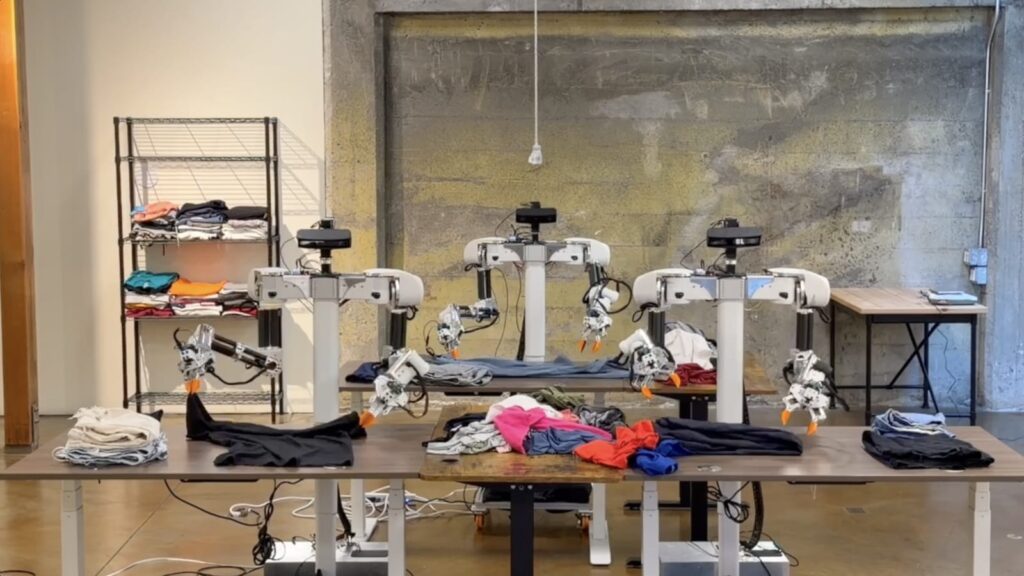
The reality is that Isaac 0 takes around 30–90 minutes to fold a single load of laundry. I’ll be honest with you, my kids are faster. And I only have to pay them in spare change and ice cream. So if you usually spend 15 minutes folding a load yourself, you might actually be waiting longer for a robot with a desktop body and dual arms to do it.
And that’s not all. While Weave says Isaac 0 “runs autonomously as much as possible,” the robot doesn’t always manage tricky folds on its own. If it gets to a garment it doesn’t yet know how to handle, a Weave specialist can jump in remotely for a quick 5–10‑second correction before handing control back to the robot.
That means this so‑called autonomous folding laundry robot is, at times, teleoperated by a human watching through its cameras. It’s an operation concept similar to what we saw from the X1 Neo, which debuted in fall 2025. It’s basically bringing someone into your home to clean it, which may make you raise an eyebrow about privacy and practicality.
What Isaac 0 Can and Can’t Do
Let’s be clear: Isaac 0 folds a range of everyday items, including shirts, pants, sweaters, and towels. It also learns from every correction the robot’s operators make, so it will improve over time.
But here’s where my dreams of outsourcing folding hit a snag:
- It can’t fold large blankets or bed sheets.
- It struggles with inside‑out clothes right from the washer.
- You still need to place the clothes in its workspace yourself—this isn’t a robot that brings the basket to itself.
There’s also real‑world commentary from early sightings that it may not produce the crispest folds—some sources even joked that the results look “fairly bad” compared with human folding.
So what you’re spending nearly eight grand on isn’t a magical laundry elf that zaps your chores away. It’s a giant, tethered folding machine with AI and some occasional human help. And the results might not be that great.
Who Is This For, Really?
It’s no secret that this robot isn’t cheap. With a hefty upfront cost and limited launch region (only Bay Area residents can order initially), this is clearly aimed at early adopters with extra cash and a taste for cutting‑edge tech, not ordinary households.
If you already have help at home—like a part‑time housekeeper or a teenager—those solutions are still cheaper and faster than a robot that takes up to 90 minutes per load.
Another use case I can see is commercial laundry services in apartments with many occupants. People could drop off their laundry to be washed, ironed, and folded and pick it up at the end of the day. Maybe it’s a futuristic dream, though.
No matter how you look at it, the idea of a robot folding laundry—for the price—feels like buying a sports car to drive to the grocery store.
It’s a Step Toward the Future—But Not the Future It Promises
I appreciate what Weave is trying to do. The idea of home robots that reduce daily drudgery is worth pursuing (it’s a huge consumer pain point), and Isaac 0 represents a real product transition from research and prototypes to something that actually shows up in people’s homes.
Weave has been testing related robots in commercial settings, like laundromats, where they’ve gathered real‑world data and improved their systems over time. This effort shows that folding laundry with robots is technically possible, and that experience will absolutely inform future, better versions.
But I can’t help thinking: we’re in a “beta version” of the future right now. If a robot that folds laundry takes almost as long as a human and still needs corrections now and then, we’re a few generations away from something truly transformative.
The Privacy Angle (Yes, It Matters)
One part of the teleoperation setup that doesn’t get enough attention is the privacy aspect. Because the robot may need help from a human operator, someone will see your home via its cameras when that happens.
For many people, that’s a strange trade‑off: pay $8k for a robot that sometimes folds your clothes while letting a remote person peek into your home for a few seconds per tricky shirt fold. It’s a detail you’ll want to think about if you’re seriously considering this sort of technology in your living space.
So… Is It Worth It?
Here’s my brutally honest verdict: No, I wouldn’t spend $7,999 on a folding laundry robot right now.
Is it cool? Yes. And it’s impressive that people are even trying this. But for most of us, the cost, limitations, and pace of performance make it more of a novelty than a necessity.
If you hate folding laundry half as much as I do, you might briefly flirt with the idea of dropping eight grand on robotic help. But the practical value just isn’t there yet. My kids are still cheaper, faster, and frankly more reliable. So are part-time cleaners and drop-off laundry services.
That said, I’ll be curious to watch where this technology goes. If Weave ultimately ships a version of Isaac 0 that tackles the entire laundry process—or even expands to other chores like tidying up or dish stacking—then maybe I’ll start saving up. But for now? My laundry basket can wait just a little bit longer.
