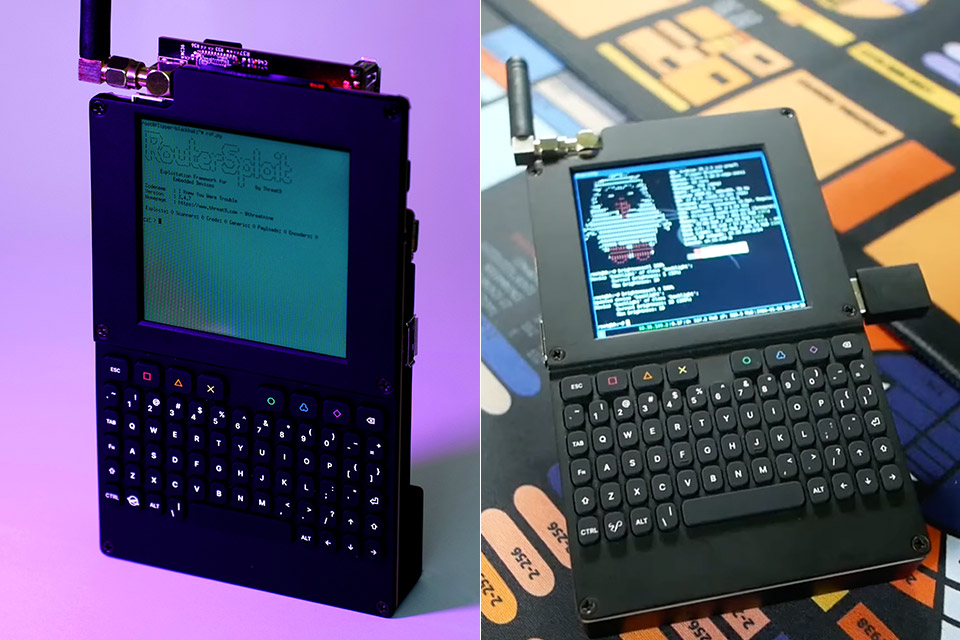
A small stealthy device lies in the hand, like something out of a dusty sci-fi prop box, with a compact screen, a grid of keys, and an antenna protruding from the top. This is The Blackhat, an open-source handheld computer created by Ryan Walker of Rootkit Labs. What began as a conference badge for the WHY2025 event has evolved into something far more capable: a portable Linux system suitable for on-the-go work, security testing, experimentation, and simply playing around.
Walker started with the original WHY2025 badge, which already had some great components inside: a nice display, a decent mechanical keyboard from Solder Party, and enough energy to handle the basics. Then he removed the original ESP32-P4 module and replaced it with his own unique configuration. The core now runs on an Allwinner A33 quad-core CPU running between 1.5 and 1.8 GHz, with 512 MB of RAM. This SoC powers the entire system, eliminating the need for popular single-board computers such as the Raspberry Pi. The result is just a more intentional and self-contained entity.
A 480×480 LCD screen provides good views and is bright enough to be used outside while being sharp enough for text-heavy activities. The keyboard is underneath it, arranged in a grid that encourages you to touch-type even when you’re cramped for space. The keys click with excellent feel, and the layout includes separate navigation and shortcut buttons. Then there are the ports, which provide a lot more flexibility: two USB-A connectors for peripherals, one of which is commonly routed through a hub, allowing you to connect the keyboard and a few other devices at simultaneously. So you can connect a mouse, a software-defined radio, and more storage, and it will still accept up to three USB devices at once. The built-in Wi-Fi keeps it connected, but the antenna provides a bit additional range when you need to be online for certain network chores.
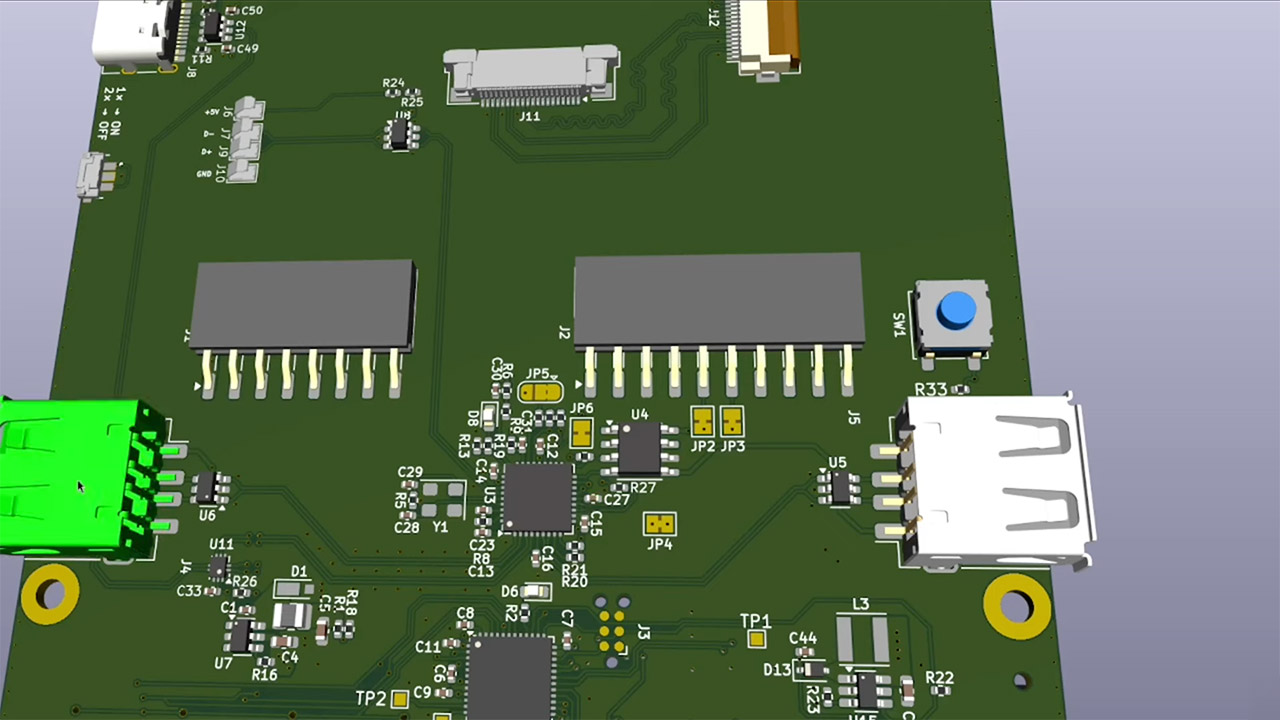
The power comes from a compact battery, which is regulated by the same charging electronics that Walker used in the original badge design. The whole system is small, pocket-sized, and weighs less than a phone, but it has all the power of a desktop-class Linux PC. Walker runs Kali Linux on it natively, but he is switching to Armbian for easier package management and complete access to Kali tools via apt. He’s already had several of the tools up and running, including aircrack-ng, RouterSploit, nmap, and some custom Wi-Fi auditing scripts that all operate well. You can compile code in Python, Go, Rust, or C++, edit it in Vim, browse the web in Firefox or Chrome, and even play Doom to test how far the visuals can be pushed.
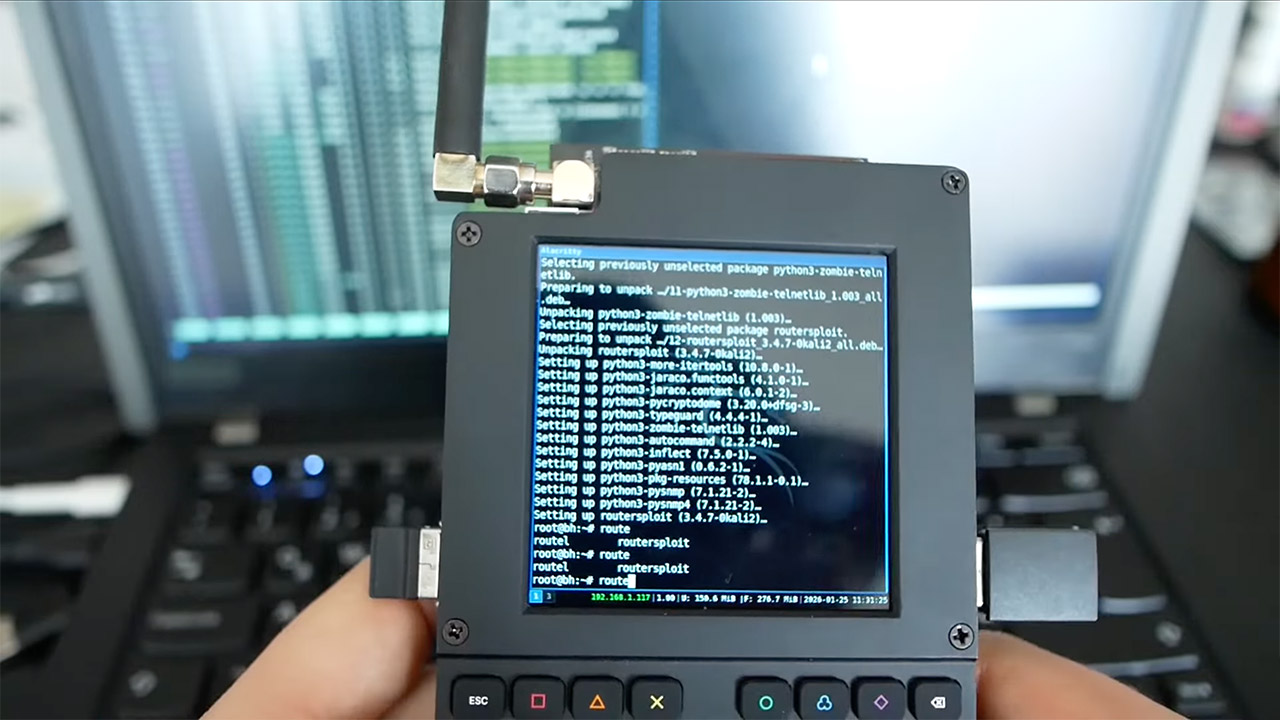
One of the most notable features is its modularity, as the design is based on Walker’s previous Flipper Blackhat, an open-source Wi-Fi add-on for the Flipper Zero. The Blackpants serve as a carrier board, and the Blackhat module just slots in via headers, so you don’t have to utilize it. All of the resources are available on GitHub under an MIT license, including the schematics, PCB layouts, case designs, and firmware, so you can construct it yourself or purchase a kit from Walker’s site. The nicest feature is that there are no proprietary components that will lock you out; everything is documented and customizable.
[Source]
