Smartphones are more powerful than ever, but they’re also missing longtime features users became accustomed to. In particular, the microSD card slot, physical SIM tray, 3.5mm headphone jack, and notification slider have all been removed from most modern flagships. The headphone jack might be the one feature removal we’re still having a hard time getting over. I made peace with losing the 3.5mm port on my smartphones years ago. That is, until I switched to a new Android phone that still has it.
I bought the TCL 60 XE NXTPAPER, a budget Android smartphone with a unique calling card — it sports a paper-like, anti-glare matte display with viewing modes for e-reading and more. An unexpected benefit of switching to the TCL 60 XE NXTPAPER was getting a headphone jack back on my primary smartphone. I thought it would bring renewed convenience and better sound quality back into my life, but the opposite happened.
The 3.5mm jack isn’t as great as I remembered
When I want wired audio, I need better than my phone’s DAC
Contrary to popular belief, the 3.5mm headphone jack isn’t completely obsolete on smartphones yet. Asus makes two flagship models with one onboard, the ROG Phone 9 Pro and the Zenfone 12 Ultra. Sony, Motorola, and Samsung are a few other brands that still offer the jack connector on certain models — usually budget ones, like the Motorola Moto G Stylus 2025, or niche ones, like the Sony Xperia line. Sure enough, my budget TCL 60 XE NXTPAPER came with the port I left behind long ago.
For perspective, I love wired audio gear. Nothing beats the kind of quality you can get from a pair of wired in-ear monitors (IEMs) or studio headphones. In fact, I keep an old Android phone with a headphone jack on-hand as a digital audio player. I’ve also got a desktop digital-to-analog converter (DAC) on my desk and use an iPod Classic for music on every flight to this day.
With that being said, the TCL 60 XE NXTPAPER became the first phone with a headphone jack I have used as my personal daily driver since the original iPhone SE. That phone came out almost a decade ago, so it has been a while since I had the convenience of a 3.5mm port on my primary device. It was nice to be able to plug in a pair of headphones straight into my phone without fiddling with adapters or losing a charging port. But everything else about the experience was worse.
Depending on the quality of your phone’s inbuilt DAC, the volume coming out of the 3.5mm jack might not be that high. If you like to use high-impedance headphones or quality IEMs, you’ll find that the stock headphone jack doesn’t have the power needed to reach their full potential. Additionally, since Android downsamples hi-res audio files played out of an inbuilt headphone jack, you’re missing out on the best quality if you use it.
Android often defaults to 48kHz resampling for hi-res audio files played through a default device output, which is higher than CD-quality. However, if you want to play files up to 192kHz/24-bit at their full quality, you’ll need an external USB DAC.
I quickly went back to my USB-C DAC instead
Better sound quality and extra power are worth the hassle
After a few days of using the inbuilt 3.5mm headphone jack on the TCL 60 XE NXTPAPER instead of my USB-C dongles or wireless headphones, I gave up. For situations where convenience is paramount, a pair of truly-wireless Bluetooth earbuds is less of a hassle than using wired ones using the headphone jack. When I wanted a high-quality, intentional listening experience, I turned to my USB-C DAC accessories for extra volume and detail than my phone’s headphone jack and DAC could provide.
Smartphone headphone jacks are known to provide low power that’s insufficient for certain pairs of wired headphones or earbuds. I experienced this firsthand, as my Sennheiser HD600 headphones sounded extremely quiet while connected to the TCL 60 XE NXTPAPER’s jack. It’s true that the HD600s are a bit demanding for the average 3.5mm jack. That said, if I’m choosing wired audio in 2026, I need quality over everything else.
So, despite having a 3.5mm jack right there on my new phone, I found myself choosing to plug in a USB-C DAC instead. My go-to accessories are the Fiio KA11 USB-C DAC dongle or the Linsoul Kiwi Ears Allegro Mini, both of which pull extra volume and sound quality out of the same headphones. Both are equipped with a custom chip for amplifying and processing audio outputs, and the Kiwi Ears Allegro Mini is unique in its support for 3.5mm and 4.4mm outputs.

Lossless audio is pointless without these cheap Android accessories
Want to use Apple Music or Spotify’s lossless audio support? You’ll need some extra gear to make the most of it.
There’s one thing I love about the headphone jack
Charging and listening to music over two cables is ethereal
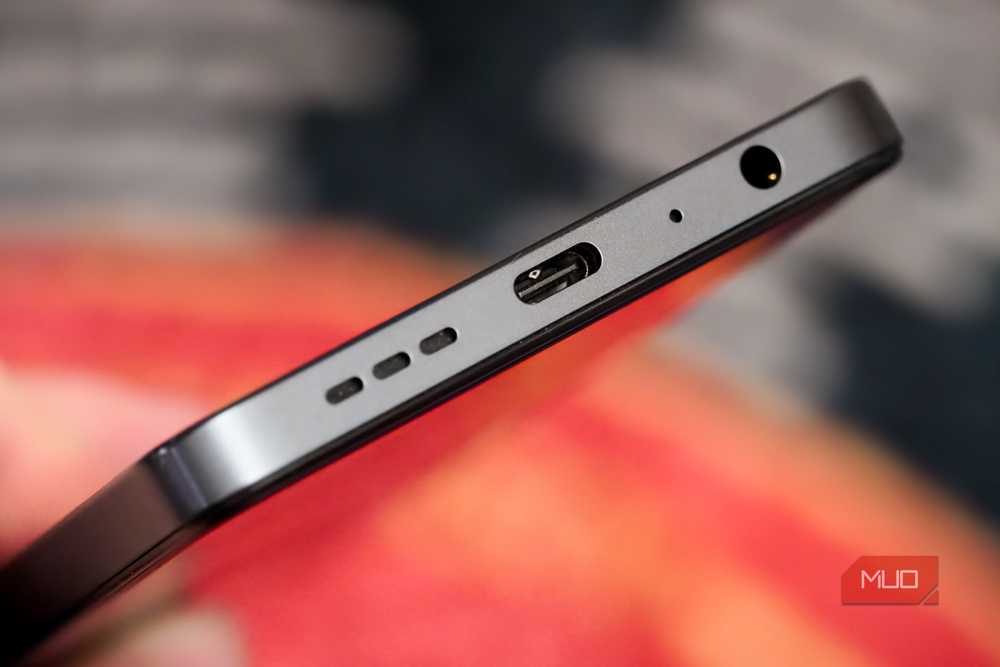
The entire experience opened my eyes to why the headphone jack was removed from modern smartphones in the first place. Unless you’re using a niche Android phone or digital audio player with a high-caliber DAC, the 3.5mm port is not the best way to connect to wired audio gear. The USB-C port is simply better, as it supports both analog output with USB-C headphones and direct USB connection with external DACs and dongles.
The things going for the headphone jack are that it uses less power than a USB-C audio accessory while keeping your phone’s charging port free. It’s incredibly annoying to have to wirelessly charge my phone while using a USB-C DAC. That annoyance is exacerbated by the fact that playing hi-res audio out of a USB-C DAC is already a battery killer. Even then, I’d rather have a phone with two USB-C ports for versatility — like the Asus ROG Phone 9 Pro — than one with a single USB-C port and headphone jack.
Now that I’ve gotten used to connecting wired headphones to my smartphones using powerful USB-C DACs, using a standard headphone jack is underwhelming. I don’t miss it, and I’ll continue avoiding using the 3.5mm jack on my TCL 60 XE NXTPAPER in favor of USB-C audio.
