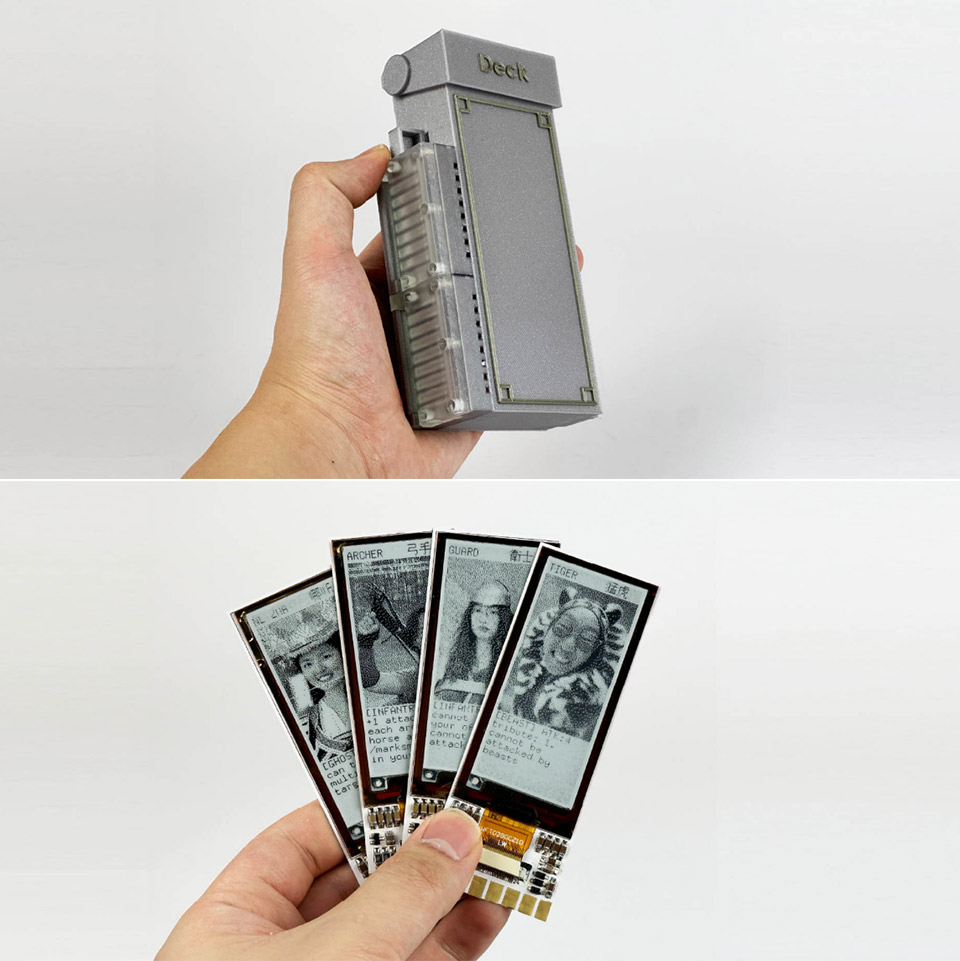
Researchers at MIT’s Media Lab are developing a new deck of AI-enhanced playing cards featuring electronic ink displays, called Pocket Ink. At a player’s request, each card can suddenly change to display a new image. A companion box acts as the brain, handling the changes and connecting to outside services. When you place a card in the box, it acts as a small reset; pull it out and you’re ready for the next hand.
Quincy Kuang was the mastermind behind the design, while Lucy Li, Lingdong Huang, and Hiroshi Ishii rounded out the team. They leaned heavily on their childhood recollections of playing card games such as Yu-Gi-Oh! and Pokémon. Those games were all about making friends through trading cards and trash talking at the dinner table. Pocket Ink aims to mimic the same feeling, but with a modern twist.
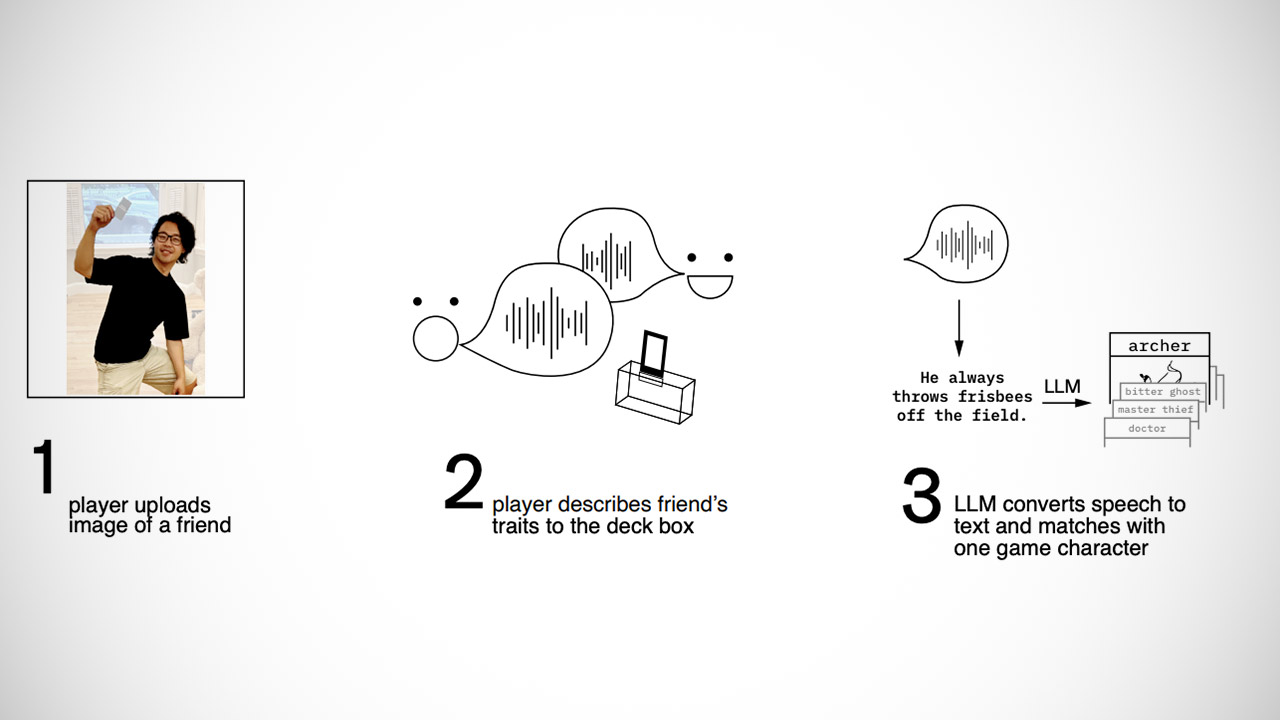
When you start a game, all the cards are blank. To populate them, gamers simply tell a story about a friend, an interesting fact, or a quirk into the box. The box then turns it to text, and a language model searches a library of 53 different character types for the best match. Take a picture next, and the box will fuse your mug with the chosen character to create a personalized portrait. That’s it; the card will update with the new image seconds later. Before you know it, everyone at the table has a card that represents a genuine person.
Heaven’s Mandate is a proof-of-concept game in which two to four players compete with their own created characters. They put it up against a version with generic art, and let’s just say the personalized one dominated. Players were fighting about whose characters they shared, making jokes about the images, and generally becoming more immersed in the game. Cards featuring generic art, on the other hand, felt flat.
When the cards are updated, they consume very little power and remain in this state until it is time to change. They plan to convert the box into a compact self-contained machine one day, with a smaller AI on board to allow you to play on the go even when there is no internet. They conducted some preliminary testing with these small versions, and what they discovered was quite attractive – a little imperfect, but loving.
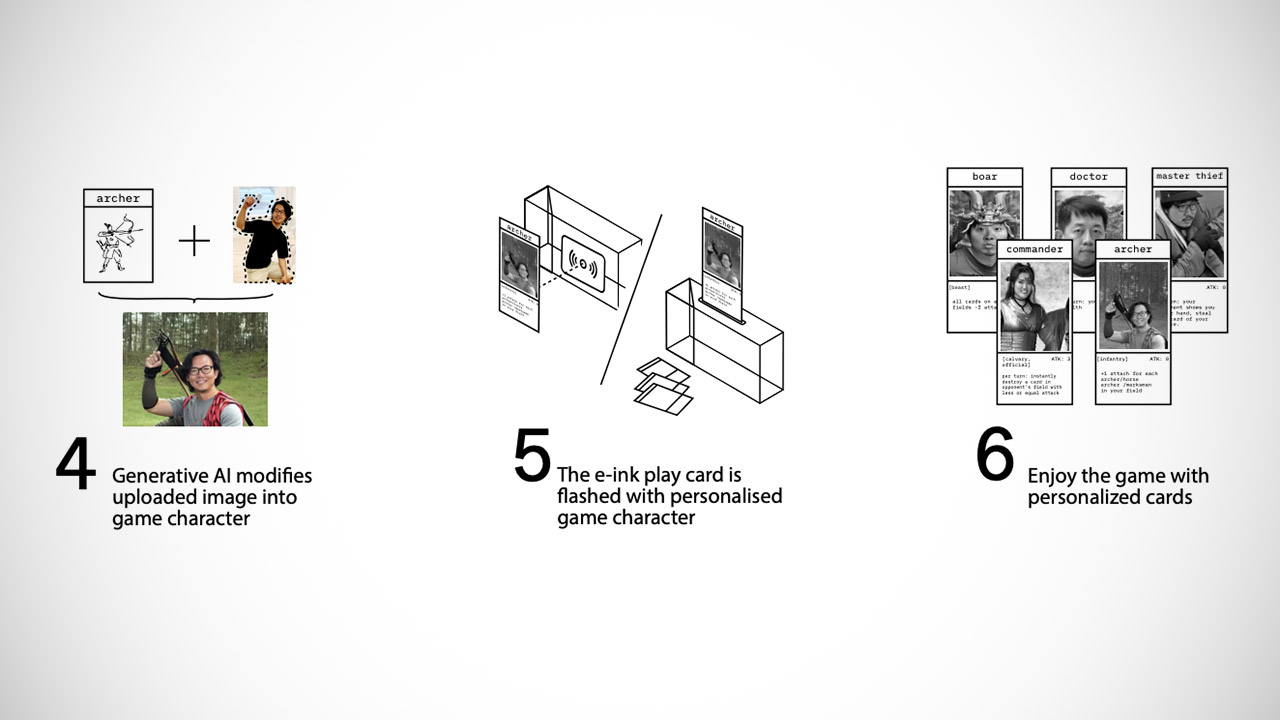
You can simply switch between themes and game types (for example, ocean warriors on a stormy night), and the cards will react accordingly. Maybe they’ll display a character in the middle of a combat or glow with power-ups. Players can flip the card over to disclose the update, which just adds to the tension of the game.
Kids these days are hooked to their iPads and consoles. Pocket Ink turns that on its head by putting them in shared places with real cards that they can hold and interchange. The clever AI handles all of the heavy lifting behind the scenes, allowing players to simply have fun with one another. The ultimate result is a lot of shared storytelling that revolves around the group.
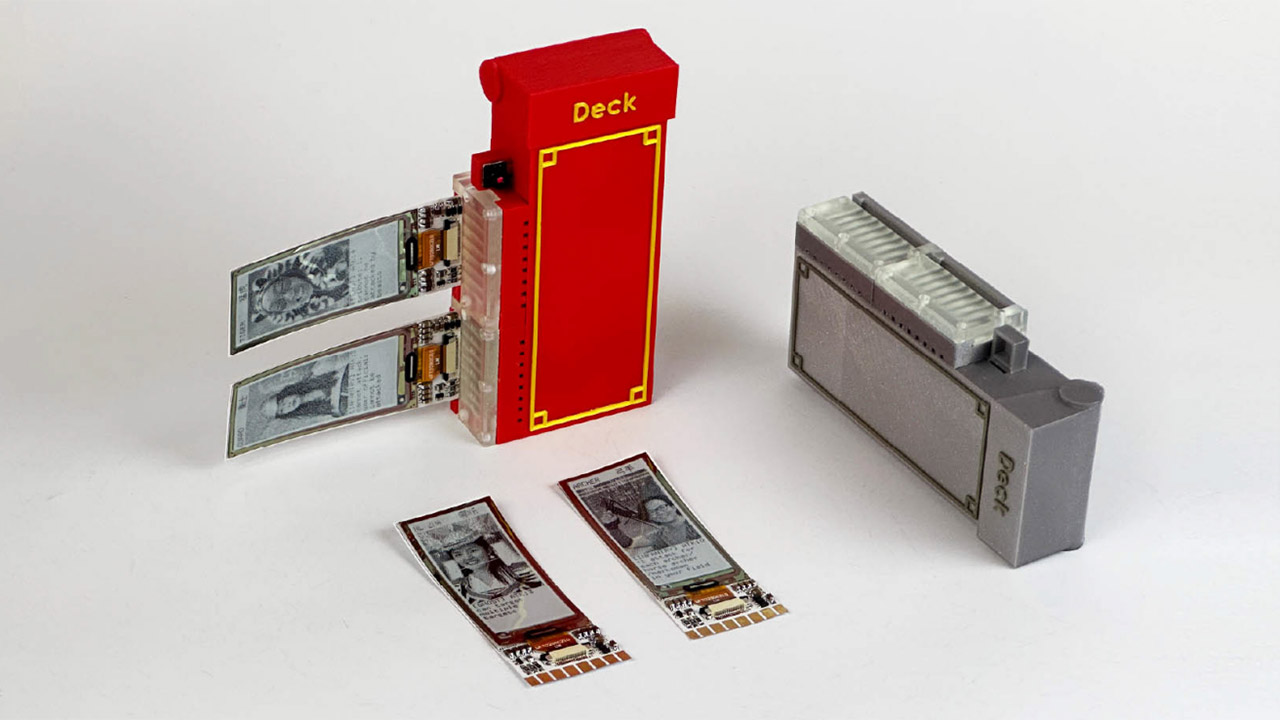
As of now, it is still a prototype, with no release date or pricing in sight. However, the work they have done is obvious enough that other teams can easily build on it. Perhaps someone will come along and develop the hardware, add some more character kinds, or simply create a whole game library. Perhaps in the not-too-distant future, families will be lugging around decks that simply rewrite themselves for each crew they are with.
[Source]
