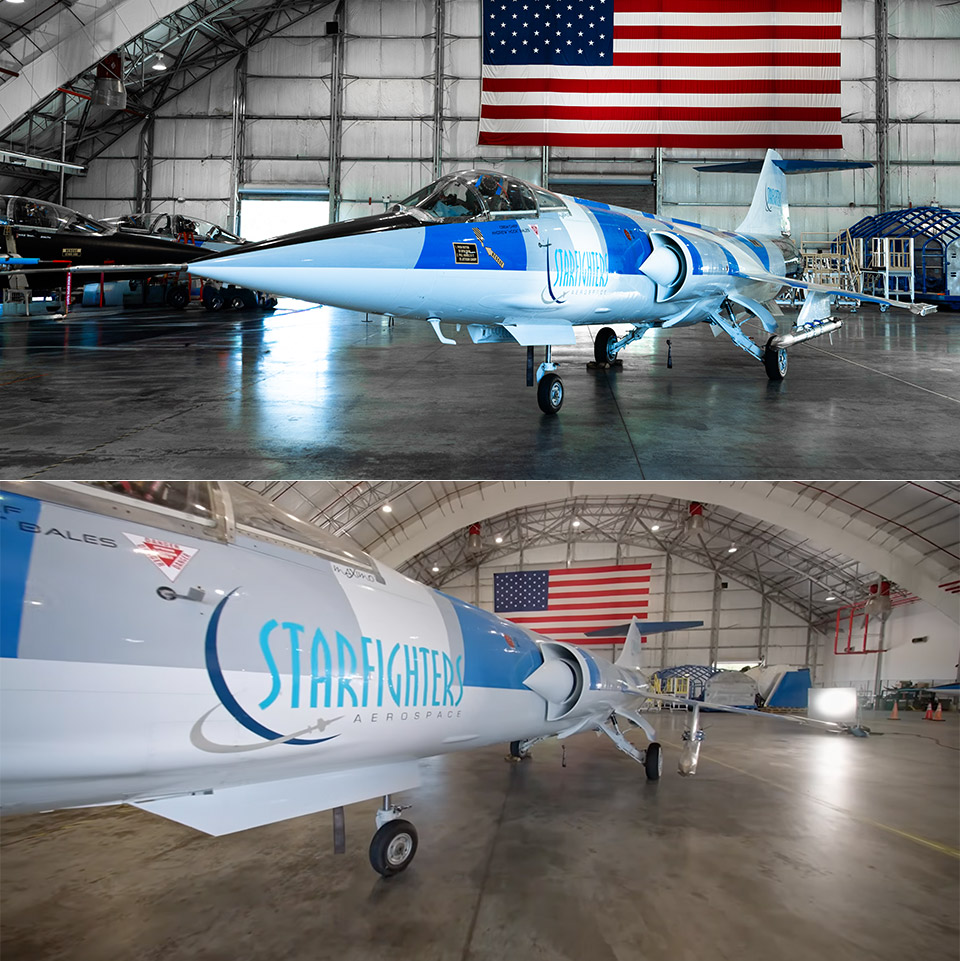
GE Aerospace has done something amazing at Kennedy Space Center. Their Atmospheric Test of Launched Airbreathing System (ATLAS) Flight Test Vehicle, powered by a solid-fuel ramjet (SFRJ), flew earlier this month on an F-104 Starfighter. This is a stripped down, beautiful piece of engineering with zero moving parts designed to go beyond Mach 5.
A ramjet is a hollow tube that turns air and fuel into raw power. Unlike the jet engines on a commercial airliner, which use spinning fans and turbines to compress air before burning it with fuel, a ramjet uses the vehicle’s own speed to do the heavy lifting. As the craft goes forward, air slams into the engine’s inlet, compresses and heats up through sheer momentum. This compressed air mixes with fuel, ignites and blasts out the back, generating thrust. The genius is in its simplicity – no turbines, no fans, just a carefully shaped tube that works at supersonic speeds. GE’s ATLAS program takes this concept and pushes it into new territory with a solid-fuel twist.
Sale

LEGO Technic Bush Plane Toy – Buildable Airplane Toy for Kids, Boys and Girls, Ages 8+ – Model Airplane…
- MODEL AIRPLANE TOY – Build and explore a fun LEGO Technic Bush Plane toy with a spinning propeller, adjustable ailerons and 4-cylinder piston engine
- IMAGINATIVE PRETEND PLAY – Kids can play creatively as they swoop their LEGO plane and imagine endless conservation missions with their bush…
- FUN FEATURES – This LEGO airplane toy comes with a cool zebra print design to reflect the role that bush planes play in wildlife conservation
Solid fuel is where things get interesting because standard ramjets use liquid fuel which needs to be fed into the combustion chamber by pumps, valves and other mechanical components. These components add weight and complexity which is undesirable when trying to go hypersonic. GE’s solution? Line the inside of the ramjet with a solid hydrocarbon fuel that looks like a rubbery coating. As the engine burns, the fuel layer wears away, revealing a new surface to keep the fire burning. The oxygen is provided by the air that rushes in, so no oxidizer is required like with a rocket. This makes the engine lighter, simpler and much more efficient – with a specific impulse (a measure of efficiency) of 1,000 seconds compared to 240 seconds for a solid rocket.
Why does this matter? Efficiency and simplicity translates to practicality. A lighter engine means a vehicle can carry more payload or go farther. Fewer parts means lower cost which is huge for a one-time missile or test vehicle. GE’s solid-fuel ramjet could power hypersonic missiles that outrun existing defenses making them practically impossible to intercept. Beyond conflict, the technology means a future where passenger flights can cross oceans in hours. A trip from New York to Tokyo could feel like a commute rather than a marathon.
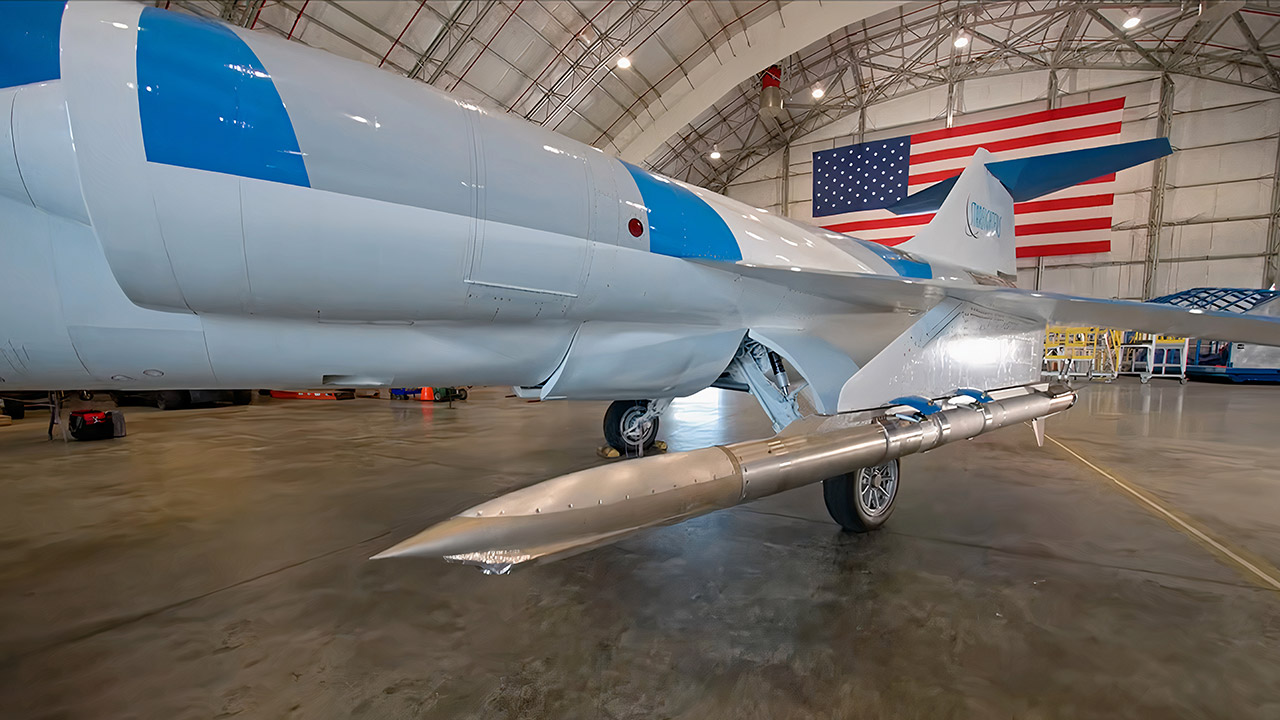
Bolted to an F-104 Starfighter, a sleek Cold War-era jet that can go Mach 2.2, the ATLAS vehicle flew through the Florida skies to test aerodynamics. Even the most advanced wind tunnels can’t recreate the turbulence, temperature changes and atmospheric quirks of the real world. GE wanted data from the source and the Starfighter delivered, flying the unlit ramjet to supersonic speeds during three flights. Lighting the engine will happen later during free-flight testing where the ramjet will burn and demonstrate its hypersonic capabilities.
[Source]
